

Clinical Correlation of the Folts Model of Ischemia in a Middle-Aged Woman With Poorly Controlled Type 2 Diabetes
DOI:
https://doi.org/10.14740/jmc5326Keywords:
Coronary angiography, Folts model of ischemia, Diabetes mellitus, PCIAbstract
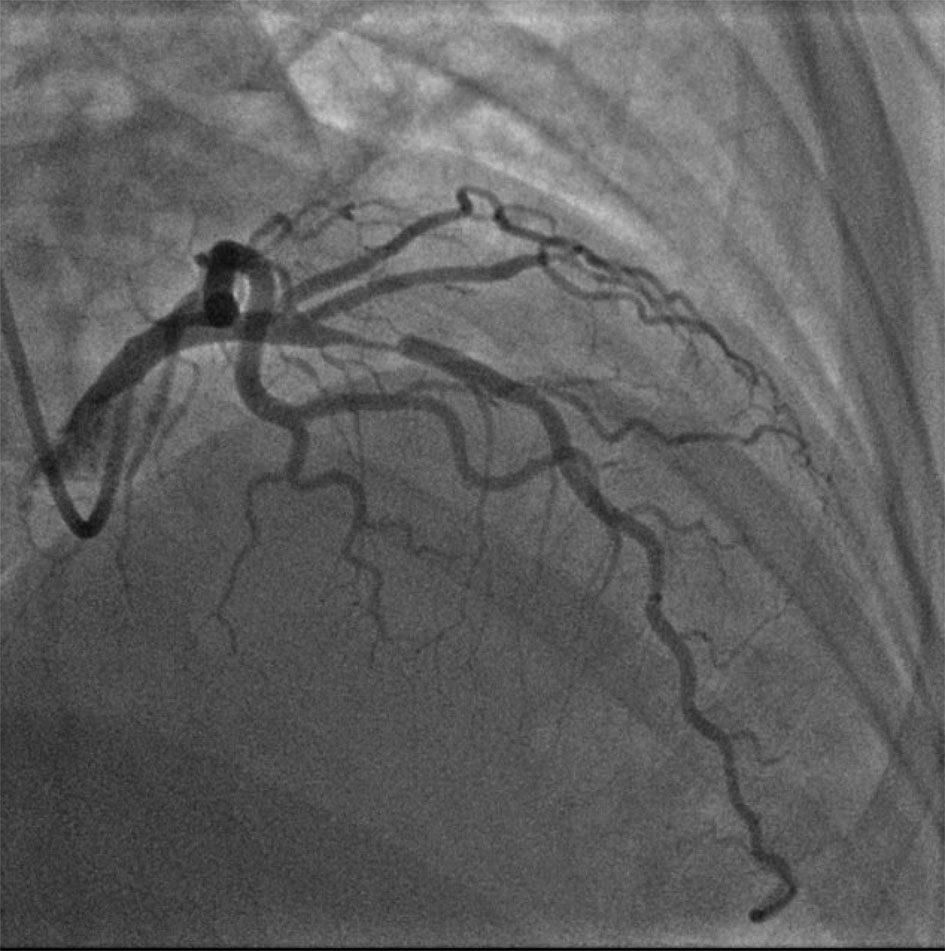
Folts model of ischemia describes cyclic flow reduction (CFR) resulting from interaction of severe vessel stenosis and super-imposed episodic platelet-rich thrombus formation. Episodic platelet aggregation at the stenotic site produces partial or near-total obstruction, causing transient ischemia that resolves spontaneously without persistent vessel occlusion. Here we present a case of 50-year-old woman with uncontrolled type 2 diabetes with severe chest pain following weeks of brief, self-resolving episodes at rest and with exertion. Despite serially negative high-sensitivity troponins and nonspecific T-wave changes on 12-lead electrocardiogram, her high-risk features prompted angiography, which revealed a critical 95% mid-left anterior descending artery stenosis. The pattern of recurrent, transient ischemic symptoms without biomarker elevation closely reflected Folts’s model of CRF, in which severe fixed stenosis promotes episodic platelet-mediated obstruction. Intravascular ultrasound-guided percutaneous coronary intervention with drug-eluting stent placement restored normal flow, and her symptoms resolved. This case illustrates how clinical unstable angina can mirror the physiologic principles described in Folts’s model and underscores the need for early invasive evaluation even in the absence of infarction.
Published
Issue
Section
License
Copyright (c) 2026 The authors

This work is licensed under a Creative Commons Attribution 4.0 International License.