Management of a Symphyseal Multilocular Odontogenic Keratocyst
DOI:
https://doi.org/10.14740/jmc5286Keywords:
Odontogenic keratocyst, Multilocular, Symphyseal, Sticky bone, Platelet-rich fibrin, Actinomyces odontolyticusAbstract
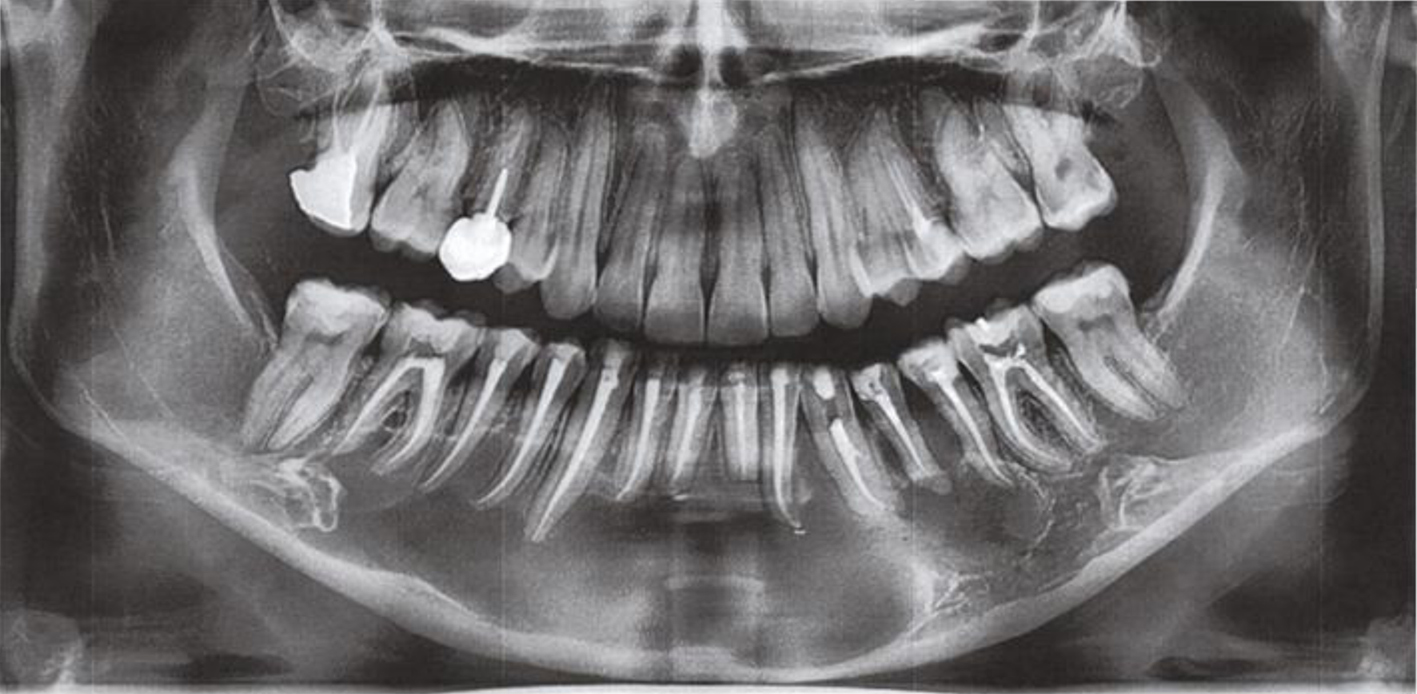
Multilocular odontogenic keratocyst (MOK) is a benign odontogenic lesion with significant aggressive behavior and a high risk of recurrence. Its occurrence in the symphyseal region is rare, with the posterior mandible being the usual site of predilection. We report the case of an MOK diagnosed incidentally in a 30-year-old female patient. Treatment consisted of endodontic therapy, complete excision via a vestibular approach, and immediate reconstruction using an autologous composite biomaterial known as “sticky bone,” supplemented with platelet-rich fibrin membranes. Bacteriological analysis revealed a secondary infection with Actinomyces odontolyticus, requiring a 3-month course of prolonged antibiotic therapy. At 3 months, follow-up examinations showed homogeneous ossification, preservation of the inferior alveolar nerve, and no evidence of recurrence. Given the high risk of recurrence, conservative marginal resection combined with the use of sticky bone allowed for reliable reconstruction. The addition of platelet-rich fibrin contributed to enhanced healing and bone maturation. The anatomical and functional outcomes are satisfactory, although long-term follow-up remains necessary. This case highlights several important clinical and therapeutic points. MOKs may be discovered incidentally and require careful radiological and histopathological evaluation for accurate diagnosis and appropriate management. Conservative marginal resection, when combined with modern biomaterials such as sticky bone, can achieve effective bone reconstruction while minimizing surgical morbidity. In addition, the adjunctive use of platelet-rich fibrin enhances soft tissue healing and promotes bone regeneration. Clinicians should also be aware that secondary infection, such as Actinomyces odontolyticus, may occur and can require prolonged, targeted antibiotic therapy. Finally, close multidisciplinary coordination among practitioners is essential to optimize sequential management and to reduce the need for more invasive surgical procedures.
Published
Issue
Section
License
Copyright (c) 2026 The authors

This work is licensed under a Creative Commons Attribution 4.0 International License.