

Isolated Neutropenia as a Sentinel of High-Risk Clonal Evolution: Acute Myeloid Leukemia With Myelodysplasia-Related Changes Harboring TP53 Deletion via Isochromosome 17q and Deletion 20q Mimicking a Myeloproliferative Neoplasm
DOI:
https://doi.org/10.14740/jmc5297Keywords:
Isolated neutropenia, Clonal evolution, Acute myeloid leukemia with myelodysplasia related changes, TP53 deletion, Isochromosome 17q, Deletion 20q, Leukoerythroblastosis, High-risk cytogeneticsAbstract
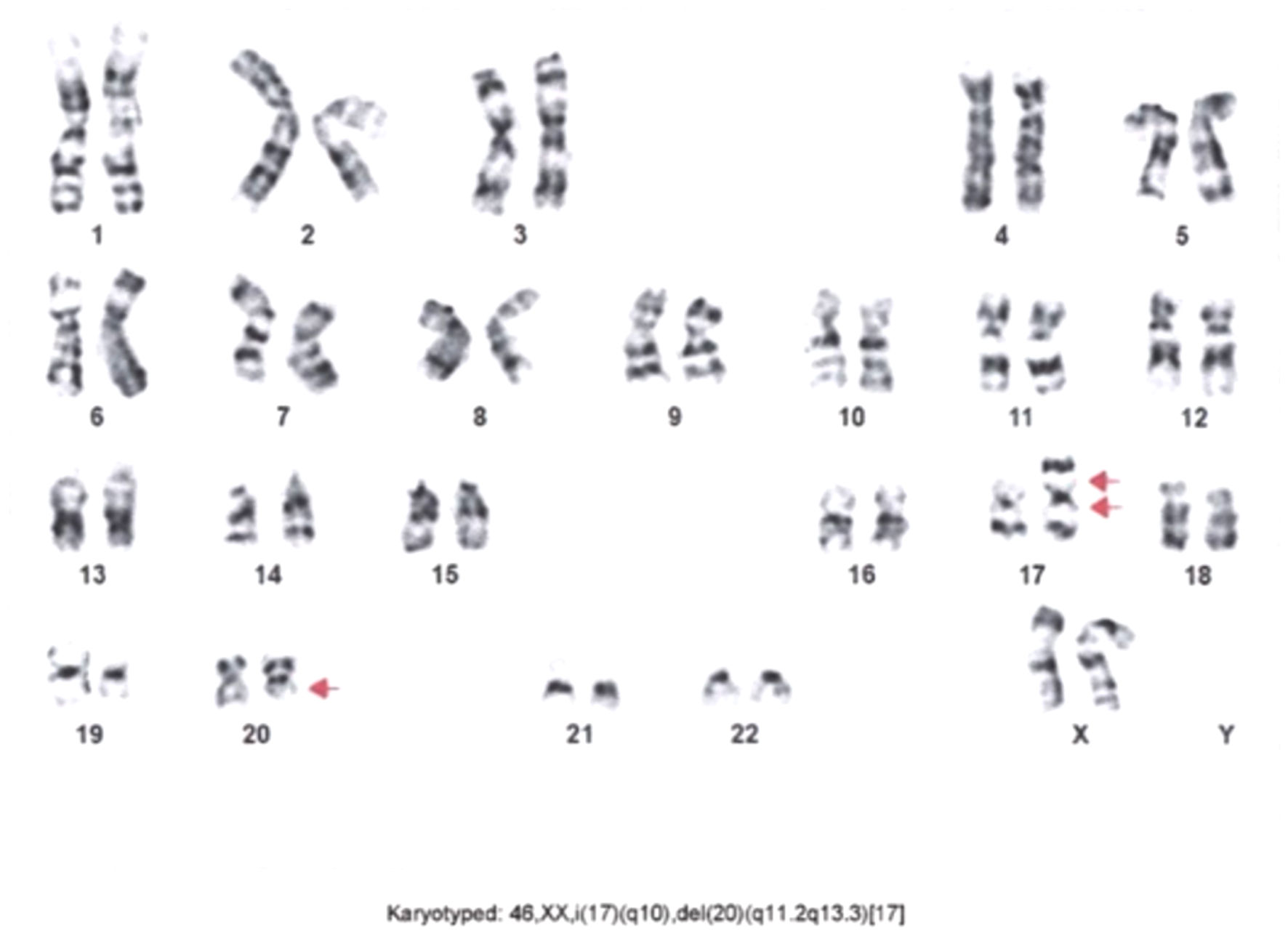
Isolated neutropenia is often deemed benign in elderly patients, frequently attributed to age-related marrow changes, medications, or nutritional deficiencies. However, persistent and unexplained neutropenia may signal early clonal hematopoiesis or evolving myeloid malignancy. While acute myeloid leukemia with myelodysplasia-related changes (AML-MRC) usually arises from multilineage cytopenia, presentation with isolated neutropenia and myeloproliferative neoplasia (MPN)-like features is exceedingly rare. This case underscores the importance of early, risk-adapted assessment in such scenarios. A 69-year-old woman presented with isolated mild neutropenia (absolute neutrophil count (ANC) 1,188/µL) and easy bruising. With no other cytopenias or symptoms, bone marrow biopsy was deferred. Six months later, she developed abdominal discomfort, anorexia, and massive splenomegaly. Laboratory tests revealed leukocytosis with left shift, anemia, thrombocytopenia, and nucleated red cells. Bone marrow biopsy showed > 40% myeloblasts, trilineage dysplasia, and mild fibrosis. JAK2 mutation and BCR-ABL were negative. Cytogenetics demonstrated i(17q) and del(20q); Fluorescence in situ hybridization (FISH) showed TP53 deletion in 81.91% of nuclei, establishing AML-MRC with high-risk features. She was started on azacitidine and venetoclax. Day 28 marrow showed minimal residual disease (blast 8%) but no metaphase growth prompting treatment continuation. She is currently on her fourth cycle with treatment-related transfusion-dependent cytopenias, prompting dose reduction. This case challenges the prevailing “watch-and-wait” paradigm in the evaluation of isolated neutropenia, particularly in older adults. It exposes the hidden risk of clinical inertia, where the absence of other overt cytopenias or symptoms may lead to missed opportunities for early diagnosis of high-risk clonal evolution. In resource-limited setting, this case underscores urgent need for heightened clinical vigilance. Likewise, it highlights the urgent need for a more risk-adapted approach to persistent isolated neutropenia and compels us to confront a critical question: how many patients are we failing to diagnose in time, and how many windows for potentially life-altering intervention are we silently allowing to close?
Published
Issue
Section
License
Copyright (c) 2026 The authors

This work is licensed under a Creative Commons Attribution 4.0 International License.