

Secondary Philadelphia Chromosome–Negative B-Cell Acute Lymphoblastic Leukemia Following Prolonged Lenalidomide Maintenance in Multiple Myeloma
DOI:
https://doi.org/10.14740/jmc5274Keywords:
Multiple myeloma, Lenalidomide, B-cell acute lymphoblastic leukemia, Second primary malignancy, Therapy-related leukemia, Maintenance therapy, Inotuzumab ozogamicin, Allogeneic transplantationAbstract
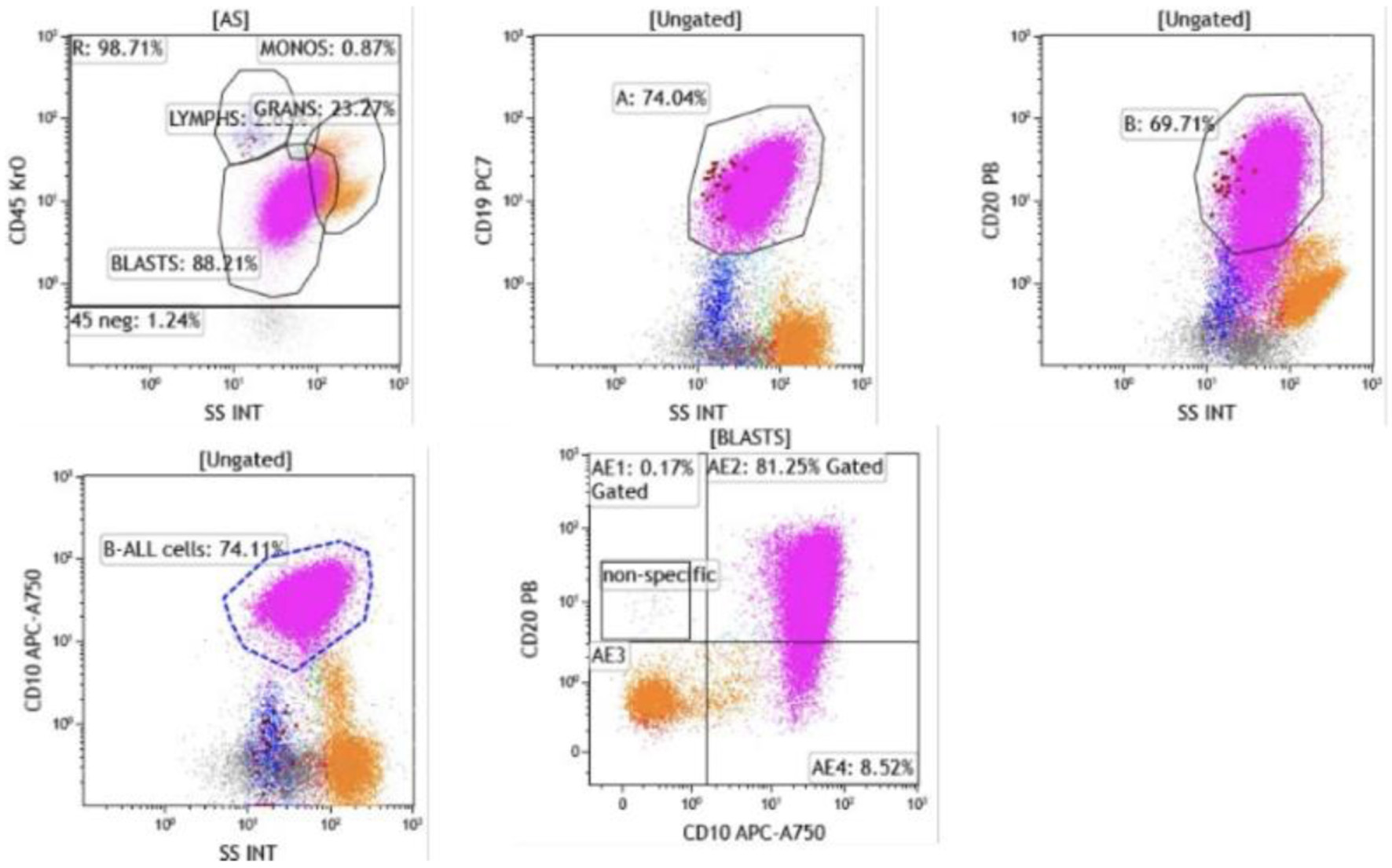
Lenalidomide maintenance significantly improves survival in multiple myeloma (MM) but increases the risk of second primary malignancies (SPMs), with the most common hematologic SPMs being myelodysplastic syndromes (MDS) and acute myeloid leukemia (AML). Secondary B-cell acute lymphoblastic leukemia (B-ALL) is rare. We describe a 62-year-old woman diagnosed with immunoglobulin G lambda MM with extramedullary disease. She achieved remission following induction with lenalidomide, carfilzomib, and dexamethasone, followed by autologous stem cell transplantation. Lenalidomide maintenance was continued for over 4 years, then discontinued due to fatigue. Nearly 1 year later, she presented with bruising and thrombocytopenia. Bone marrow biopsy confirmed Philadelphia chromosome–negative B-ALL with a complex karyotype. She achieved remission with mini–hyper-CVD (cyclophosphamide, vincristine, dexamethasone) plus inotuzumab ozogamicin and rituximab, followed by allogeneic transplantation. This case illustrates lenalidomide-associated B-ALL as a rare late complication of maintenance therapy in MM, underscoring the need for vigilance and early diagnostic evaluation.
Published
Issue
Section
License
Copyright (c) 2026 The authors

This work is licensed under a Creative Commons Attribution 4.0 International License.