


Incidental Discovery of Dual Intrauterine Devices With Bladder Perforation Involving One Device
DOI:
https://doi.org/10.14740/jmc5390Keywords:
Intrauterine contraceptive device, Urinary bladder injuries, Device migration, Uterine perforation, Incidental findingsAbstract
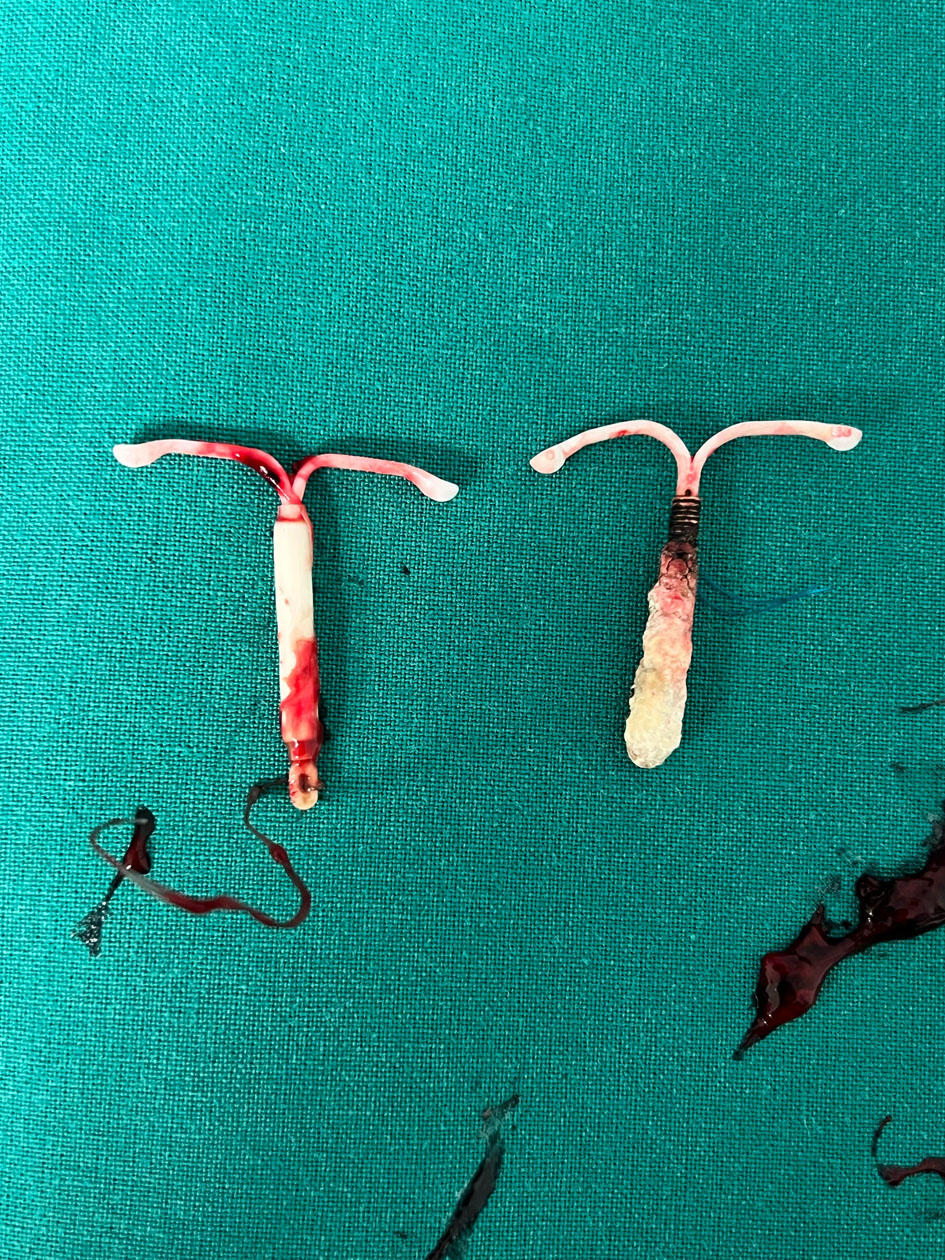
Intrauterine contraceptive devices (IUDs) are highly effective and widely used long-acting reversible contraceptives. Uterine perforation is an uncommon complication, reported in approximately 1–2 per 1,000 insertions, and may result in extrauterine migration to adjacent organs. Bladder involvement is sporadic and may remain clinically silent, leading to delayed or incidental diagnosis. A 40-year-old multiparous woman presented with intermittent painless hematuria several years after IUD insertion. Following postpartum insertion of a copper IUD, the device was not visualized on repeated ultrasonography and was assumed expelled after an unremarkable dilation and curettage. A second hormonal IUD was subsequently inserted. Years later, imaging revealed the presence of two IUDs: one had perforated the uterine wall and embedded into the urinary bladder wall, while the second was partially perforating the uterus. Surgical removal via laparotomy with bladder repair was successfully performed, along with bilateral tubal ligation. This case highlights the diagnostic challenges associated with presumed IUD expulsion and delayed recognition of X-ray time migration. It emphasizes the importance of appropriate imaging to confirm the location of missing IUD before reinsertion and the need to consider device migration in patients presenting with unexplained urinary symptoms.
Published
Issue
Section
License
Copyright (c) 2026 The authors

This work is licensed under a Creative Commons Attribution 4.0 International License.