

Adult Thalamic Diffuse Midline Glioma, H3 K27-Altered, With KRAS Comutation and Potential Early Subependymal Dissemination
DOI:
https://doi.org/10.14740/jmc5399Keywords:
Adult diffuse midline glioma, H3F3A K27M and KRAS G12V comutation, MAPK pathway, Radiotherapy, Dordaviprone, Early CSF disseminationAbstract
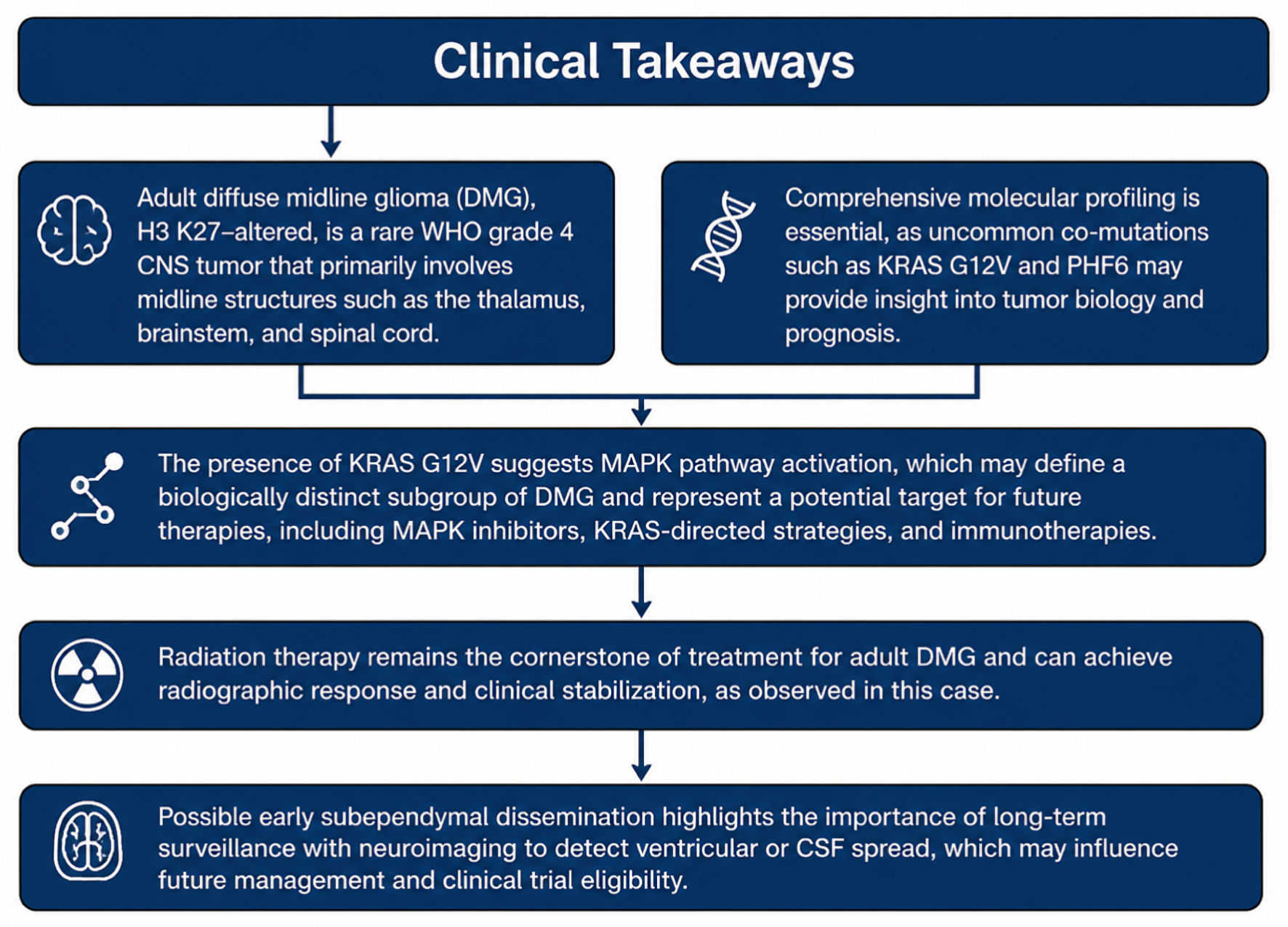
Diffuse midline glioma (DMG) is a highly aggressive central nervous system neoplasm that predominantly affects pediatric populations and is associated with a dismal prognosis. Adult DMGs remain relatively uncommon and continue to pose significant diagnostic and therapeutic challenges. We present the case of a 54-year-old adult patient with a left thalamic DMG, H3 K27-altered, World Health Organization (WHO) grade 4, harboring pathogenic H3F3A K27M, KRAS G12V, and PHF6 mutations. The patient presented with headaches, fatigue, imbalance, dizziness, and slowed dexterity. Imaging demonstrated a heterogeneously enhancing left thalamic lesion extending into the midbrain, with associated edema and third-ventricular compression. Stereotactic biopsy confirmed a DMG, H3 K27-altered. Given the surgically inaccessible location and the high risk of neurologic morbidity, the patient underwent definitive radiotherapy without concurrent temozolomide. Follow-up imaging showed an interval reduction in tumor size, consistent with treatment response; however, a new subependymal ventricular nodule raised concern for possible early dissemination. This case highlights the importance of molecular characterization in adult DMG and discusses the potential biological implications of a KRAS comutation in this rare entity. We also review the evolving literature on adult thalamic DMG, molecular alterations, therapeutic considerations, and emerging targeted therapies, including dordaviprone (ONC201).
Published
Issue
Section
License
Copyright (c) 2026 The authors

This work is licensed under a Creative Commons Attribution 4.0 International License.