

Mandibular Osteomyelitis and Acute Soft Head Syndrome in an Adolescent With Sickle Cell Disease
DOI:
https://doi.org/10.14740/jmc5366Keywords:
Sickle cell disease, Acute soft head syndrome, Mandibular osteomyelitis, Pain crisesAbstract
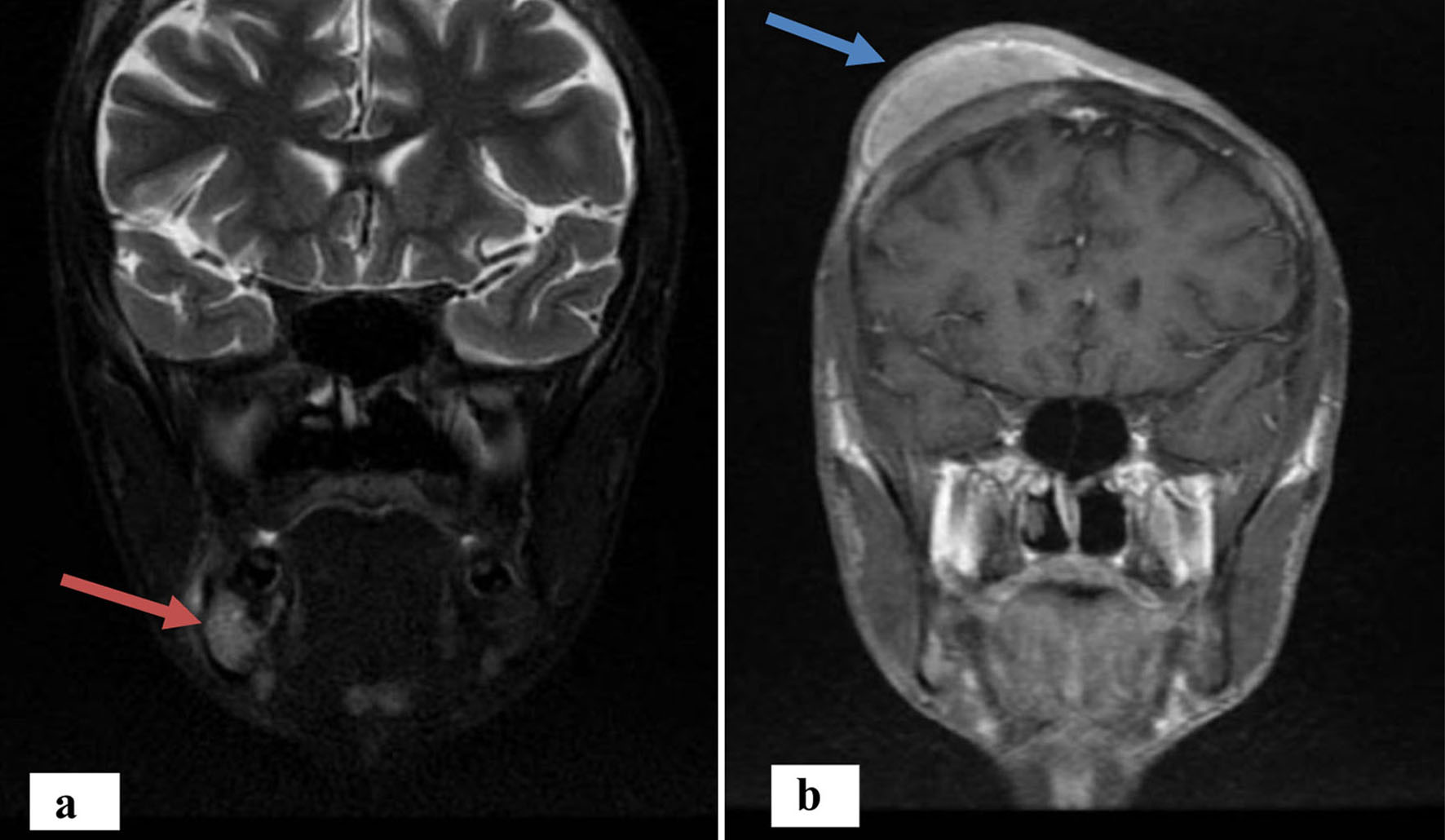
Sickle cell disease (SCD) is a type of inherited disorder of hemoglobin characterized by recurring vaso-occlusive pain crises that affect many organ systems. Although it is uncommon, involvement of the orofacial region, such as the mandible area and jaw, can lead to a mandibular osteomyelitis, which can cause serious morbidity and diagnostic uncertainty. We describe a 17-year-old male Saudi patient with SCD who initially complained of bodily ache before developing fever, facial swelling, frontoparietal head swelling, and elevated inflammatory markers. The image resembled an odontogenic abscess along with frontoparietal head collection. However, the patient’s clinical history, painful crises, elevated inflammatory markers, and high Hb S% along with further radiological study were all compatible with a mandibular osteomyelitis along with acute soft head syndrome. Vigorous supportive care with exchange transfusions to lower Hb S%, antibiotic support, and multidisciplinary consultation was all part of the management. The patient was steadily getting better, and after 1 month from starting management, all of the facial and head swelling had completely disappeared. In conclusion, this case highlights the presentation of two uncommon SCD manifestations: mandibular osteomyelitis and acute soft head syndrome in young SCD patient. Additionally, it demonstrated how crucial it is to keep mandibular crisis (osteomyelitis) as a differential diagnosis for orofacial pain in SCD patients and how lowering Hb S% is important for treating such instances.
Published
Issue
Section
License
Copyright (c) 2026 The authors

This work is licensed under a Creative Commons Attribution 4.0 International License.