

Delayed Presentation of Metachronous Ascending Colonic Adenocarcinoma in Early-Onset Colorectal Cancer Undergoing Curative Resection
DOI:
https://doi.org/10.14740/jmc5184Keywords:
Early-onset colorectal cancer, Metachronous, Delayed, ResectionAbstract
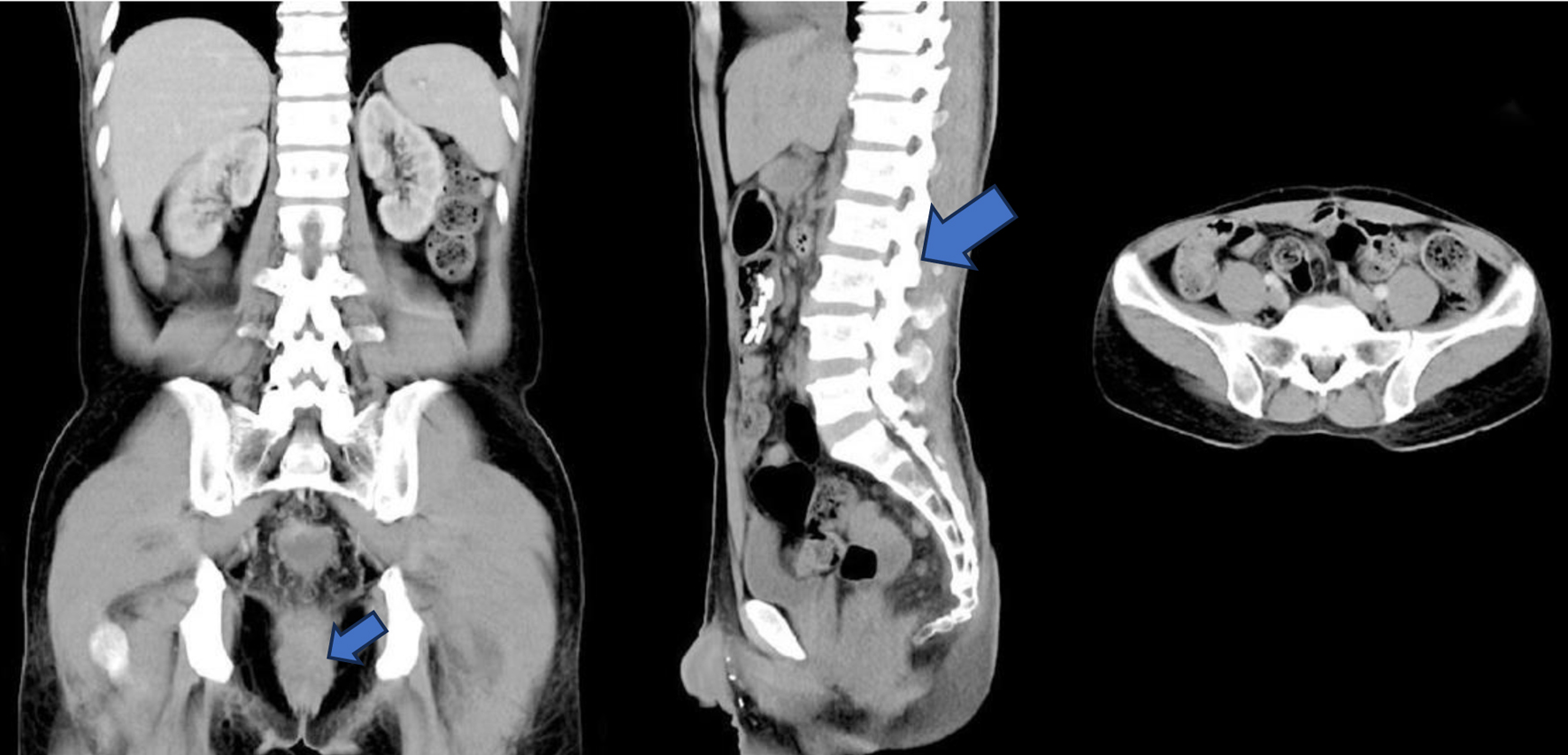
Colorectal cancer (CRC) is the third most common cancer in both age groups in the world and one of the increasing causes of mortality each year. Particularly in early-onset colorectal cancer (EOCRC), this age group tends to metastasize to distant organs like the liver, lung, bone, and brain and in metachronous cases. Metachronous cancer in the colorectal adenocarcinoma is usually found in the first 2 - 3 years following curative treatment, with delayed recurrences being extremely rare. We report a rare case of a 42-year-old male with a history of ascending colon adenocarcinoma diagnosed at the age of 31. He underwent curative R0 resection with lymph node involvement, followed by 6 months of adjuvant FOLFOX chemotherapy. He remained disease-free for 11 years under routine surveillance. In 2025, he presented with symptoms of bloody diarrhea and altered bowel habits. Imaging and colonoscopic biopsy revealed a new adenocarcinoma in the distal rectum, representing a delayed metachronous. Clinical staging confirmed localized rectal cancer with limited metastasis (T3N2bM1a). Despite surgical resection being indicated, the patient declined surgery and opted for systemic chemotherapy. He tolerated treatment well, maintained functional status, and reported a good quality of life. Delayed metachronous recurrence can occur in EOCRC even after standard adjuvant therapy and prolonged remission. EOCRC also has a chance to be a delayed metachronous case. Closed follow-up should be performed, particularly in the case of those who refused the operative treatment.
Published
Issue
Section
License
Copyright (c) 2025 The authors

This work is licensed under a Creative Commons Attribution 4.0 International License.