Emergence of a Citrobacter amalonaticus Strain Co-Producing Three Carbapenemases: Molecular Insights and Resistance Profiles
DOI:
https://doi.org/10.14740/jmc5285Keywords:
Citrobacter amalonaticus, OXA-48, NDM, KPC, Carbapenemase, Whole-genome sequencingAbstract
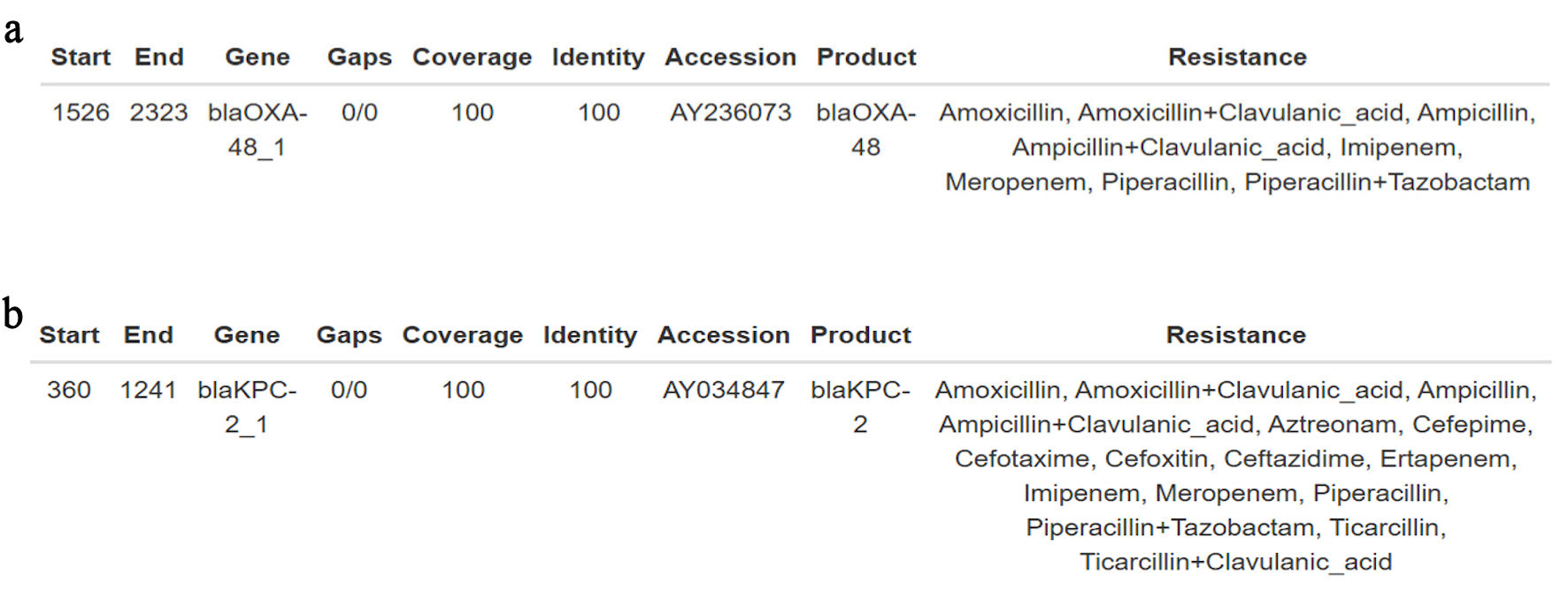
The emergence of carbapenemase-producing organisms poses an escalating public health risk. In this case study, we used whole-genome sequencing (WGS) to characterize the carbapenem resistance mechanisms of a multidrug-resistant Citrobacter amalonaticus (C. amalonaticus) strain recovered from a surgical site infection. The isolate was initially identified using a MALDI-TOF mass spectrometry system. Phenotypic antibiotic susceptibility testing revealed the presence of carbapenem-resistant C. amalonaticus isolate with high-level resistance to both imipenem and meropenem (imipenem minimum inhibitory concentration (MIC) ≥ 32 mg/L; meropenem MIC ≥ 32 mg/L). Rapid screening of the carbapenemase-encoding genes using the GeneXpert system revealed the presence of blaOXA-48, blaNDM, and blaKPC. WGS performed on an Illumina NovaSeq 6000 platform demonstrated the presence of blaNDM-1, which was chromosomally integrated. In silico analysis suggested that blaKPC-2 and blaOXA-48 were associated with distinct plasmid replicons (IncQ2 and IncL/M, respectively), although complete plasmid reconstruction was not possible using short-read sequencing. The convergence of multiple carbapenemase genes in C. amalonaticus indicates an urgent shift in the landscape of carbapenem resistance beyond that of traditional high-risk pathogens. These findings underscore the need for enhanced active surveillance of Citrobacter spp. as emergent reservoirs of carbapenemase genes. Early detection of these novel resistance determinants is essential for strengthening targeted infection control strategies and optimizing antimicrobial stewardship interventions at regional, national, and global levels.
Published
Issue
Section
License
Copyright (c) 2026 The authors

This work is licensed under a Creative Commons Attribution 4.0 International License.