

Hyperviscosity Syndrome as a Rare Presentation of Immunoglobulin G Kappa Smoldering Multiple Myeloma Successfully Treated With Daratumumab
DOI:
https://doi.org/10.14740/jmc5398Keywords:
Hyperviscosity syndrome, Smoldering multiple myeloma, Waldenström macroglobulinemia, paraproteinemia, hematuria, retinal hemorrhage, epistaxis, DaratumumabAbstract
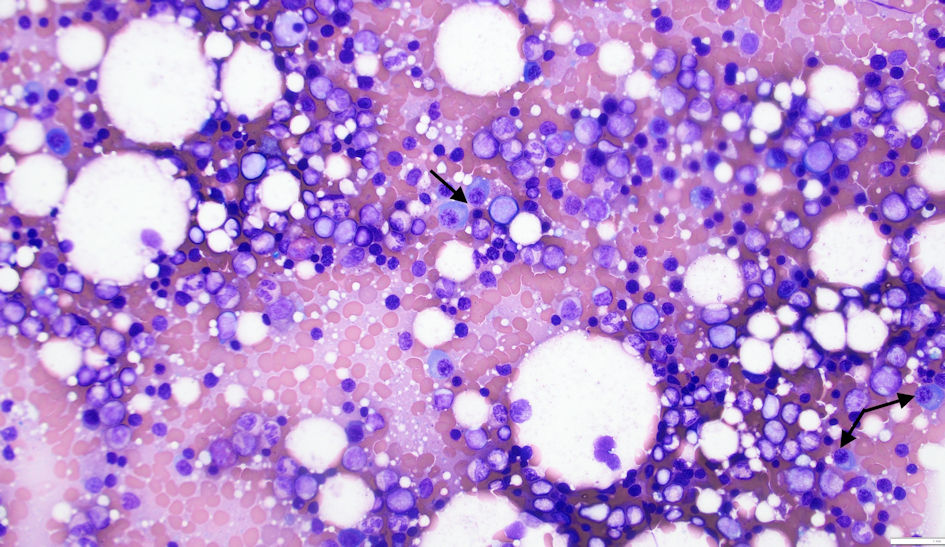
Hyperviscosity syndrome (HVS) is an oncologic emergency most commonly associated with Waldenstrom macroglobulinemia and immunoglobulin (Ig)M paraproteinemia. Clinically, significant HVS in smoldering multiple myeloma (SMM), particularly IgG-associated disease without overt CRAB (hypercalcemia, renal insufficiency, anemia, and bone lesions) criteria, is exceedingly rare. We report a unique case of IgG kappa smoldering myeloma complicated by symptomatic HVS, manifesting with retinal hemorrhage, epistaxis, and gross hematuria, despite the absence of overt end-organ myeloma-defining events. A 70-year-old patient with Sjogren syndrome and longstanding monoclonal gammopathy showed gradual progression from high-risk monoclonal gammopathy of undetermined significance (MGUS) to smoldering myeloma over several years. Bone marrow biopsy showed 10% plasma cells, with no high-risk cytogenetic abnormalities on limited fluorescence in situ hybridization (FISH) testing. Positron emission tomography/computed tomography (PET/CT) imaging repeatedly showed no fluorodeoxyglucose (FDG)-avid osseous disease. In the setting of HVS, serum viscosity peaked at 5.7 centipoise, with concomitant IgG elevation to 5,463 mg/dL and an M-protein of 3.01 g/dL. Given symptomatic hyperviscosity, treatment with daratumumab was initiated despite the absence of SLiM (≥ 60% clonal plasma cells, light chain ratio ≥ 100, and magnetic resonance imaging (MRI) focal lesions)-CRAB criteria for overt multiple myeloma. Following therapy, serum viscosity rapidly improved from 5.7 to 2.2, with corresponding reductions in IgG and M-protein levels and resolution of bleeding manifestations. This case highlights that symptomatic hyperviscosity may occur in IgG smoldering myeloma at a relatively modest plasma cell burden and may itself represent a clinically meaningful indication for early therapeutic intervention.
Published
Issue
Section
License
Copyright (c) 2026 The authors

This work is licensed under a Creative Commons Attribution 4.0 International License.