

Cyclophosphamide for the Treatment of Refractory Immune Effector Cell-Associated Neurotoxicity Syndrome Following CD19-Targeted CAR T-Cell Therapy
DOI:
https://doi.org/10.14740/jmc5211Keywords:
CAR-T, Neurotoxicity, Cyclophosphamide, ICANSAbstract
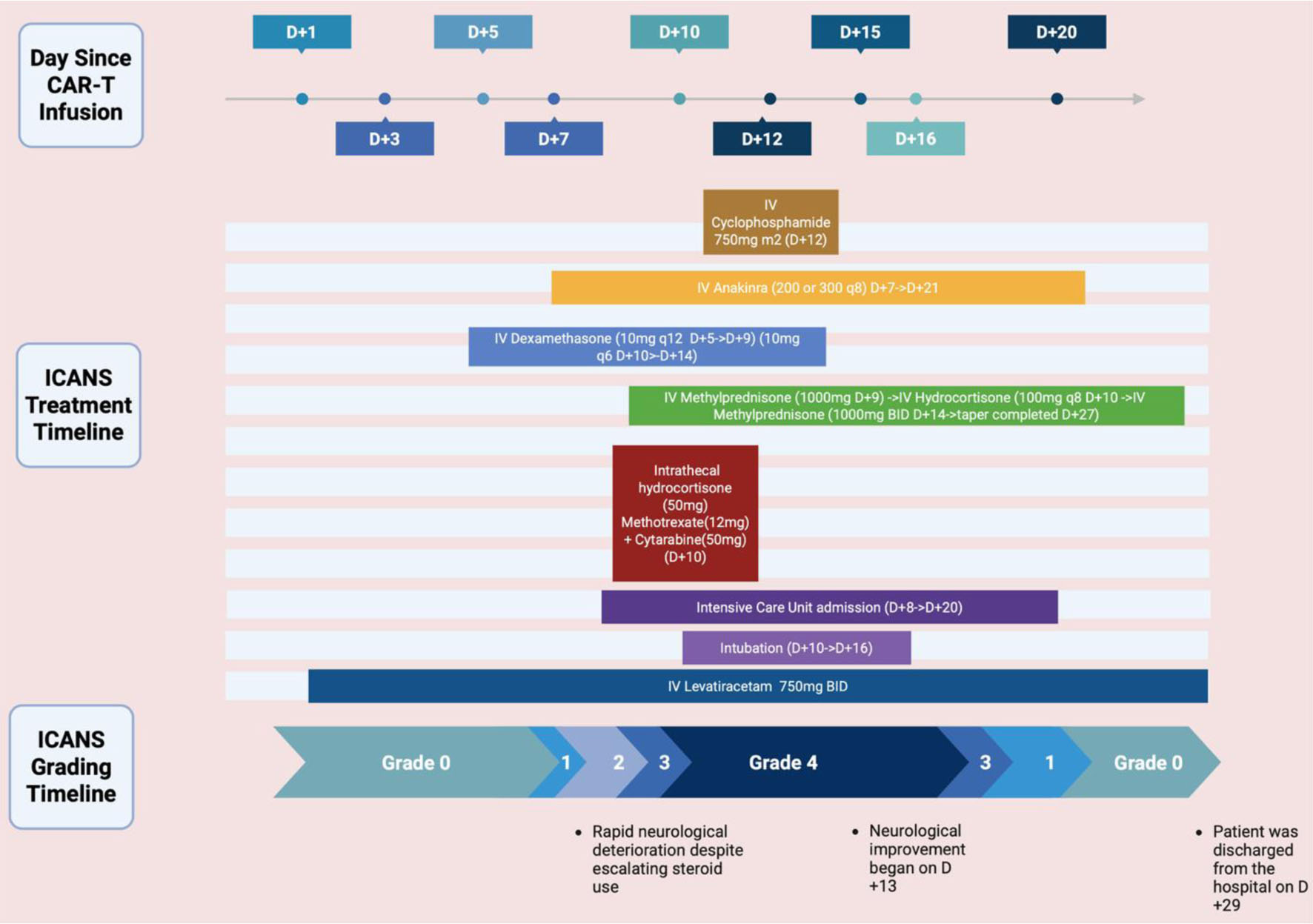
Immune effector cell-associated neurotoxicity syndrome (ICANS) is a serious complication of chimeric antigen receptor T-cell (CAR-T) therapy, associated with significant morbidity and mortality. While corticosteroids and anakinra are cornerstones of treatment, a subset of patients develop severe, steroid-refractory ICANS, highlighting a critical need for more effective therapies. We present the case of a 51-year-old male with relapsed/refractory Philadelphia chromosome-positive (Ph+) B-cell acute lymphoblastic leukemia (B-ALL) who developed grade 4 ICANS following brexucabtagene autoleucel CAR-T therapy. His neurotoxicity was refractory to high-dose corticosteroids, anakinra, and intrathecal chemotherapy. Following administration of low-dose cyclophosphamide (375 mg/m2), patient achieved full neurological recovery. This case suggests that earlier, lower-dose cyclophosphamide may be an effective strategy to mitigate ICANS while preserving CAR-T function, warranting further investigation to define its role in treatment algorithms.
Published
Issue
Section
License
Copyright (c) 2025 The authors

This work is licensed under a Creative Commons Attribution 4.0 International License.