

Transformation From Oxyntic Gland Neoplasm Into Advanced Gastric Cancer via TP53 Mutation: A First Case Report
DOI:
https://doi.org/10.14740/jmc5339Keywords:
Gastric adenocarcinoma of fundic gland type, Oxyntic gland neoplasm, Transformation, TP53, Double stainAbstract
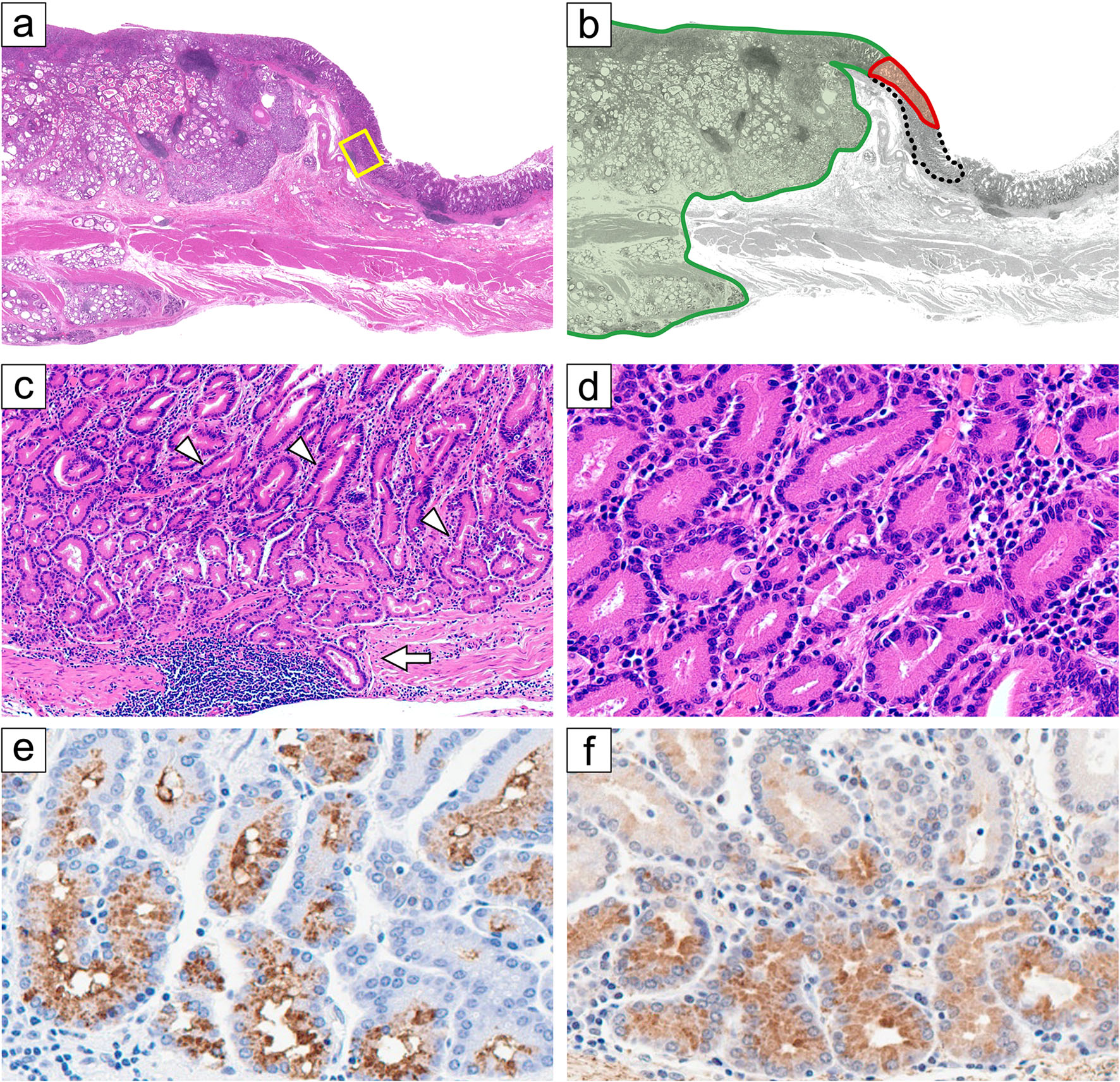
The molecular genetic mechanisms behind oxyntic gland neoplasm (OGN) progression are not well established. We present the first case suggesting that a TP53 mutation caused the transformation from OGN into advanced gastric cancer with nodal metastasis. An 80-year-old man presented with anemia and was found to have a gastric tumor measuring 35 × 30 mm. Histology revealed predominantly invasive tubular adenocarcinoma showing diffuse p53 positivity, with a minor chief cell-predominant OGN component. Targeted sequencing of the entire tumor revealed a pathogenic TP53 c.832C>A (p.Pro278Thr) mutation; no mutations were found in GNAS or KRAS. A double stain (p53/MUC5AC) provided immunohistochemical evidence of a shift from wild-type to mutant-type p53 expression, particularly in the foveolar epithelium within the intramucosal OGN component, suggesting the acquisition of a TP53 mutation during tumor progression. This case supports an unreported role for TP53 in the transformation of OGNs into aggressive carcinomas.
Published
Issue
Section
License
Copyright (c) 2026 The authors

This work is licensed under a Creative Commons Attribution 4.0 International License.