

Combined Functional Electrical and Transcranial Direct Current Stimulation for Foot Drop: A Case Series
DOI:
https://doi.org/10.14740/jmc5333Keywords:
Falls, Foot drop, Minimum toe clearance, Functional electrical stimulation, Case series, Transcranial direct current stimulation, StrokeAbstract
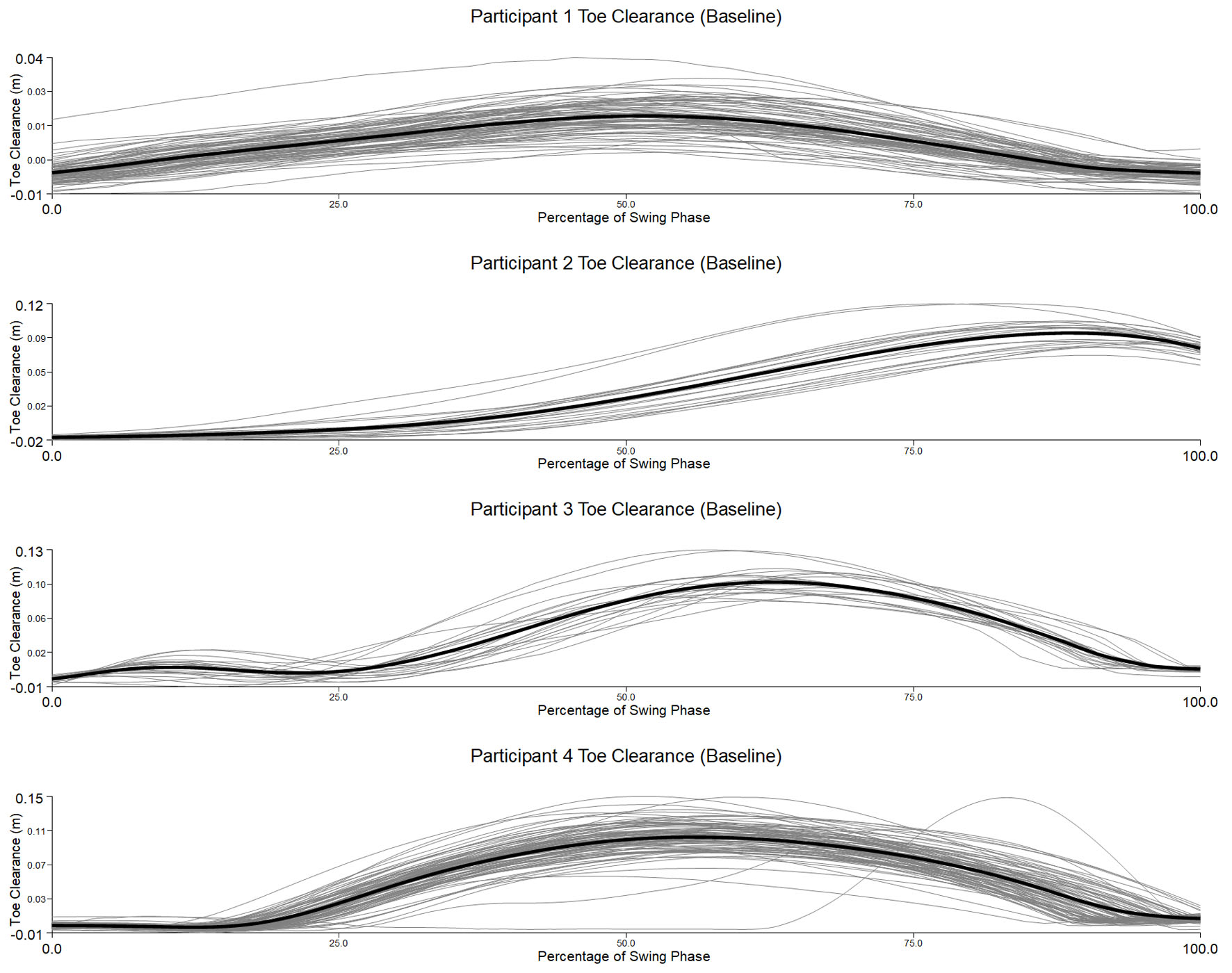
Stroke is a leading cause of severe long-term disability, and foot drop is a common post-stroke gait impairment that may reduce toe clearance, increasing the risk of toe contacts and, in turn, trip-related falls. This case series evaluated the novel combination of transcranial direct current stimulation (tDCS), functional electrical stimulation (FES) to the tibialis anterior, and physical therapy training to improve minimum toe clearance (MTC) in individuals with chronic stroke. The rationale for this combined approach was that tDCS may prime the motor cortex and enhance neuroplastic responsiveness, while FES provides task-specific peripheral stimulation to the dorsiflexors during gait-related training, potentially increasing MTC and minimizing toe drag. Four individuals with chronic stroke participated in an 8-week treatment program with sessions twice a week. Assessments were conducted at baseline, 4 weeks, and 8 weeks. Participant 1 started with tDCS alone for 4 weeks, then added FES for the remaining 4 weeks. Participant 2 began with FES for the first 4 weeks, and tDCS was added for the remaining 4 weeks. Participants 3 and 4 received both tDCS and FES throughout the entire 8-week program. Participants 1 (58-year-old female) and 4 (42-year-old male) showed no active ankle dorsiflexion at baseline, while participants 2 (66-year-old male) and 3 (36-year-old male) had a grade of 2 out of 5 for ankle dorsiflexion strength at baseline. Toe clearance and functional outcomes were collected at each assessment. Participants 1 and 4 demonstrated no meaningful change in MTC, whereas participants 2 and 3 both showed modest improvements. Among these responders, MTC increased by an average of 0.63 cm. These findings suggest that combining cortical neuromodulation with localized FES and physical therapy may improve toe clearance in select individuals with chronic stroke. However, because tibialis anterior activation was not directly measured, it remains unclear whether the observed changes were due to improved dorsiflexor activation or other compensatory gait strategies.
Published
Issue
Section
License
Copyright (c) 2026 The authors

This work is licensed under a Creative Commons Attribution 4.0 International License.