

Encountering the Unusual: Anesthesia Mumps as a Rare Postoperative Complication in a Ventriculoperitoneal Shunt Surgery
DOI:
https://doi.org/10.14740/jmc5332Keywords:
Postoperative anesthesia care, Neuroimaging, Anesthesia mumps, Ventriculoperitoneal shunt, Acute sialadenitisAbstract
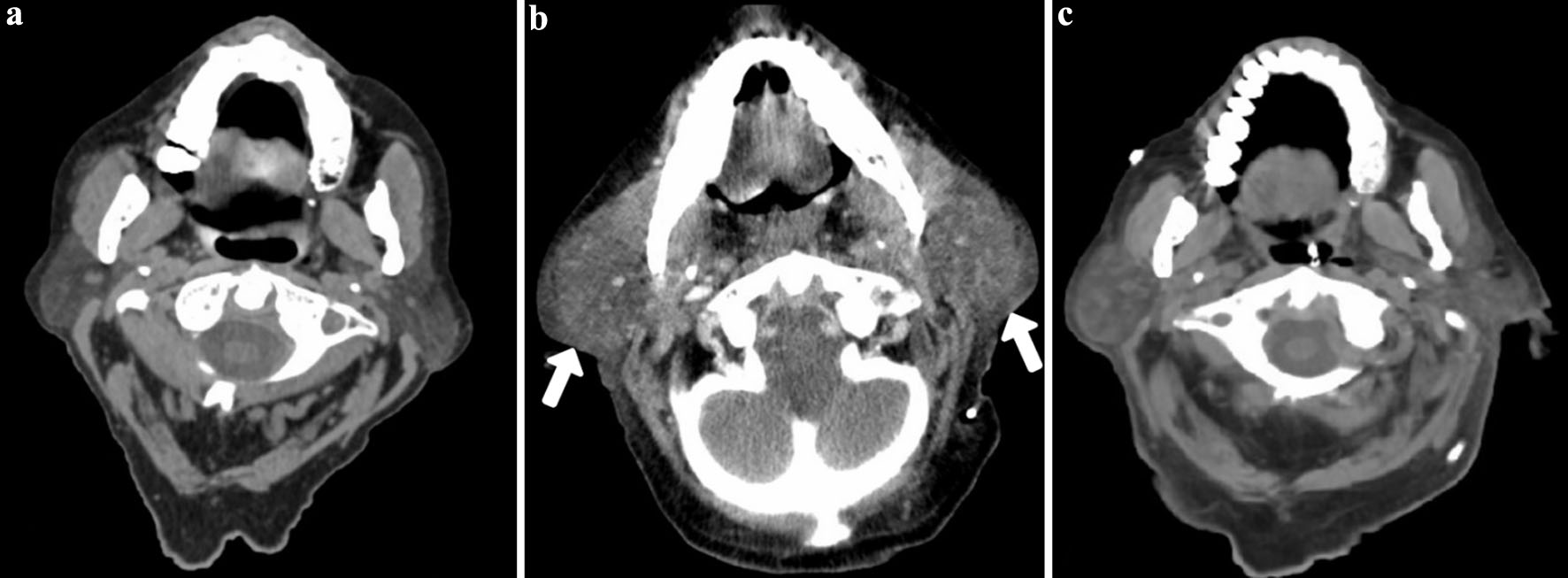
An 87-year-old man with a history of World Health Organization (WHO) grade IV glioblastoma resection developed hydrocephalus and underwent a ventriculoperitoneal (VP) shunt insertion as an American Society of Anesthesiologists (ASA) class 4E patient with a body mass index (BMI) of 24.3 and postoperatively was found to have acute bilateral parotid glands swelling after 2 h post-extubation. He became acutely unwell with sinus tachycardia, hypertension, and a drop in SpO2 to 82%. Primary interventions included oxygen supplementation, 1 L bolus of normal saline, pain control, and a non-contrast computed tomography of the head and neck to evaluate cause of swelling, which revealed subcutaneous edema without evidence of hematoma. Patient was weaned off oxygen and monitored over the next 48 h, and face and neck swelling resolved without any further interventions. To our knowledge, the occurrence of anesthesia mumps (AM) described as acute, transient bilateral parotid gland swelling without purulence, has not been documented in the setting of a VP shunt insertion. This case represents a novel contribution to the literature and expands our understanding of the clinical contexts in which AM may arise. Risk factors for AM in this case included poor oral hygiene and nutritional status, prolonged “nothing by mouth” (NPO) status while awaiting surgery, and significant rotation of the head in neurosurgery such as a VP shunt insertion.
Published
Issue
Section
License
Copyright (c) 2026 The authors

This work is licensed under a Creative Commons Attribution 4.0 International License.