

Vertebral Artery Dissection and Cerebellar Stroke in a Young Patient Following Neck Manipulation
DOI:
https://doi.org/10.14740/jmc5304Keywords:
Vertebral artery dissection, Cerebellar infarction, Patent foramen ovaleAbstract
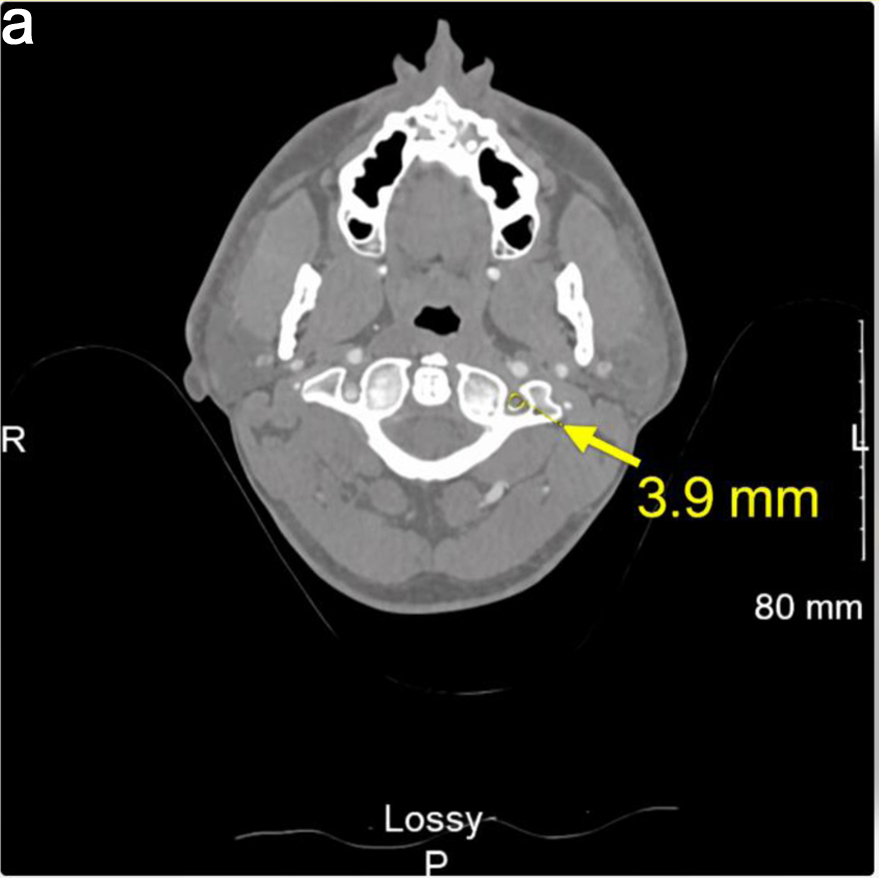
Vertebral artery dissection (VAD) is an uncommon but critical cause of ischemic stroke in young adults. While some cases of VAD are associated with trauma, many occur spontaneously or without clearly identifiable precipitating events. This case report describes a 33-year-old male with a history of migraines and attention deficit hyperactivity disorder (ADHD) who presented with worsening left-side headache, neck pain, nausea, and left arm paresthesia. His initial presentation to urgent care resulted in conservative treatment without improvement. The patient later presented to the emergency department following persistent symptoms and a recent history of chiropractic visits, based solely on patient self-report. Computed tomography angiography (CTA) revealed vertebral artery aneurysm and pseudoaneurysm, magnetic resonance imaging (MRI) demonstrated an acute lacunar infarct in the left cerebellar hemisphere, and magnetic resonance angiography (MRA) confirmed bilateral VAD. Transesophageal echocardiography (TEE) later revealed a patent foramen ovale (PFO), though no immediate intervention was required. The patient was managed with dual antiplatelet therapy and supportive medications for migraine and vertigo. This case warrants reporting due to the patient’s atypical age, absence of clear trauma, and the diagnostic delay caused by overlapping migraine symptoms. While a temporal association with recent neck manipulation was noted, causation cannot be established. Early recognition and appropriate imaging are essential to prevent disabling outcomes and guide proper management in at-risk populations.
Published
Issue
Section
License
Copyright (c) 2026 The authors

This work is licensed under a Creative Commons Attribution 4.0 International License.