

Nonsurgical Management of Cardiac Papillary Fibroelastoma on the Aortic Valve
DOI:
https://doi.org/10.14740/jmc5247Keywords:
Papillary fibroelastoma, Cardiac neoplasm, Aortic valve, Nonsurgical management, Long-term anticoagulation, Apixaban, Myocardial infarction, ST-elevation myocardial infarctionAbstract
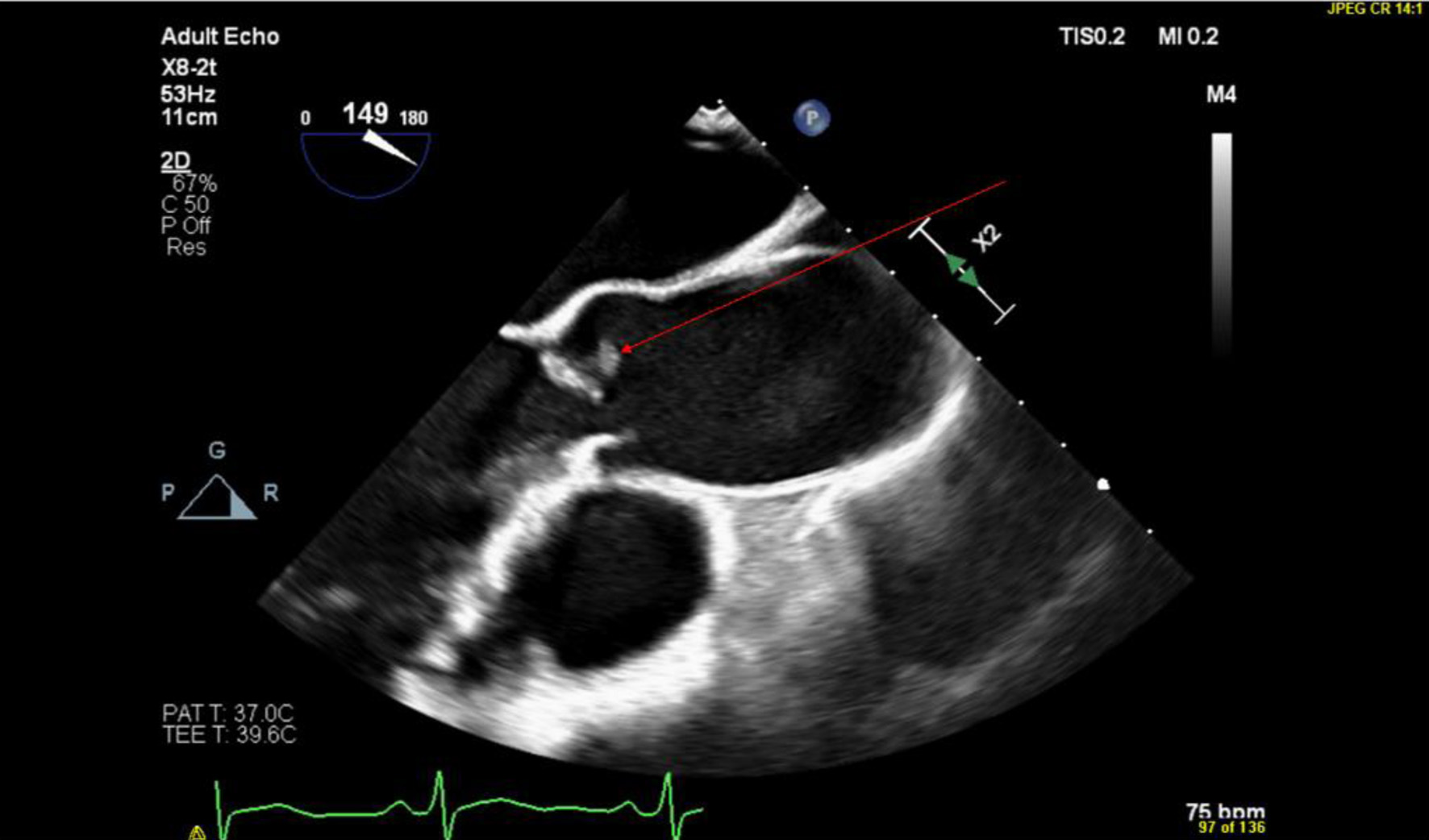
Papillary fibroelastomas are benign cardiac tumors that constitute the second most common cardiac tumors. Controversy exists in the management of papillary fibroelastoma. When to surgically manage the patient or use pharmaceutical therapy is not clear. There are studies that indicate that nonsurgical management might be associated with higher mortality and morbidity rates and more adverse events. There has not been a reported case of papillary fibroelastoma managed successfully with only anticoagulation. Clearer guidelines are needed for the management of papillary fibroelastoma, especially in cases where a patient is a poor surgical candidate or declines surgical intervention. In this case, a patient has been managed nonsurgically for 4 years and 7 months up to date. The patient is a 57-year-old female who presented to the emergency department with myocardial infarction symptoms. The myocardial infarction was thought to be secondary to an embolic event after a patent foramen ovale was identified on transthoracic echocardiogram or sequelae from arrhythmia. Cardionet ruled out arrhythmia, and patent foramen ovale closure workup revealed a 0.3-cm mobile papillary fibroelastoma. Surgical management was not pursued due to surgical risks and the patient’s preference, and the patient was prescribed long-term apixaban. The patient was followed for 4 years and 7 months and experienced an episode of vaginal bleeding during this time. This case shows an example of when nonsurgical management can be pursued as the patient declined surgical intervention after benefits and risks were discussed. Also, this case shows the importance of considering the patient’s bleeding risk, such as this patient’s history of hematuria due to acute cystitis, miscarriages, and heparin-induced gingival hematoma while hospitalized, prior to initiating anticoagulation. Bleeding risk can be assessed using the HAS-BLED risk score or equivalent.
Published
Issue
Section
License
Copyright (c) 2026 The authors

This work is licensed under a Creative Commons Attribution 4.0 International License.