

Reversible Thyroid Nodule in Van Wyk–Grumbach Syndrome: An Unusual Case Report
DOI:
https://doi.org/10.14740/jmc5386Keywords:
Van Wyk–Grumbach syndrome, Thyroid nodule, Juvenile hypothyroidism, Precocious puberty, Autoimmune thyroiditisAbstract
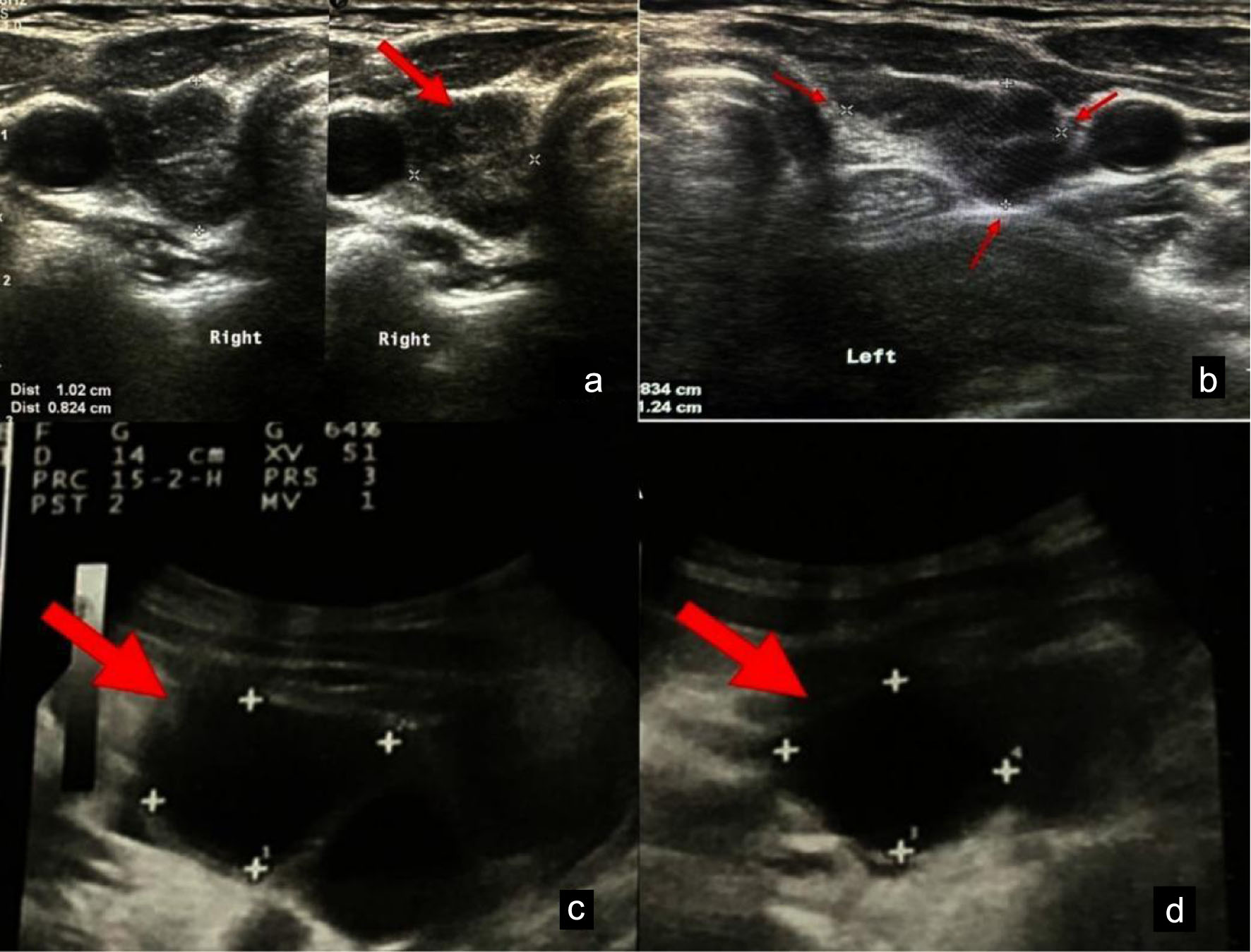
Van Wyk–Grumbach syndrome (VWGS) is a rare complication of longstanding, untreated primary hypothyroidism in children. It is characterized by isosexual precocious puberty, delayed bone age, and multicystic ovarian enlargement despite the presence of severe hypothyroidism. Although thyroid enlargement is common, a discrete thyroid nodule has not previously been documented in this syndrome. This study presents a 6-year-old Saudi girl who exhibited a 2-day history of vaginal hemorrhage and a history of breast development for 6 months. The physical examination demonstrated a palpable right thyroid nodule. The laboratory evaluation revealed a severe primary hypothyroidism, high thyroid autoantibodies, elevated prolactin levels, and prepubertal levels of basal gonadotropins. A thyroid ultrasound demonstrated a well-defined, hypoechoic nodule. Further testing revealed that the child had a delayed bone age, multi-cystic ovaries, and pituitary hyperplasia. After levothyroxine treatment, the patient’s thyroid hormone levels normalized. In addition, there was progressive shrinkage of the thyroid nodule, pituitary hypertrophy, and ovarian cysts, along with significant improvement in linear growth. This case adds to the previously unreported association of a reversible thyroid nodule with VWGS and highlights the importance of early diagnosis and appropriate management of severe hypothyroidism to prevent unnecessary or invasive diagnostic tests.
Published
Issue
Section
License
Copyright (c) 2026 The authors

This work is licensed under a Creative Commons Attribution 4.0 International License.