

Trans-Endometrial Cesarean Myomectomy for a Large Anterior Lower-Segment Intramural Fibroid Preventing Hysterotomy Closure
DOI:
https://doi.org/10.14740/jmc5308Keywords:
Cesarean delivery, Cesarean myomectomy, Hysterotomy closure, Intramural fibroid, Lower uterine segment, Trans-endometrial myomectomy, Uterine fibroidAbstract
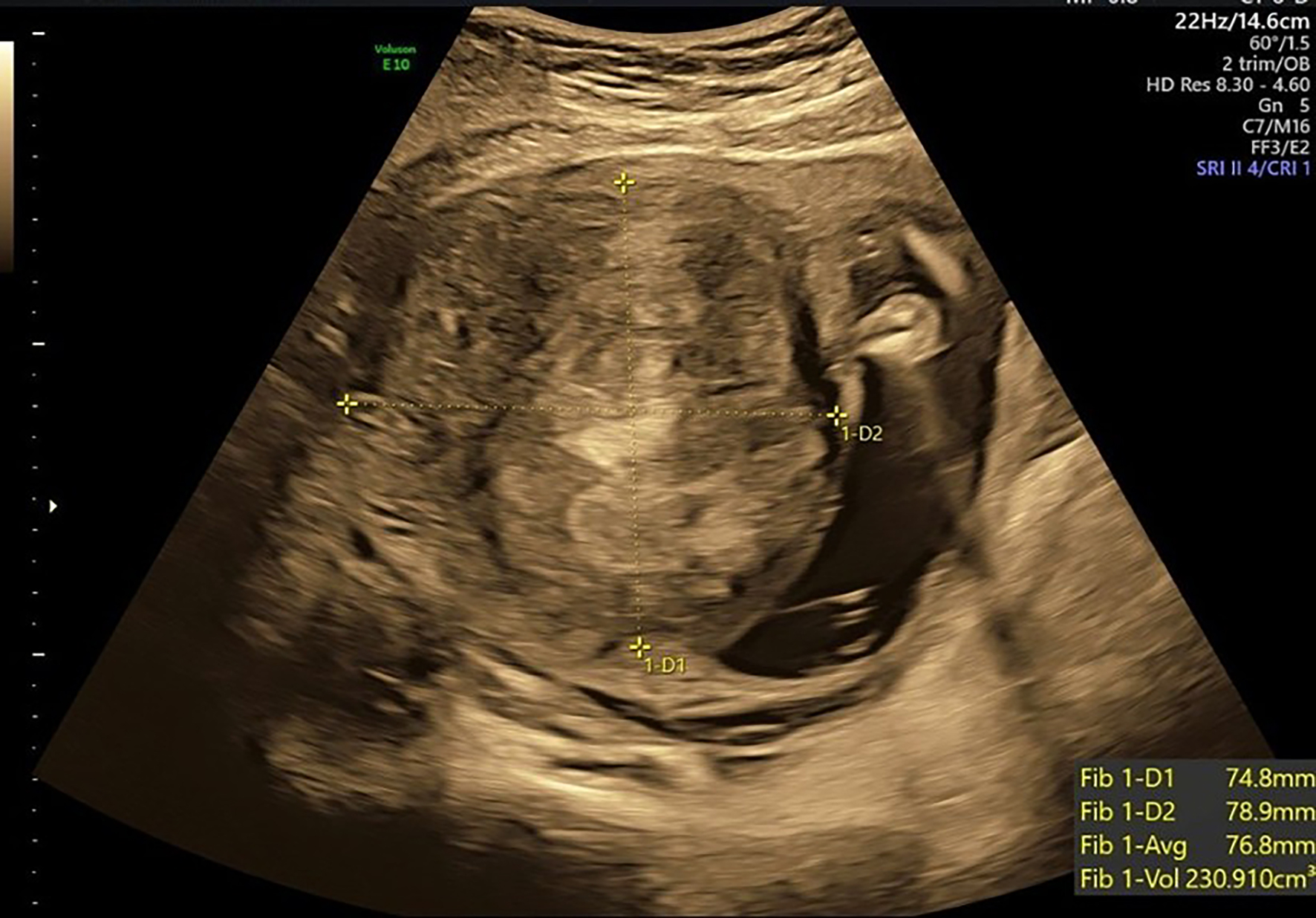
Cesarean myomectomy has traditionally been avoided because of hemorrhage risk, but removal at cesarean delivery (CD) may be required when a fibroid distorts the lower uterine segment or prevents secure hysterotomy closure. A 35-year-old primigravida with fetal growth restriction at 38 + 2 weeks’ gestation had a large anterior intramural fibroid in the lower uterine segment. Intraoperatively, the fibroid caused distortion and traction along the hysterotomy line, and prevented approximation of the myometrial edges, precluding secure closure without excision. A trans-endometrial myomectomy was performed. The lesion was enucleated using combined blunt and sharp dissection, and the myoma bed was repaired with targeted hemostatic suturing. Hemostasis was supported with continuous intravenous oxytocin infusion, followed by multilayer uterine closure. Estimated blood loss was 1,300 mL and one unit of packed red blood cells was transfused. Histopathology confirmed leiomyoma. At 6 weeks postpartum, the patient reported no secondary postpartum hemorrhage, fever, or pelvic pain, and transvaginal ultrasonography was normal. This case highlights that a trans-endometrial approach can be considered in selected situations, particularly when a large lower-segment intramural fibroid prevents secure uterine closure during CD.
Published
Issue
Section
License
Copyright (c) 2026 The authors

This work is licensed under a Creative Commons Attribution 4.0 International License.