

Spontaneous Onset of Postoperative Chilaiditi Syndrome: A Case Report and Its Potential Other Association?
DOI:
https://doi.org/10.14740/jmc5249Keywords:
Chilaiditi syndrome, Pregabalin, Postoperative periodsAbstract
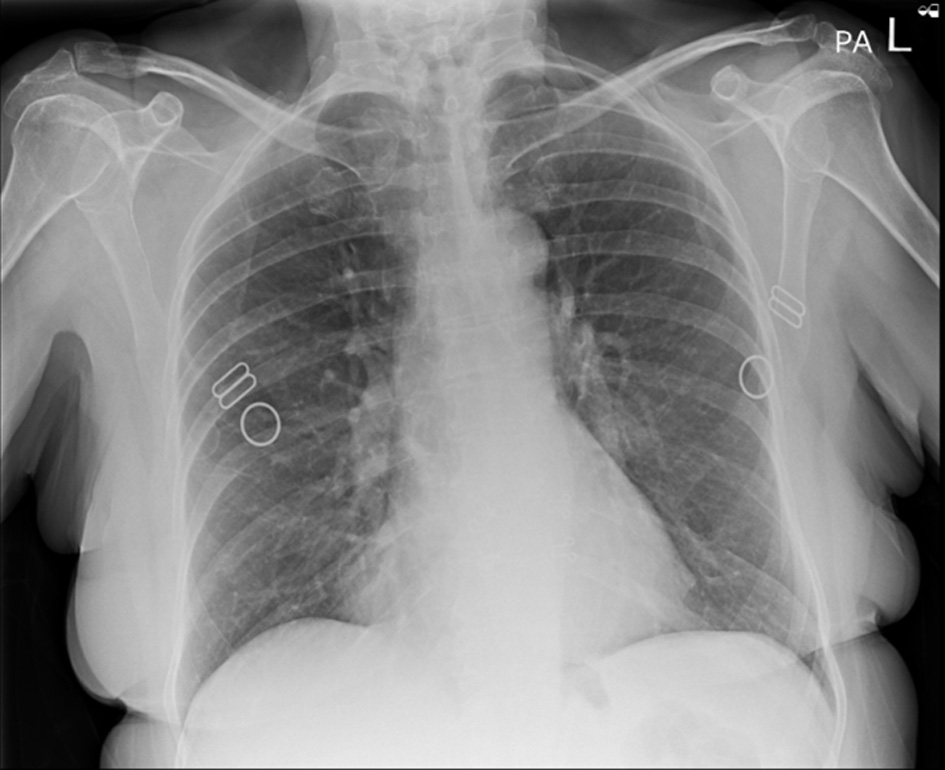
Chilaiditi syndrome is characterized by the interposition of the colon between the liver and diaphragm, leading to various abdominal symptoms. Current literature explores the suspected etiology of this condition including diaphragmatic conditions such as phrenic injury or deficient peritoneal attachments that lead to laxity of suspensory ligaments or enlarged subdiaphragmatic space; however, there is considerable ambiguity in the contributing factors to the development of Chilaiditi syndrome due to its rarity. Furthermore, an association between Chilaiditi syndrome and psychiatric conditions has been found in the literature but the evidence base is limited due to paucity of cases. We present a case involving an 85-year-old female patient who was initially admitted with hip pain, later found to have a neck of femur fracture, and underwent hemiarthroplasty. The patient’s past medical history was significant for depression, generalized anxiety disorder, pulmonary embolism, osteopenia, osteoarthritis, and a previous stroke. Postoperatively, the patient exhibited abdominal distention and absent bowel movements. A chest X-ray showed gas-filled loops in both hemidiaphragms, and computed tomography (CT) imaging identified the anterior interposition of bowel segments into the liver. The patient had been prescribed pregabalin as part of the treatment for her psychiatric conditions. Although no link has been established between the development of Chilaiditi syndrome and the use of pregabalin in current literature, it is worth noting that pregabalin’s side effect profile includes gastrointestinal symptoms such as abdominal distention and constipation, similar to those seen in Chilaiditi syndrome. Further research is needed to assess the potential association between pregabalin and Chilaiditi syndrome. As well as considering pregabalin’s possible contribution to the development of Chilaiditi syndrome, it is worth considering psychological conditions as a risk factor for development of Chilaiditi syndrome, independent of medications. There is an established link which already exists, but the reasons as to why this exists are yet to be cemented. Similarly, few cases of Chilaiditi syndrome developing in the perioperative setting have been reported, so this case is valuable in considering the role of anesthetics and postoperative analgesia in the development of this syndrome.
Published
Issue
Section
License
Copyright (c) 2026 The authors

This work is licensed under a Creative Commons Attribution 4.0 International License.