

Serial Custom 3D-Printed Nostril Retainers After Unilateral Cleft Lip Repair in Infants: A Comparative Report of Two Cases
DOI:
https://doi.org/10.14740/jmc5440Keywords:
Cleft lip and palate, Nostril retainer, Postoperative nasal retention, Three-dimensional printing, Digital fabricationAbstract
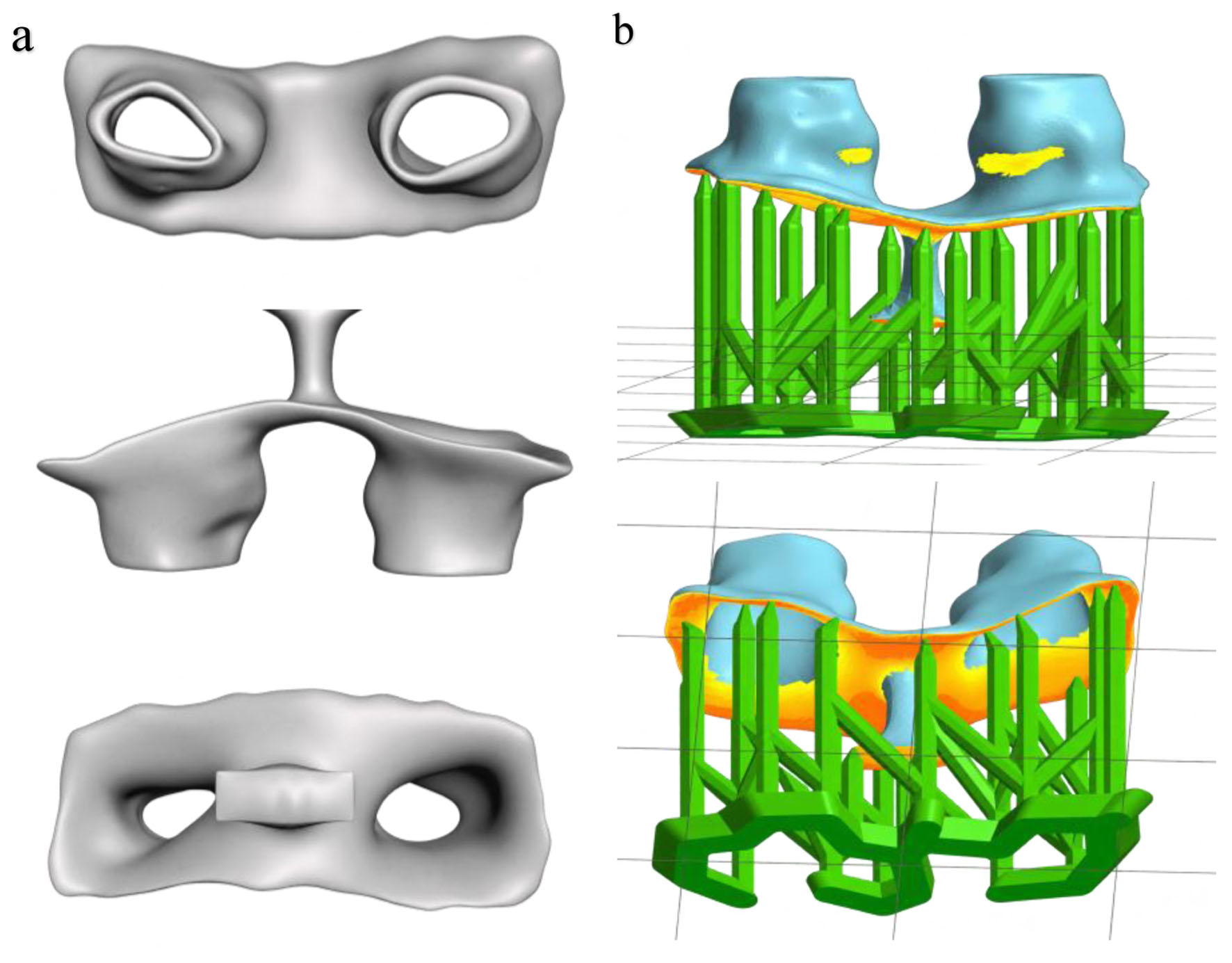
Postoperative nasal support may help maintain the contour established by cleft lip repair, but the contribution of an individual appliance protocol requires careful evaluation. This report describes sequential use of custom bilateral nostril retainers and compares the clinical course with that of an infant treated without retention. Two 3-month-old infants, one boy and one girl, with complete left unilateral cleft lip and palate underwent Fisher lip and nasal repair by the same surgeon. Neither had received presurgical molding. Random allocation determined postoperative management with or without retention. For the intervention infant, an immediate postoperative nasal impression was digitized to design six sequential bilateral retainers incorporating staged enlargement and later-stage mirroring of the non-cleft side. The appliances were fabricated using TFDH resin and a UNIZ UBEE printer. Retention began after suture removal at postoperative week 1 and continued for approximately 6 months. Clinical and photographic assessments were performed at 1 week, 3 months, and 6 months. At the later reviews, cleft-side alar collapse appeared more pronounced in the infant without retention. Initial columellar blanching in the intervention infant resolved within approximately 20–30 s; no local allergic reaction or appliance loosening was reported. Outcomes were assessed qualitatively, without standardized nasal measurements. This two-case report illustrates the clinical implementation of serial custom bilateral nostril retainers following unilateral cleft lip repair. The observed difference in postoperative alar contour provides a basis for further investigation but cannot establish a causal benefit of retention. Larger studies with objective measurements, standardized photography, and follow-up after appliance discontinuation are needed to evaluate effectiveness and longer-term safety.
Published
Issue
Section
License
Copyright (c) 2026 The authors

This work is licensed under a Creative Commons Attribution 4.0 International License.