


From a Cutaneous Nodule to Presumed Multisystem Sarcoidosis Amid Persistent Tuberculosis Uncertainty
DOI:
https://doi.org/10.14740/jmc5433Keywords:
Sarcoidosis, Tuberculosis, Cutaneous nodule, Granuloma, Hypercalcemia, Lymph node biopsyAbstract
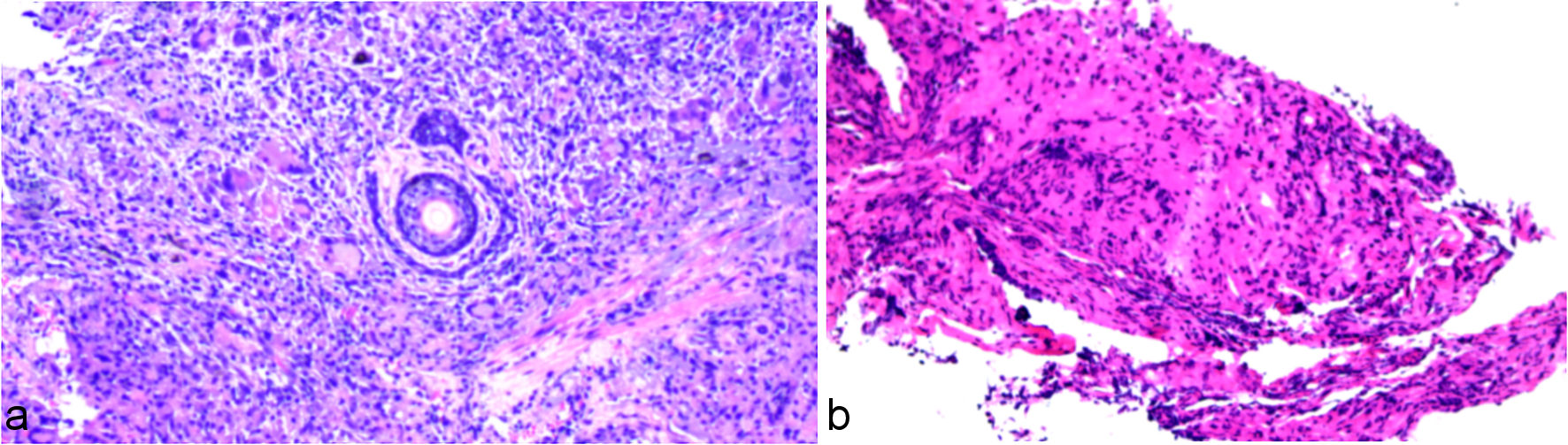
Sarcoidosis requires a compatible phenotype, granulomatous inflammation, and reasonable exclusion of alternative causes. That framework becomes difficult when tissue samples are discordant and tuberculosis remains plausible. A 60-year-old woman had a right-eyebrow cutaneous nodule removed in 2024. Histology showed chronic inflammation and granuloma formation with an intradermal nevus, but it was interpreted as chronic dermatitis and did not establish cutaneous sarcoidosis. In 2025, she was evaluated for respiratory symptoms and found to have diffuse pulmonary micronodules, extensive thoracic and extrathoracic lymphadenopathy, bilateral pleural effusions, hypercalcemia, kidney dysfunction, parotid abnormalities, dry eye, and multiple subcutaneous nodules. A bronchial biopsy showed severe acute and chronic inflammation with necrosis and was non-diagnostic. A later right supraclavicular-node biopsy showed multiple epithelioid granulomas with multinucleated giant cells and no definite necrosis. Five respiratory acid-fast smears, bronchoalveolar-lavage Xpert MTB/RIF and metagenomic sequencing, and tissue Mycobacterium tuberculosis polymerase-chain-reaction testing were negative. No respiratory or lymph-node specimen was submitted for mycobacterial culture, and special-stain results were unavailable. Multidisciplinary assessment supported a working diagnosis of presumed multisystem sarcoidosis. Prednisone was administered with preventive isoniazid and rifampicin because immunosuppression was considered necessary despite residual tuberculosis uncertainty. Symptoms, subcutaneous nodules, hypercalcemia, kidney dysfunction, and thoracic imaging improved during concurrent treatment, but residual supraclavicular lymph nodes were interpreted as possibly tuberculous. This case demonstrates how an initially nonspecific cutaneous granulomatous lesion may become an important longitudinal clue while also showing why negative molecular tests and improvement during overlapping therapies cannot fully exclude tuberculosis or confirm treatment attribution.
Published
Issue
Section
License
Copyright (c) 2026 The authors

This work is licensed under a Creative Commons Attribution 4.0 International License.