

Kill Four Birds With One Stone: Ablation of Atrial Fibrillation, Atrial Flutter, and Supraventricular Tachycardia Plus Left Atrial Appendage
DOI:
https://doi.org/10.14740/jmc5352Keywords:
Atrial fibrillation, Catheter ablation, Left atrial appendage occlusionAbstract
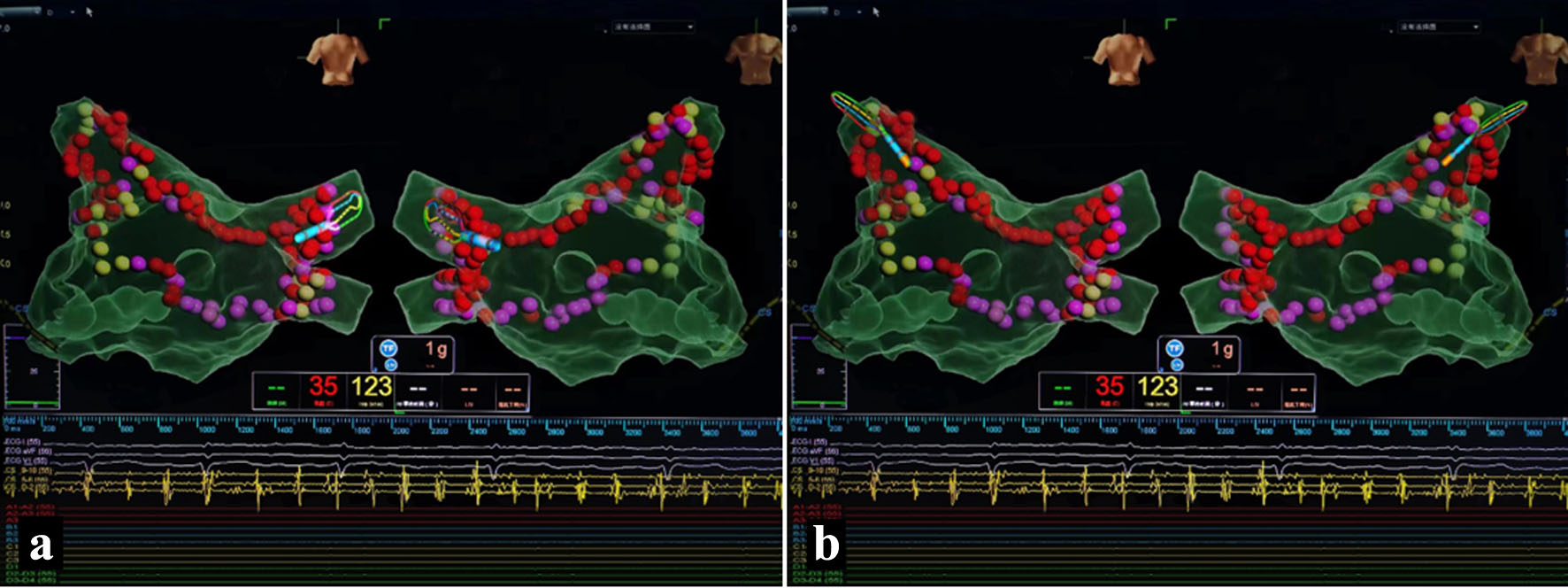
Atrial fibrillation (AF) is the most common arrhythmia in clinical practice. Catheter ablation, particularly pulmonary vein isolation, reduces AF recurrence by 50% and is more effective than antiarrhythmic drugs. To better understand this condition, we present a case of a patient with persistent AF admitted to our department. The planned treatment strategy was a one-stop procedure combining catheter radiofrequency ablation with left atrial appendage occlusion (LAAO). Although AF, atrial flutter (AFL), and supraventricular tachycardia (SVT) exhibit distinct electrocardiographic characteristics, they often share overlapping triggers and common electrophysiological substrates within the atrial myocardium. AF is frequently initiated by ectopic triggers originating from the pulmonary veins, typical AFL is maintained by a macro-reentrant circuit around the cavotricuspid isthmus, and atrioventricular nodal reentrant tachycardia (AVNRT), the most common form of SVT, involves dual conduction pathways within the atrioventricular node. Transcatheter intervention provides an integrated therapeutic strategy that enables sequential targeting of these anatomically and electrophysiologically distinct substrates within a single electroanatomical mapping procedure, thereby offering a comprehensive curative approach while avoiding redundant interventions. However, the patient developed AFL and dual-pathway SVT during the procedure. Despite these challenges, radiofrequency ablation was performed successfully, followed by satisfactory LAAO.
Published
Issue
Section
License
Copyright (c) 2026 The authors

This work is licensed under a Creative Commons Attribution 4.0 International License.