

Supportive Management of Severe Acetaminophen and Ibuprofen Overdose Twenty-Four Hours After Ingestion in Limited Resources Settings
DOI:
https://doi.org/10.14740/jmc5330Keywords:
Toxicology, Overdose, Acetaminophen, Ibuprofen, Supportive treatment, Intensive care unitAbstract
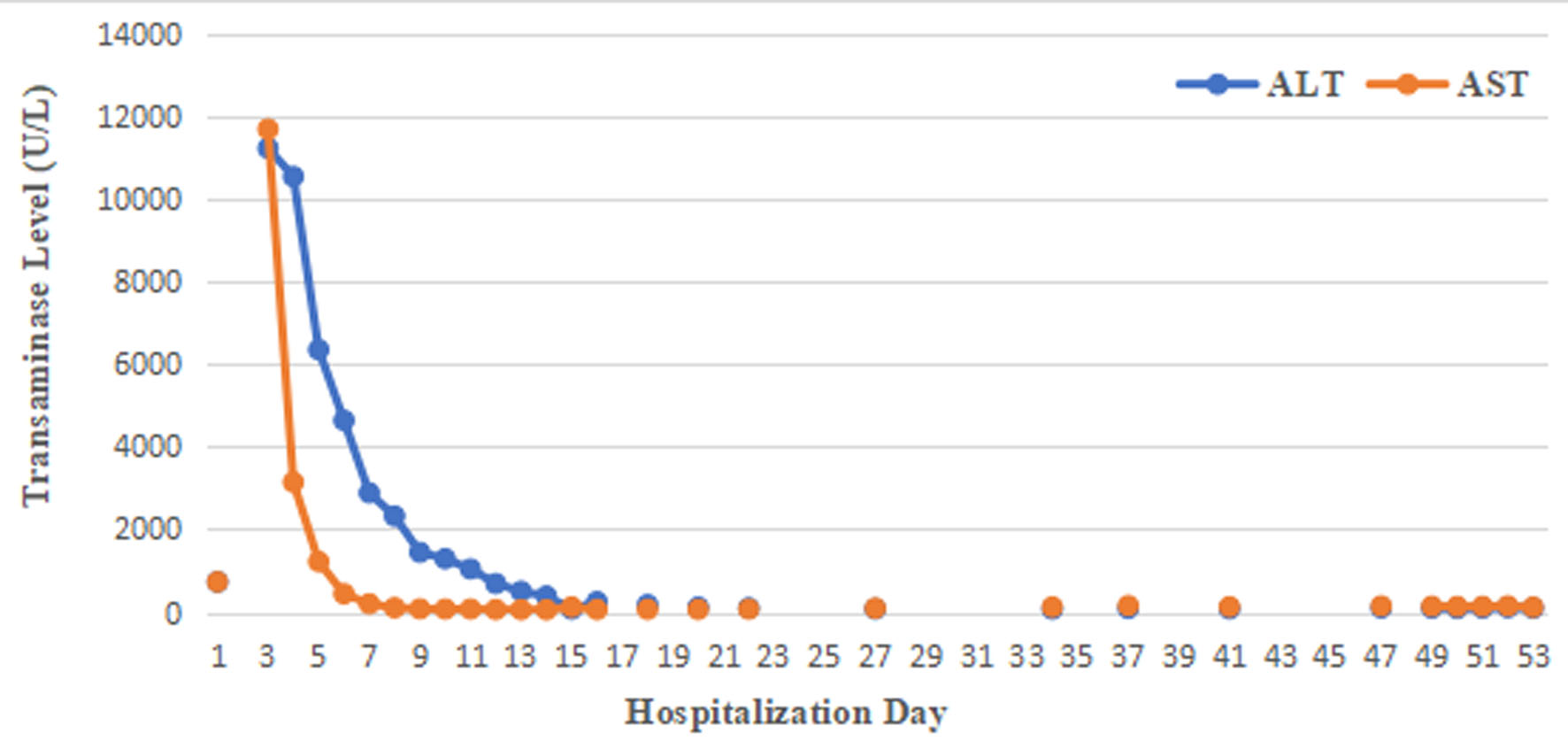
Acetaminophen and ibuprofen are among the most used analgesic–antipyretic agents worldwide, yet their combined overdose can become life-threatening, particularly when medical care is delayed. We report the case of a 29-year-old woman who presented to the emergency department more than 48 h after ingesting a massive dual overdose of acetaminophen (25 g) and ibuprofen (20 g). At admission, she complained of nausea, epigastric pain, tinnitus, and mild jaundice. Laboratory findings indicated severe acute liver injury, with markedly elevated transaminases, hyperbilirubinemia, significant coagulopathy, and metabolic acidosis, consistent with advanced acetaminophen toxicity. Due to the delayed presentation, the Rumack–Matthew nomogram was no longer reliable for risk assessment. Although antidotal therapy was indicated, neither N-acetylcysteine nor alternative antidotes were available, and options such as hemodialysis or liver transplantation were inaccessible. Management therefore relied entirely on intensive supportive care, including correction of metabolic disturbances, coagulopathy, and evolving organ dysfunction, alongside close clinical and biochemical monitoring. Despite the severity of hepatic failure and metabolic derangement at presentation, the patient showed gradual improvement over a prolonged hospital course. After 53 days of supportive therapy, liver function recovered sufficiently, and transplantation was not required according to King’s College criteria. This case illustrates that even in severe, late-presenting combined analgesic overdose complicated by acute liver failure and metabolic acidosis, a favorable outcome may still be achieved with comprehensive supportive care alone when advanced therapies are unavailable. It underscores the pivotal role of meticulous supportive management in toxicological emergencies.
Published
Issue
Section
License
Copyright (c) 2026 The authors

This work is licensed under a Creative Commons Attribution 4.0 International License.