

First-Attempt Video Laryngoscopic Intubation in an Adult With Down Syndrome and Severe Tracheal Compression From a Giant Retrosternal Goiter
DOI:
https://doi.org/10.14740/jmc5416Keywords:
Down syndrome, Retrosternal goiter, Difficult airway, Median sternotomy, Video laryngoscopyAbstract
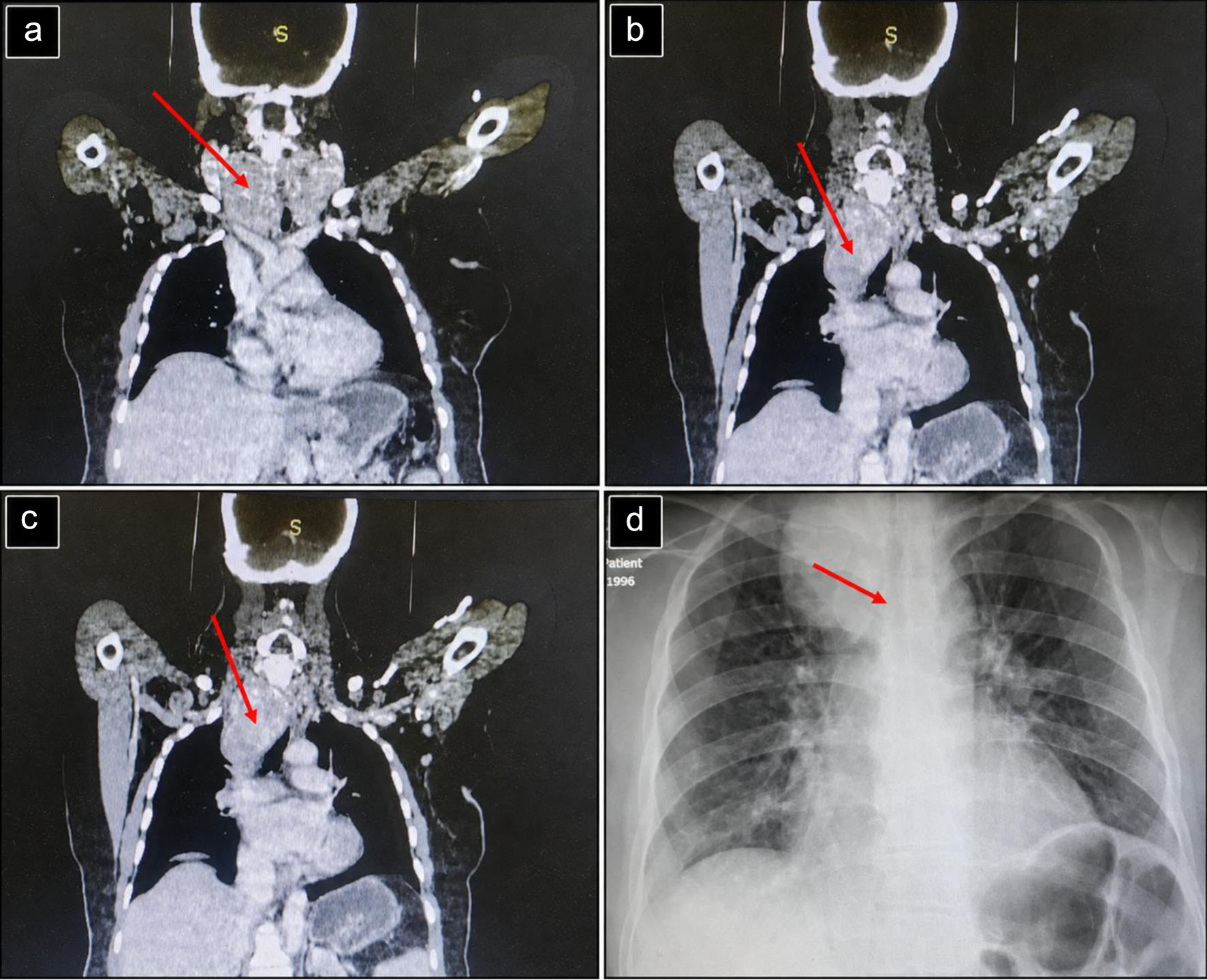
Giant retrosternal goiters can cause severe tracheal compression and pose substantial challenges for airway management and surgical resection. These challenges may be further increased in adults with Down syndrome (DS), in whom craniofacial abnormalities, macroglossia, obesity, limited neck mobility, and potential cervical spine abnormalities may contribute to difficult airway management. We report the perioperative management of a 29-year-old woman with DS and a giant multinodular retrosternal goiter causing marked rightward tracheal deviation and critical tracheal narrowing to approximately 7 mm, requiring combined cervical resection and median sternotomy. Preoperative assessment identified multiple predictors of difficult mask ventilation and tracheal intubation, while severe intellectual disability made awake airway management impractical. A multidisciplinary airway and surgical strategy were therefore developed, incorporating optimized positioning and preoxygenation, video laryngoscopy as the planned primary intubation technique, flexible bronchoscopy for confirmation and rescue, and predefined escalation to surgical airway and extracorporeal support if conventional airway management failed. Following controlled intravenous induction, tracheal intubation was achieved on the first attempt with a 6.0-mm endotracheal tube without hypoxemia or hemodynamic instability. Total thyroidectomy and median sternotomy were completed uneventfully. After an adequate cuff-leak test and confirmation of full neuromuscular recovery, the patient was extubated in the operating room and received postoperative bilevel positive airway pressure and overnight intensive care monitoring. No respiratory or other major postoperative complications occurred, and she was discharged home on postoperative day 5. This case illustrates the individualized integration of established difficult-airway principles when DS coexists with severe mechanical tracheal compression from a giant retrosternal goiter. Successful management depended not on a single airway technique, but on careful preoperative anatomical and functional assessment, selection of a feasible primary approach, optimized oxygenation, and an immediately executable multidisciplinary rescue pathway.
Published
Issue
Section
License
Copyright (c) 2026 The authors

This work is licensed under a Creative Commons Attribution 4.0 International License.