

Postoperative Adjuvant Treatment Decision for Early Epstein–Barr Virus-Associated Gastric Cancer
DOI:
https://doi.org/10.14740/jmc5353Keywords:
Epstein–Barr virus-associated gastric cancer, Lymphoepithelioma-like carcinoma, EBER in situ hybridization, Adjuvant therapyAbstract
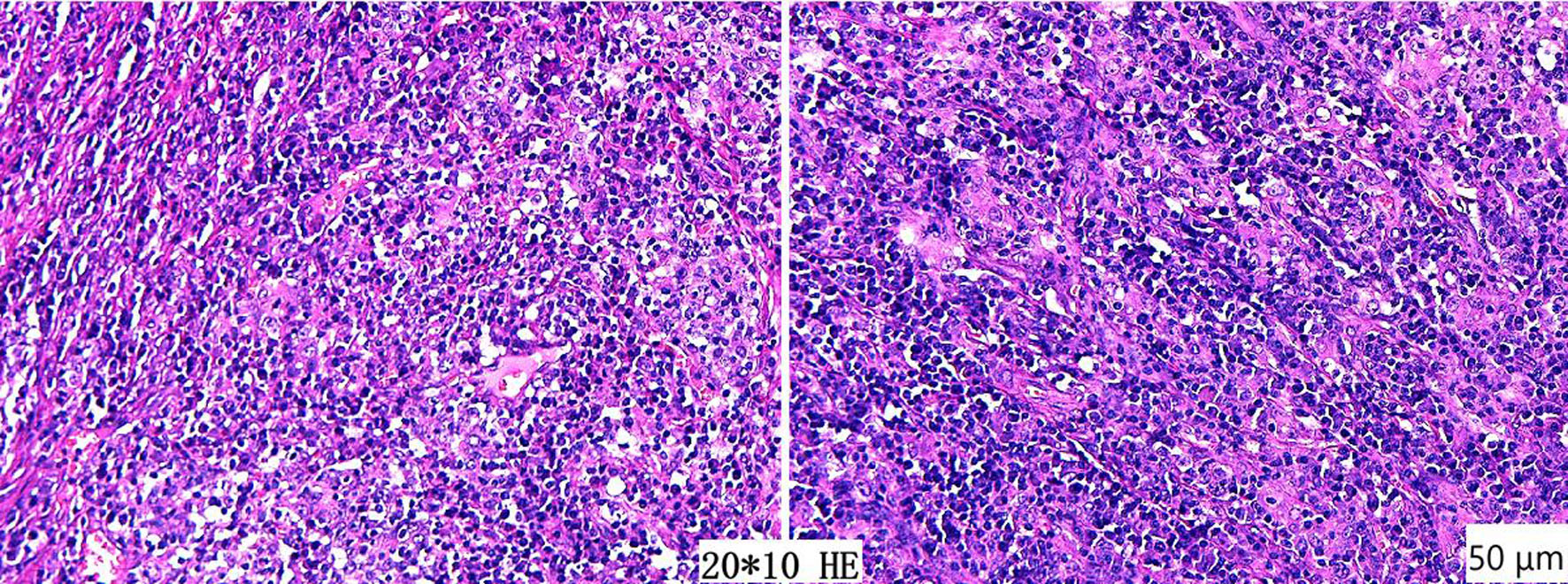
Epstein–Barr virus-associated gastric cancer (EBVaGC) is a relatively rare clinical subtype. Despite its generally favorable prognosis, preoperative diagnosis remains challenging, and no established consensus exists regarding postoperative adjuvant treatment strategies for early-stage patients with high-risk pathological factors. This study reports a female case of early-stage EBVaGC of the lymphoepithelioma-like carcinoma subtype complicated with perineural invasion (a high-risk factor), and systematically explores the etiology, pathological features, key diagnostic points, individualized adjuvant therapy options, and prognosis of EBVaGC. The aim is to improve clinicians’ understanding of this gastric cancer subtype, reduce its misdiagnosis rate, and accelerate the development of standardized diagnostic and treatment pathways. A case of a 60-year-old female patient admitted with “abdominal pain and distension for more than 1 year” was reported, and postoperative pathology confirmed EBVaGC. The clinical manifestations and diagnostic and treatment process were analyzed in combination with a review of relevant literature from recent years. Preoperative gastroscopic biopsy revealed poorly differentiated adenocarcinoma of the gastric mucosa. The patient underwent laparoscopic radical subtotal gastrectomy with lymph node dissection. Postoperative pathology confirmed EBVaGC. After symptomatic treatment, the patient improved and was discharged from the hospital. One month after surgery, no disease progression was observed and the SOX regimen was administered. The patient tolerated the treatment well, and the next cycle of chemotherapy is currently planned. EBVaGC lacks specific clinical manifestations, and laboratory findings may be within normal ranges at the time of onset. Reliance solely on conventional gastroscopy and histopathological biopsy can easily lead to misdiagnosis and inappropriate treatment. Epstein–Barr virus–encoded RNA in situ hybridization is the core diagnostic modality for definitive diagnosis. This subtype generally has a favorable prognosis. However, for patients with high-risk pathological factors such as perineural invasion and tumor invasion into the muscularis propria, standardized postoperative individualized adjuvant therapy should be administered based on tumor stage and molecular profiles.
Published
Issue
Section
License
Copyright (c) 2026 The authors

This work is licensed under a Creative Commons Attribution 4.0 International License.