

Bivalirudin for Recurrent Pediatric Venous Thromboembolism: A Case Report of Heparin Resistance and Thrombectomy
DOI:
https://doi.org/10.14740/jmc5306Keywords:
Pediatric venous thromboembolism, Deep vein thrombosis, Pulmonary embolism, Heparin resistance, Bivalirudin, Mechanical thrombectomy, Direct thrombin inhibitor, Anticoagulation failureAbstract
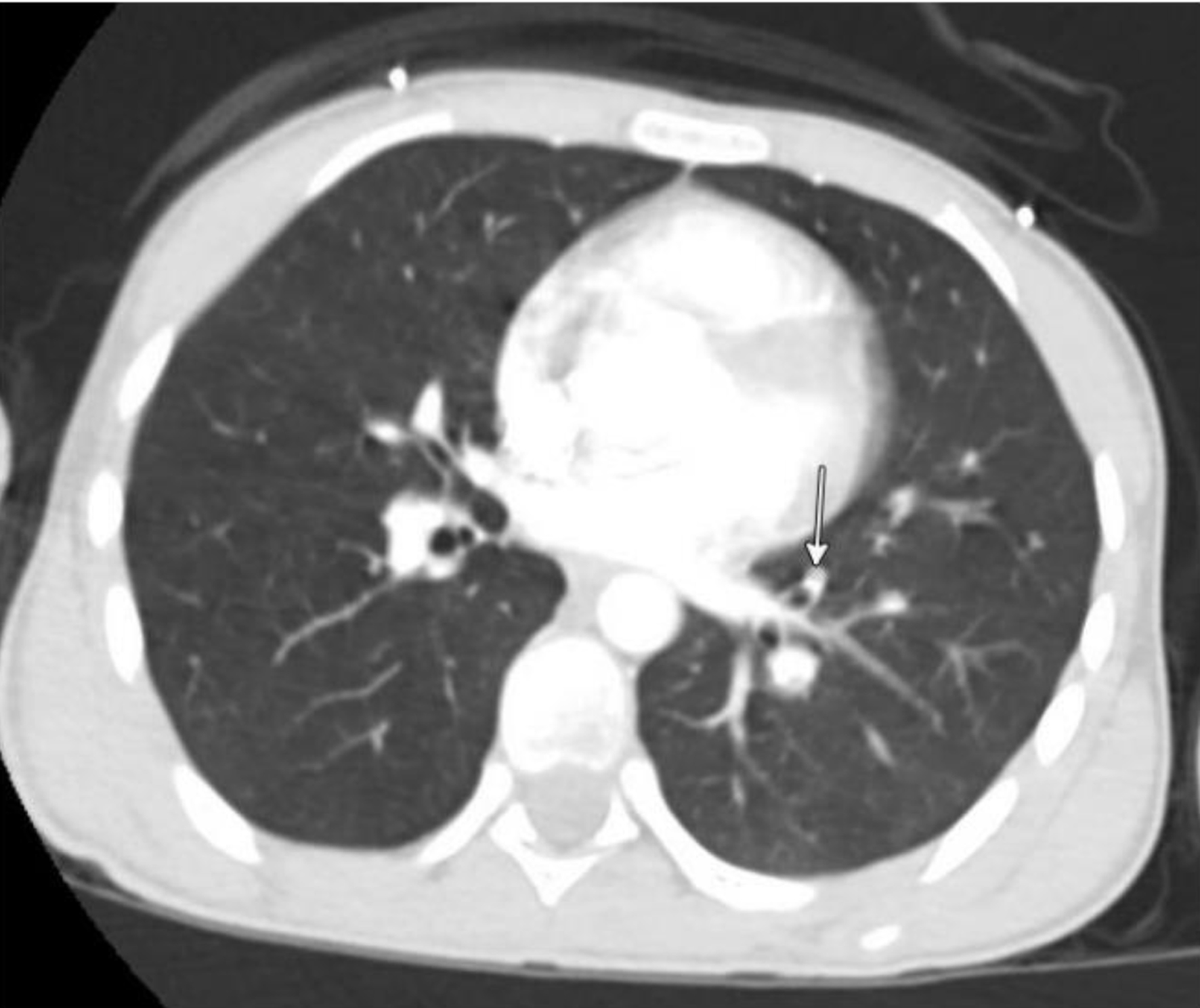
Venous thromboembolism (VTE) is rare in pediatric patients, and spontaneous thrombosis in otherwise healthy children presents unique diagnostic and therapeutic challenges. We describe a 15-year-old male who presented with abrupt right leg pain and swelling. Imaging revealed extensive deep venous thrombosis (DVT) involving the right iliac, femoral, and popliteal systems, along with bilateral pulmonary emboli (PEs). He was started on an unfractionated heparin (UFH) infusion but therapeutic anticoagulation was never achieved despite escalating doses, consistent with heparin resistance. During hospitalization, the patient developed worsening clot burden and limb swelling. His hospital course was complicated by worsening clot burden requiring two mechanical thrombectomies. Given failure of UFH, anticoagulation was transitioned to bivalirudin, which stabilized his clinical course and improved perfusion and clot burden on follow-up imaging. He was discharged on enoxaparin, though repeat evaluation at 3 months showed recurrent thrombosis and persistent pulmonary emboli. He was subsequently transitioned to oral dabigatran, after which follow-up ultrasound demonstrated improvement. This case highlights the importance of recognizing heparin resistance in pediatric patients with persistently subtherapeutic anticoagulation, considering mechanical thrombectomy for extensive or limb-threatening thrombosis, and using direct thrombin inhibitors such as bivalirudin when UFH fails. Although experience outside extracorporeal support is limited, bivalirudin may be a safe and effective alternative for pediatric VTE management. This case demonstrates successful use of bivalirudin after heparin resistance and thrombectomy in a pediatric patient without cardiac disease or extracorporeal support, highlighting a novel application of direct thrombin inhibition and the need for further studies to define standardized pediatric dosing, monitoring, and safety outcomes.
Published
Issue
Section
License
Copyright (c) 2026 The authors

This work is licensed under a Creative Commons Attribution 4.0 International License.