

A Case Series of Late Myocardial Infarction Following Self-Expanding Transcatheter Aortic Valve Replacement
DOI:
https://doi.org/10.14740/jmc5303Keywords:
TAVR, Acute myocardial infarction, Aortic stenosis, Transcatheter, Aspiration thrombectomyAbstract
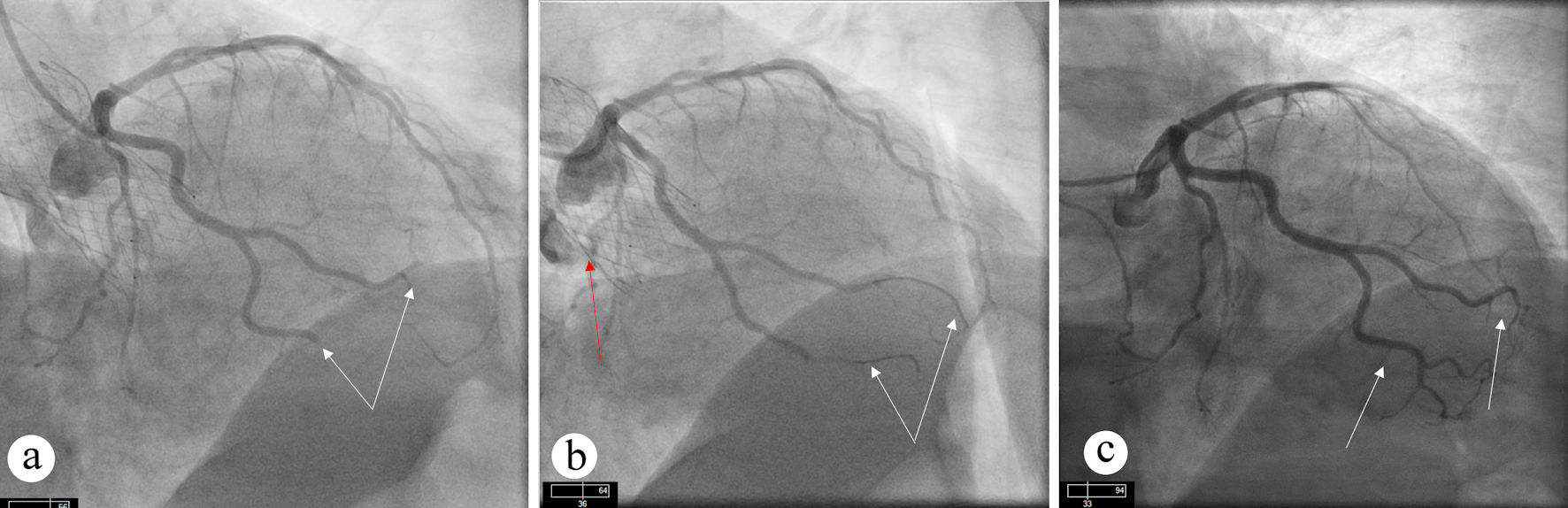
Embolic stroke is a recognized complication of transcatheter aortic valve replacement (TAVR); however, coronary embolism is rarely reported, particularly when occurring late after valve implantation. We described three patients presenting with ST-segment elevation myocardial infarction (STEMI) between 10 and 50 months after self-expanding TAVR. All patients had angiographically normal coronary arteries prior to TAVR, severe native aortic valve calcification, and well-controlled cardiovascular risk factors, and were maintained on guideline-directed single antiplatelet therapy. At presentation, coronary angiography demonstrated abrupt 100% coronary occlusion without angiographic evidence of underlying atherosclerotic disease. Aspiration thrombectomy was required in all three cases. These cases illustrate a rare presentation of late myocardial infarction following self-expanding TAVR with angiographic features possibly suggestive of a non-atherosclerotic mechanism. Although a definitive embolic source cannot be established, delayed embolization of calcific or thrombotic material may represent a plausible explanation. These observations are hypothesis-generating and underscore the need for clinical vigilance and further mechanistic and imaging-based studies to better characterize potential late thromboembolic pathways after TAVR.
Published
Issue
Section
License
Copyright (c) 2026 The authors

This work is licensed under a Creative Commons Attribution 4.0 International License.