

Successful Treatment of Overlapping Myelin Oligodendrocyte Glycoprotein Antibody-Associated Disease and Glial Fibrillary Acidic Protein Astrocytopathy With Plasma Exchange
DOI:
https://doi.org/10.14740/jmc5290Keywords:
MOGAD, GFAP astrocytopathy, Overlapping syndrome, Plasma exchangeAbstract
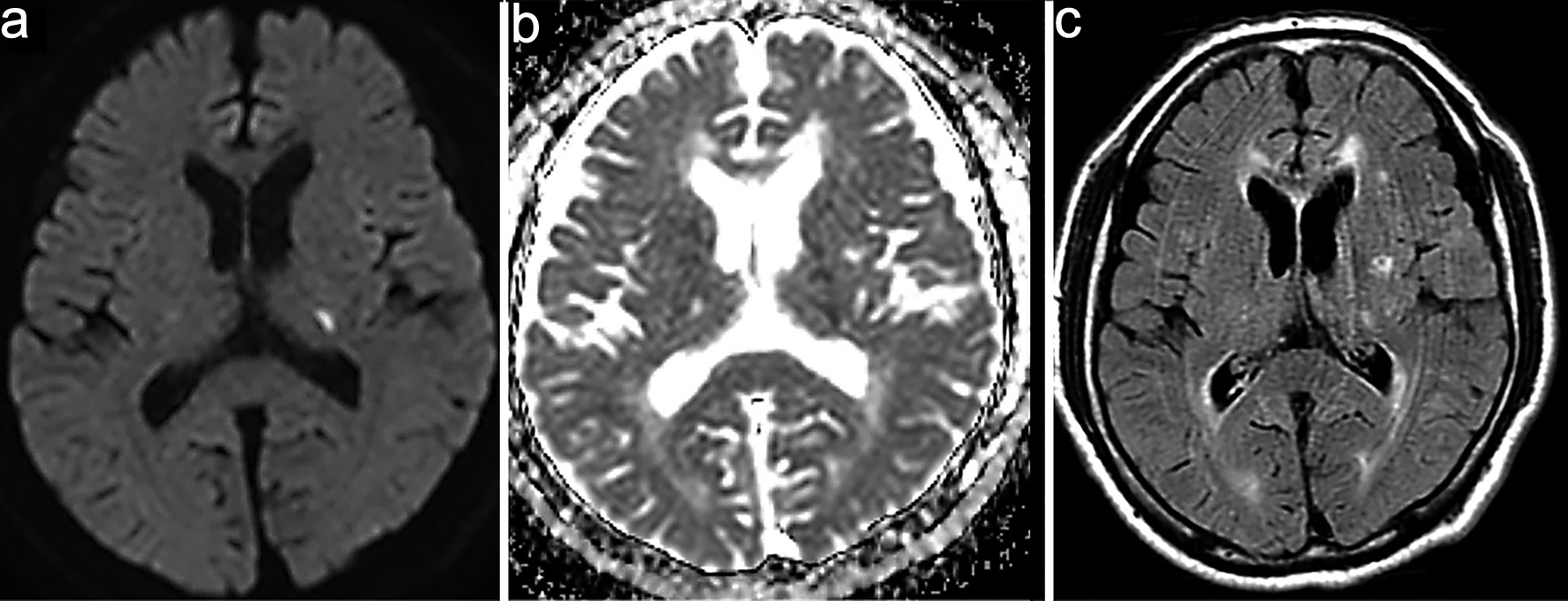
Myelin oligodendrocyte glycoprotein (MOG) antibody-associated disease (MOGAD) and glial fibrillary acidic protein (GFAP) astrocytopathy are distinct autoimmune inflammatory disorders of the central nervous system (CNS) that occasionally overlap. A 69-year-old man presented with acute gait disturbance, followed by progressive impairment of consciousness, myoclonus, cerebellar ataxia, and hyponatremia. Initial brain magnetic resonance imaging (MRI) revealed a high-intensity lesion in the left thalamus on diffusion-weighted imaging (DWI) and multiple white matter lesions on fluid-attenuated inversion recovery (FLAIR) imaging. While serum anti-MOG antibodies were positive, the clinical features, including progressive impairment of consciousness and hyponatremia, were atypical for MOGAD alone, leading to the identification of anti-GFAPα antibodies in the cerebrospinal fluid (CSF). High-dose corticosteroid therapy (three courses of intravenous methylprednisolone pulse) resulted in only partial clinical improvement. However, subsequent simple plasma exchange (PE) with fresh frozen plasma (FFP) led to marked neurological recovery. The mechanism of recovery is thought to involve the removal of both pathogenic antibodies and pro-inflammatory mediators. By day 82 of hospitalization, the patient was able to ambulate independently. This case suggests that in overlapping autoimmune syndromes, early escalation to PE should be considered when conventional steroid therapy is insufficient.
Published
Issue
Section
License
Copyright (c) 2026 The authors

This work is licensed under a Creative Commons Attribution 4.0 International License.