

Catastrophic Outcome of Pregnancy Complicated With Tricuspid Valve Nonbacterial Thrombotic Endocarditis
DOI:
https://doi.org/10.14740/jmc5270Keywords:
Endocarditis, Thrombus, Tricuspid valveAbstract
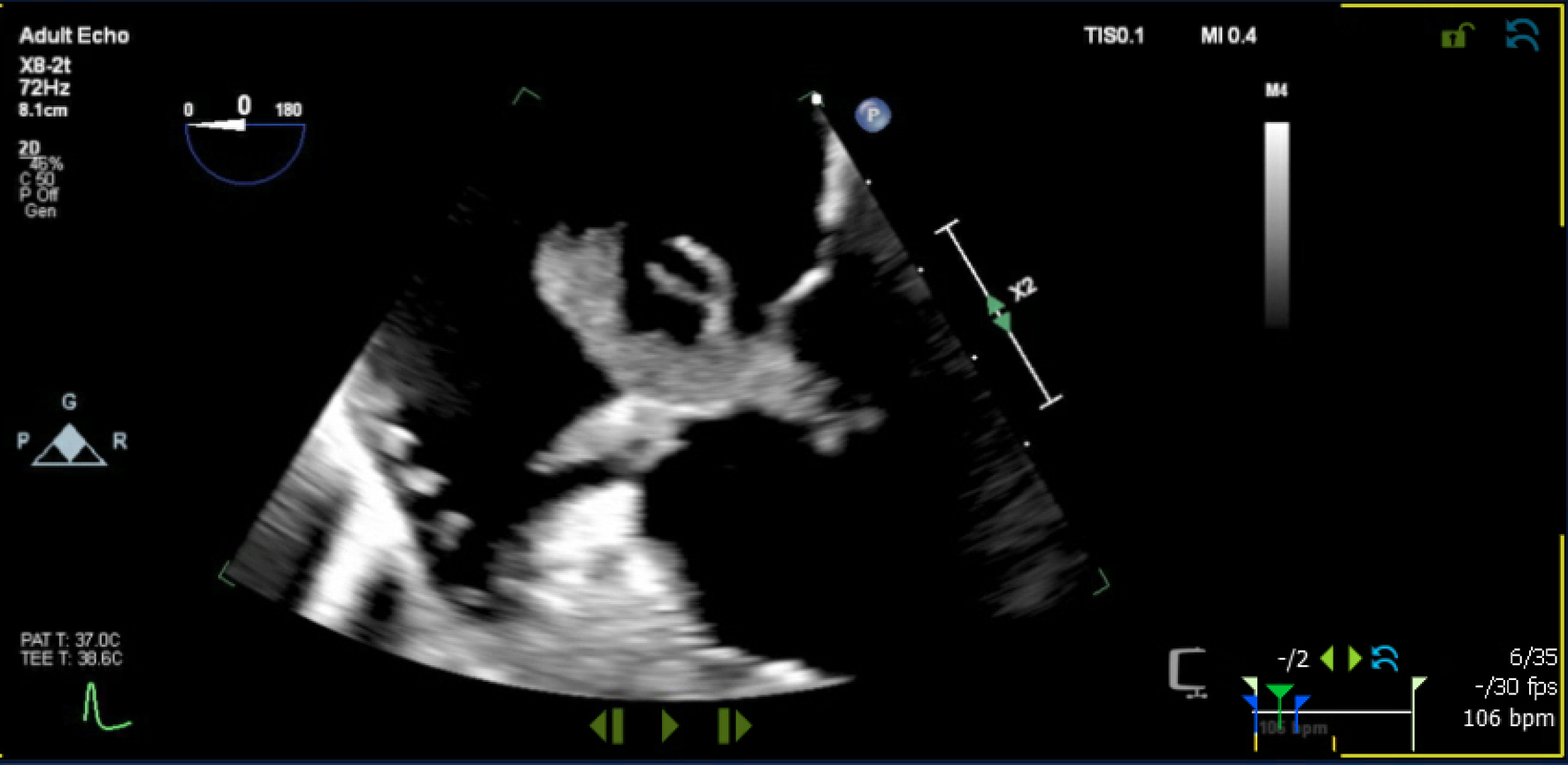
Nonbacterial thrombotic endocarditis (NBTE) is a rare condition characterized by sterile fibrin-platelet vegetations on cardiac valves, typically associated with hypercoagulable states. Isolated tricuspid valve (TV) involvement during pregnancy is exceedingly rare, with no previously reported cases of fatal maternal and fetal outcome in the published literature. We report a 31-year-old woman (gravida 3) with a complex medical history including human immunodeficiency virus infection, chronic kidney disease, recurrent venous thromboembolism, and thrombocytopenia, who presented at 9 weeks of gestation with a large, mobile TV mass. Initial workup revealed elevated IgM antiphospholipid antibodies, a positive dilute Russell’s viper venom time, negative blood cultures, and a concurrent pulmonary embolism. A transthoracic echocardiogram identified a 2.2 × 1.6 cm irregular hyperechoic mass on the anterior tricuspid leaflet. Despite therapeutic anticoagulation with enoxaparin and aspirin, the mass enlarged to 3.5 × 2.7 cm by 13 weeks of gestation. Following multidisciplinary discussion and shared decision-making with the patient, AngioVac-assisted percutaneous aspiration thrombectomy was performed at 14 weeks and 4 days of gestation. Histopathology confirmed sterile fibrin thrombi with histiocytic infiltration consistent with NBTE. Fetal demise was identified on postoperative day 2. Subsequently, the patient developed encephalopathy and massive hemoptysis, raising concern for catastrophic antiphospholipid syndrome. Despite aggressive resuscitation including venovenous extracorporeal membrane oxygenation, continuous renal replacement therapy, and maximum vasopressor support, the patient died. This is the first reported case of fatal maternal and fetal outcomes associated with TV NBTE during pregnancy. The case underscores the challenges of evaluation and management of cardiac masses in immunocompromised pregnant patients, the limitations of APS classification criteria in the peripartum setting, and the importance of a multidisciplinary cardio-obstetric approach.
Published
Issue
Section
License
Copyright (c) 2026 The authors

This work is licensed under a Creative Commons Attribution 4.0 International License.