Intraoperative Neuromuscular Monitoring: Electromyography Monitor Versus Peripheral Nerve Stimulator. Does the Face Lie?
DOI:
https://doi.org/10.14740/jmc5267Keywords:
Neuromuscular block, Neuromuscular blocking agents, Train-of-four, Peripheral nerve stimulator, Quantitative neuromuscular monitorAbstract
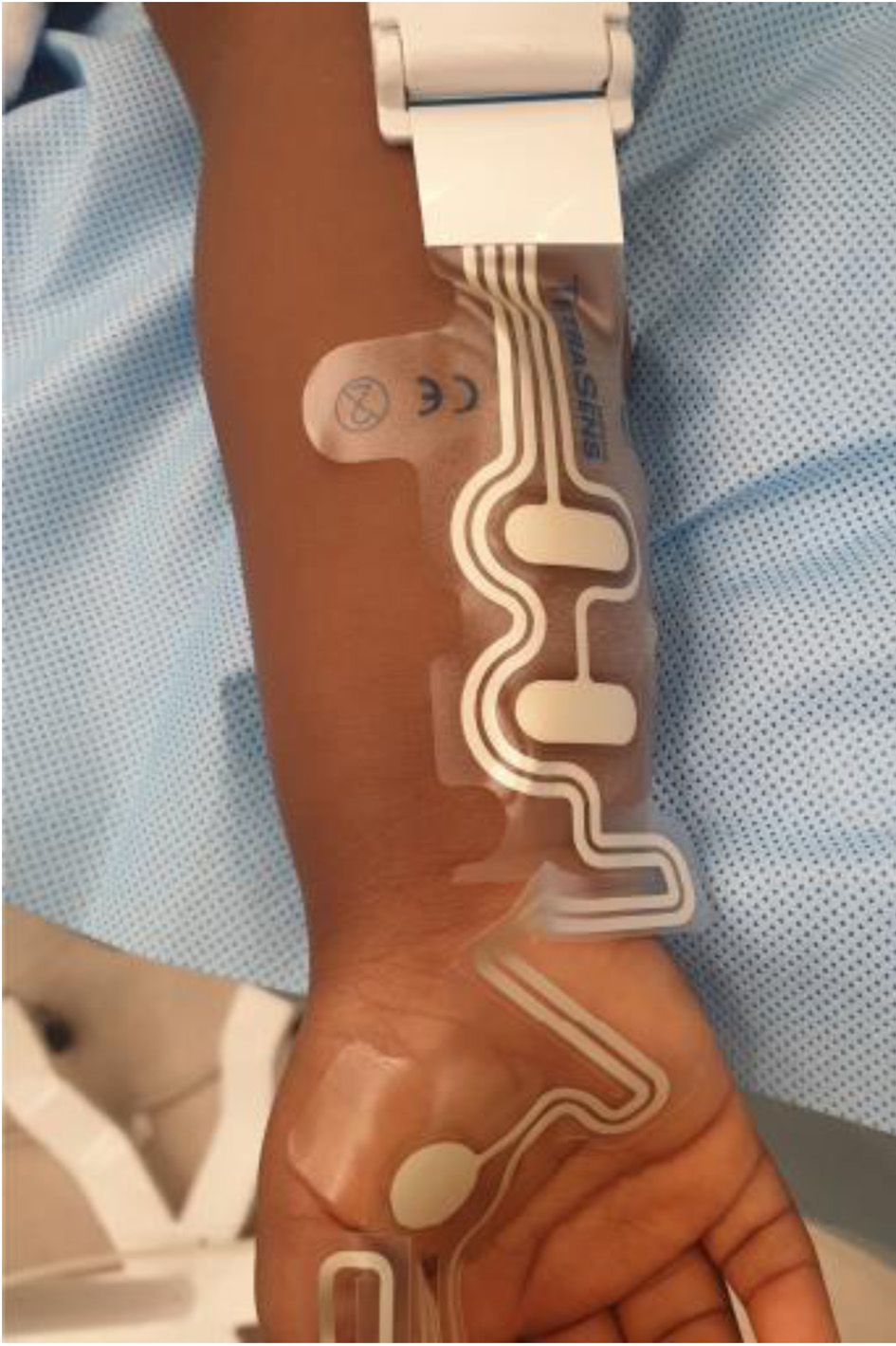
During intraoperative anesthetic care, the administration of neuromuscular blocking agents (NMBAs) may be required to facilitate endotracheal intubation or provide ongoing skeletal muscle relaxation during surgical procedures. Assessments of the train-of-four (TOF) responses may be used to judge the adequacy of block and the need for redosing of NMBAs. The TOF evaluation can be performed qualitatively, by manual palpation or visual evaluation of the twitch response, or quantitatively, by using devices that measure the amplitude of the twitches. As an operator-dependent technique, qualitative techniques are prone to error, particularly in pediatric patients, and are not sensitive enough to detect a clinically significant TOF fade, which may increase the risk of postoperative residual neuromuscular block. We present a pediatric case of intraoperative neuromuscular monitoring that demonstrates discrepancies between an electromyography (EMG)-based quantitative monitor and qualitative TOF assessments using a peripheral nerve stimulator. The different sensitivities between respiratory and peripheral muscles to NMBAs, as well as the difference between qualitative and quantitative TOF monitoring are discussed.
Published
Issue
Section
License
Copyright (c) 2026 The authors

This work is licensed under a Creative Commons Attribution 4.0 International License.