| Journal of Medical Cases, ISSN 1923-4155 print, 1923-4163 online, Open Access |
| Article copyright, the authors; Journal compilation copyright, J Med Cases and Elmer Press Inc |
| Journal website https://jmc.elmerpub.com |
Case Report
Volume 18, 2027, e5365

Successful Eight-Week Delayed-Interval Delivery in Dichorionic Diamniotic Twin Pregnancy: Experience From Multidisciplinary Team at a Tertiary Obstetric Hospital
Ngoc Hai Trana, d  , Huu Trung Nguyenb, d, Thanh Hai Phama , Anh Dinh Bao Vuonga , Yen Oanh Ngoc Nguyenb , Lan Huong Dang Buic, Phuc Nhon Nguyena, b, d, e
aTu Du Clinical Research Unit (TD-CRU), Tu Du Hospital, Ho Chi Minh City, Vietnam
bDepartment of Pregnancy Pathology, Tu Du Hospital, Ho Chi Minh City, Vietnam
cRoom of Human Resource, Tu Du Hospital, Ho Chi Minh City, Vietnam
dThese authors contributed equally to this work and share the first authorship
eCorresponding Author: Phuc Nhon Nguyen, Department of Pregnancy Pathology, Tu Du Hospital, Ho Chi Minh City 71012, Vietnam
Manuscript submitted July 17, 2026, accepted September 18, 2026, published online November 20, 2026
Short title: Delayed-Interval Delivery in Twin Pregnancy
doi: https://doi.org/10.14740/jmc5365
| Abstract | ▴Top |
Delayed-interval delivery (DID) in twin pregnancy is a rare occurrence in obstetrical practice. We report a case of retention of the second heathy twin after delivery of the first one and underscore the challenges in an uncommon management. A 21-year-old Vietnamese woman (G1P0) with twin pregnancy was admitted to Tu Du Hospital due to abdominal pain and vaginal bleeding. This twin pregnancy had dichorionic and diamniotic characteristics. The first twin was delivered at 24 weeks and 6 days of gestation. Antibiotic therapy was administered, whereas tocolysis and cerclage were not used. Expectant management was continued until spontaneous labor occurred at 32 weeks and 6 days. The vaginal birth occurred without adverse events. The second fetus weighed 1,600 g with good outcomes. Both mother and fetus were uneventfully discharged. In conclusion, an 8-week prolongation, spontaneous delivery at 32 weeks and 6 days, and favorable maternal and neonatal conditions at discharge under multidisciplinary expectant management were documented. A continuation of pregnancy after delivery of the first twin remains a critical decision; however, this management contributes to improve the neonatal outcomes of the second fetus in the such rare pregnancies at the tertiary-care setting. Further studies are required to strengthen the findings.
Keywords: Asynchronous delivery; Dichorionic diamniotic; Intrauterine fetal death; Preterm birth; Twin pregnancy
| Introduction | ▴Top |
Today, multifetal pregnancy is increasing due to advanced assisted reproductive technology [1]. Twin pregnancy is associated with many severe complications [2]. The vanishing twin syndrome results in a higher risk of miscarriage and preterm birth (PB) [3, 4]. Delayed-interval delivery (DID) time of the second fetus after abortion of the first fetus or asynchronous delivery has been reported [5–7]. This management strategy is conservative treatment. This approach is an alternative to pregnancy termination and aims to achieve a minimal viable gestation for the delayed fetus [8].
Recently, Gadeer et al, reported four cases of dichorionic diamniotic twins and one trichorionic-triamniotic triplet. The patients were hospitalized between 17 weeks and 3 days and 21 weeks and 5 days of gestation. An interval delivery range was achieved between 1 and 36 days. Four out of six multiples did not survive in DID. The two surviving newborns were born at 23 weeks and 23 weeks and 2 days, stayed in the neonatal intensive care unit (NICU) for 111 and 131 days, and discharged with a weight of 3,594 and 2,743 g, respectively. All DID cases were delivered spontaneously except two patients that required immediate intervention due to maternal sepsis [9]. In general, the overall survival rate has reached 42.8% after a mean interval between deliveries of 47 days [8].
However, evidence comparing the maternal and neonatal risks of intentional delayed delivery with those of termination remains limited. Consequently, there is no consensus on the best approach relating to using continuation of pregnancy, antibiotic prophylaxis, cerclage, tocolysis, and timing of pregnancy termination for achieving successful delayed delivery [10]. Through this report, we add a dichorionic diamniotic twin pregnancy by assisted-conception context presenting with an 8-week delivery interval delay and the surveillance approach at our tertiary referral hospital and outline the multidisciplinary management.
| Case Report | ▴Top |
A 21-year-old Vietnamese pregnant woman (G1P0) presenting with an abortion of the first fetus in twin pregnancy was hospitalized for monitoring. Her medical record was unremarkable. She had been married for 3 years and desired a child. She was treated with assisted reproductive technology for this pregnancy. Ultrasound at 9 weeks and 1 day showed a viable twin pregnancy. The first aneuploidy screening result was negative. At 24 weeks and 6 days, the patient delivered the demised first fetus. After abortion of the first fetus, the second twin was left in utero. The uterine contractions ceased (Fig. 1a, b). The fetal autopsy was not performed; thus, the cause of fetal death was unknown. Hypothesis relating to severe fetal growth restriction (FGR) was suggested. The second fetus and placenta were retained. The cervical dilation was noted at 1 cm and effacement of 50%.
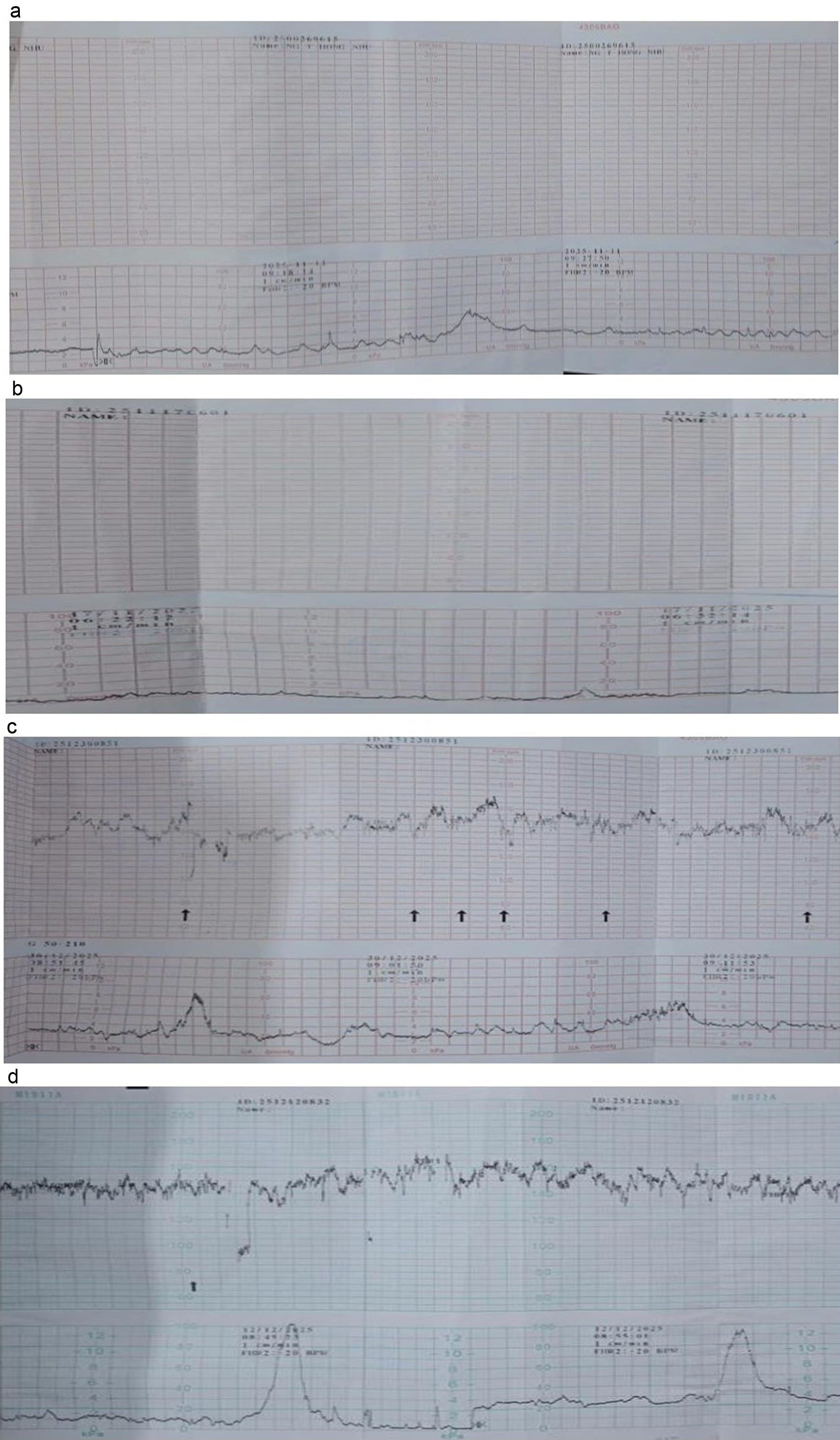 Click for large image | Figure 1. Monitoring shows absence of significant uterine contraction following delivery of the first fetus at 24 weeks and 6 days (a) and after 48 h (b). On outpatient follow-up, cardiotocography (CTG) at 28 weeks and 3 days indicates the CTG group I according to the American College of Obstetricians and Gynecologists (ACOG) 2009 (c) and one uterine contraction per 10 min at 29 weeks (d). |
Multidisciplinary counseling including obstetricians, neonatologist, sonographer, anesthetist, and pharmacologist was provided. A continuing of the second vital fetus was given after the desire of the patient. The patient was hospitalized for 2 weeks for a strict surveillance under bed rest advice. Orally 400 mg progesterone was administered. Since the uterine contraction was absent, the patient was not indicated with tocolysis (Fig. 1b, c). In addition, the cerclage and pessary were not performed due to suspicion of increased risk of infection. A fetal lung maturation with corticosteroid (betamethasone 12 mg by intramuscular injection × 2 doses at 24 h interval) and neuroprotection (magnesium sulfate 15%/10 mL × 3 ampoules by intravenous infusion at a speed of 120 mL/h) were administered (Fig. 2).
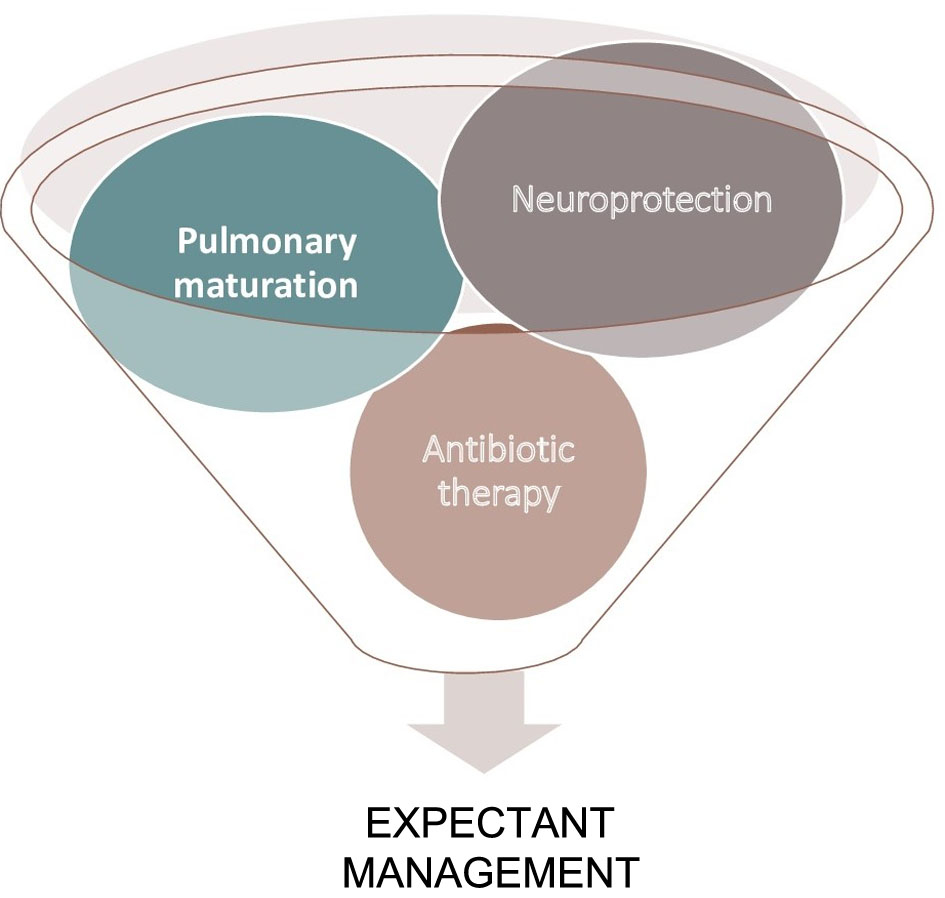 Click for large image | Figure 2. Triad of the treatment for delayed-interval delivery in twin pregnancy. |
On follow-up ultrasound, the fetus showed an FGR, with an estimated fetal weight of 875 g, below the first percentile. Amniotic fluid volume and middle cerebral and umbilical artery Doppler findings were normal (Fig. 3). A U-shaped cervix and a cervical length of 17 mm were observed at 28 weeks and 3 days (Fig. 4). Additionally, she underwent outpatient expectant management for 2 weeks. The oral glucose tolerance test (OGTT) was negative.
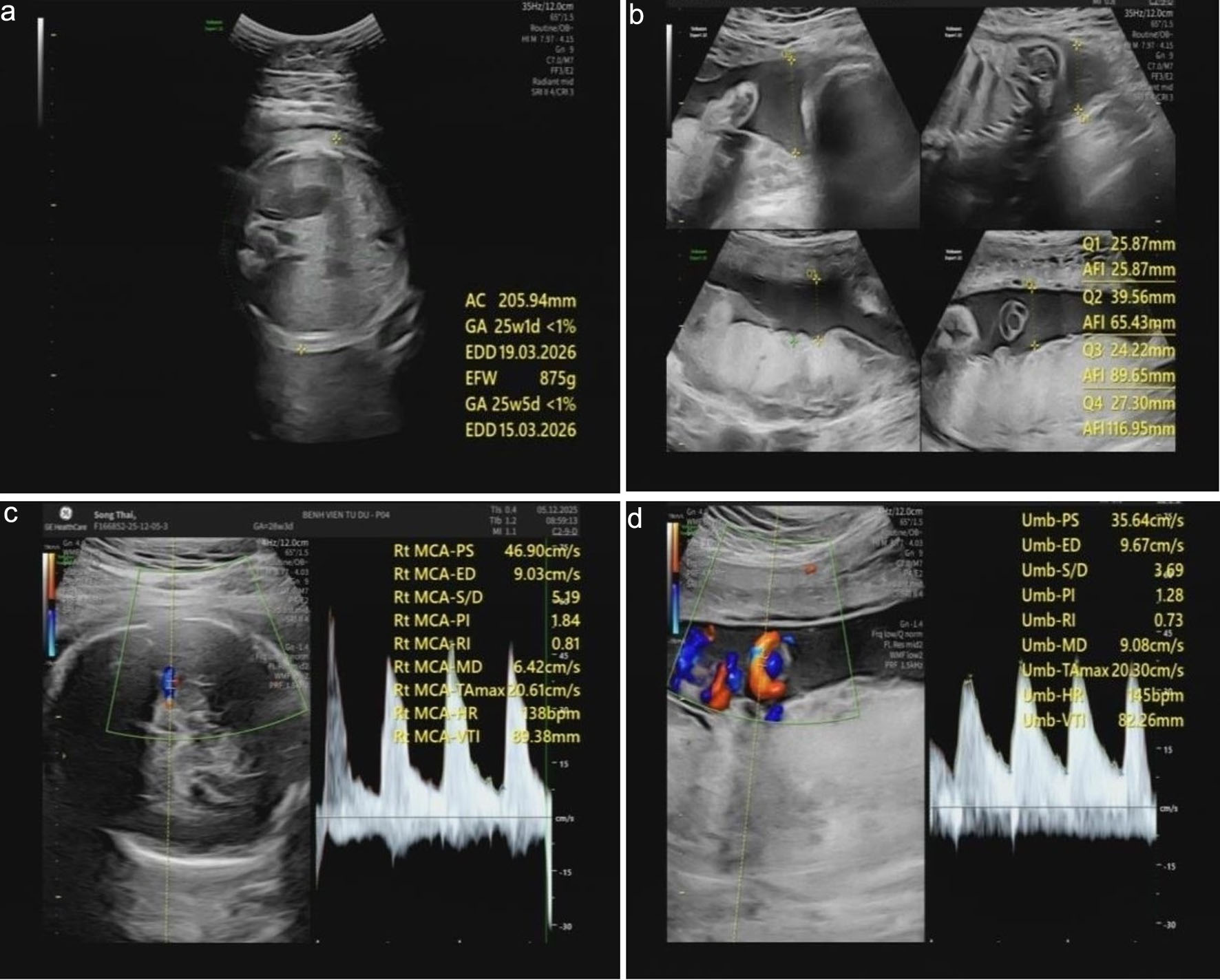 Click for large image | Figure 3. Ultrasound at 28 weeks and 3 days shows a fetus that is small for gestational age, with an estimated fetal weight (EFW) of 875 g, below the first percentile (a); normal amniotic fluid volume, with an amniotic fluid index of 11 cm (b); normal middle cerebral artery Doppler findings (c); and normal umbilical artery Doppler findings (d). |
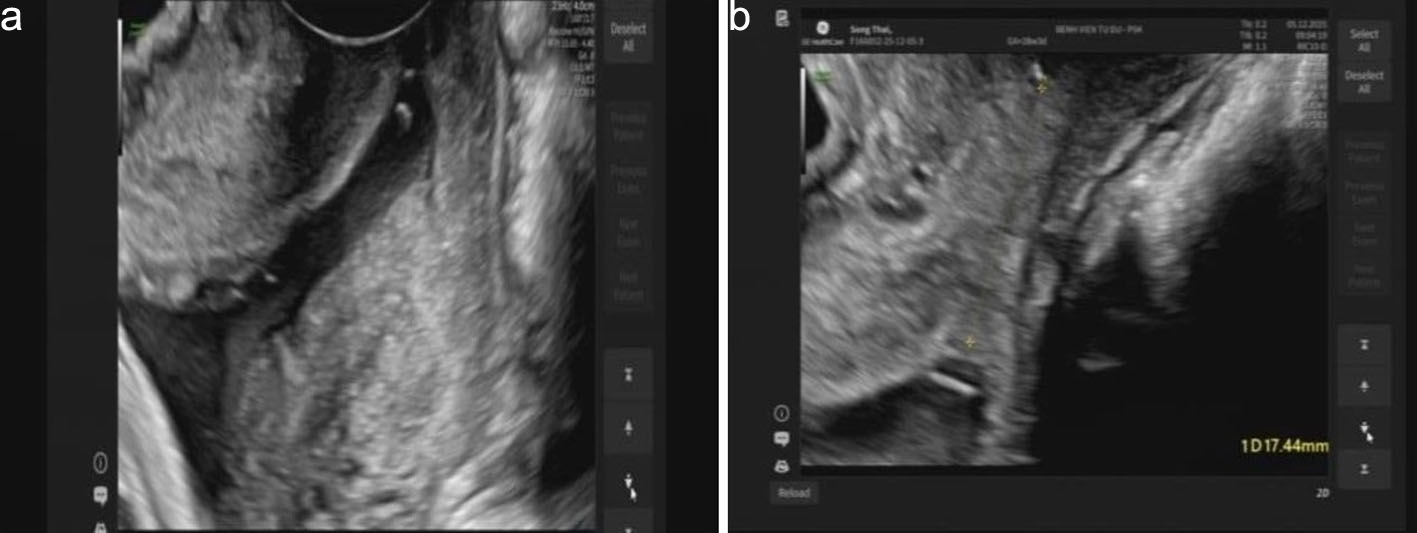 Click for large image | Figure 4. Cervical U-shape (a) and cervical length at 17 mm (b) at 28 weeks and 3 days of gestation. |
The pregnant woman was admitted again at 29 weeks of gestation. The uterine height measured at 23 cm. Blood pressure was normal. At obstetric examination, speculum showed a short cervix without inflammation. A cervical dilation was noted at 1 cm without effacement. Uterine contraction was absent.
During her hospitalization, infectious markers were negative. White blood cells and neutrophil count were stable in normal range (Table 1). C-reactive protein (CRP) and procalcitonin were negative. Hemoglobin was measured at 122 g/L. Culture of the vaginal discharge detected Escherichia coli and Candida tropicalis. Antibiotic susceptibility testing showed that the tested organism was resistant to ampicillin, cephalosporins, and gentamicin. The group B Streptococcus (GBS) test was negative. The patient received prophylactic antibiotic treatment with tazopellin 4.5 g intravenous (IV) four times daily and progesterone 400 mg was given orally twice daily. Regarding antifungal therapy, the patient was administered with Neo-Tergynan (metronidazole 500 mg, neomycin sulfate 65,000 IU, and nystatin 100,000 IU) capsules administered vaginally for 7 days. Since then, the patient was followed up as an outpatient and remained asymptomatic (Fig. 5).
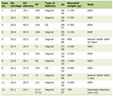 Click to view | Table 1. Blood Count Tests of WBC and NEU |
 Click for large image | Figure 5. Flowchart summarizes the expectant management in the present case. |
Ultrasound scan was repeated weekly. At 32 weeks and 2 days, ultrasound showed a vital fetus weighing 1,580 g, small gestational age (GA) at fifth percentile without Doppler abnormality, cephalic presentation, and amniotic fluid index at 12 cm. Cardiotocography (CTG) was classified as group I following the American College of Obstetricians and Gynecologists (ACOG) 2009 (Fig. 6a). A diagnosis of FGR grade I was made. The patient was planned to delivery by induction of labor at 36–37 weeks of gestation or at the viability term following clinical condition.
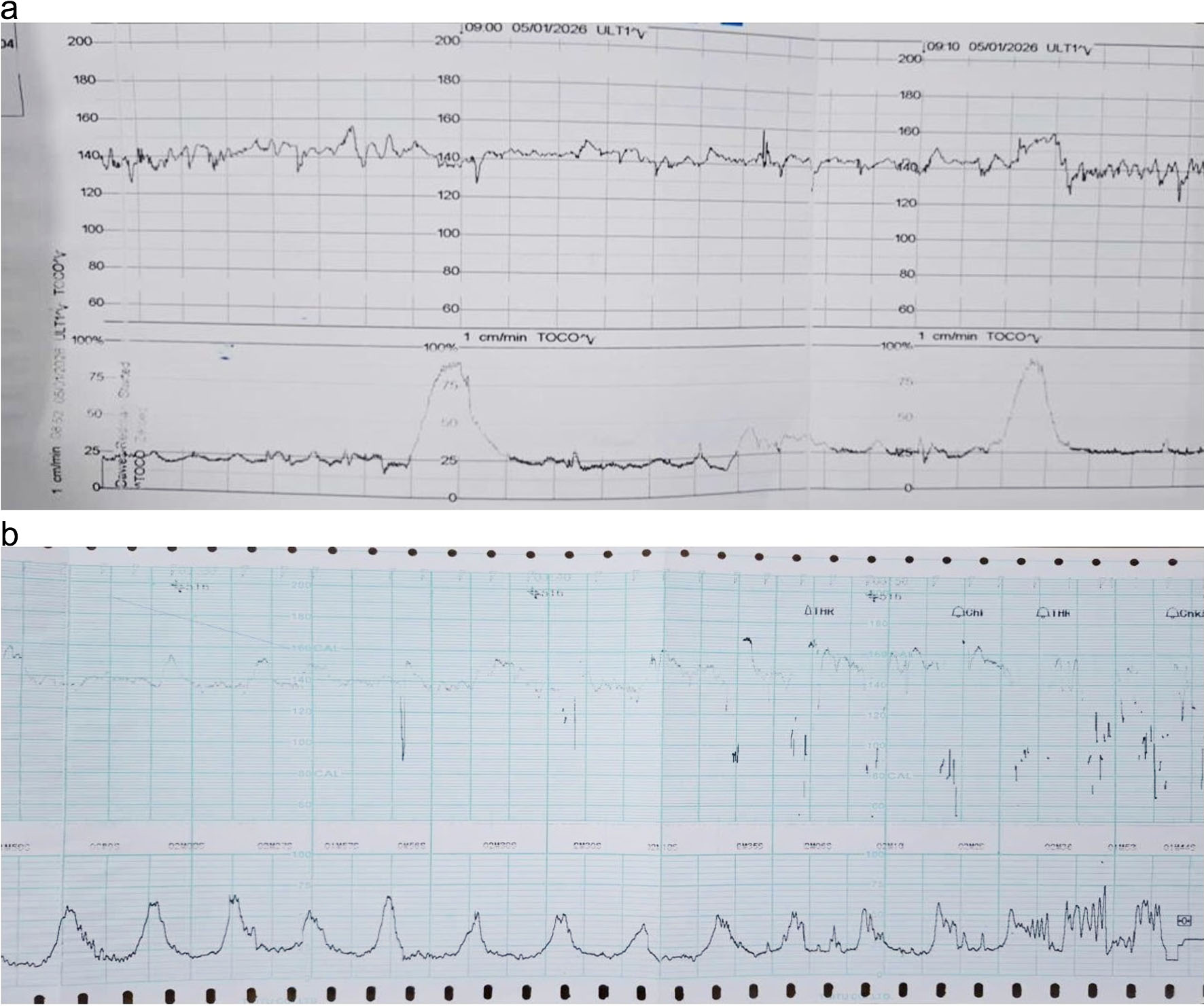 Click for large image | Figure 6. The cardiotocography (CTG) shows normal fetal heart tracing with two uterine contractions at 32 weeks and 3 days (a). The monitoring depicts regular uterine contractions, approximate 4–5 contractions per 10 min at 32 weeks and 6 days (b). |
At 32 weeks and 6 days, the patient had spontaneous labor and a vaginal delivery of a female neonate weighing 1,600 g (Figs 6b and 7a). The Apgar score was 6 at 1 min and 7 at 5 min. Macroscopically, the placenta of the second fetal sac appeared normal, whereas the placenta of the first fetus was small and yellowish brown. Estimated blood loss was approximately 300 mL. Carbetocin 100 µg was used for postpartum hemorrhage prevention. The neonate received full resuscitation and immediate life-support intervention and was admitted to the neonatal intensive care unit (NICU) due to prematurity for 7 days. The mother and the newborn discharged later in a good condition (Table 2). A post-discharge neurodevelopmental follow-up was monitored until 6 months without adverse events (Fig. 7b).
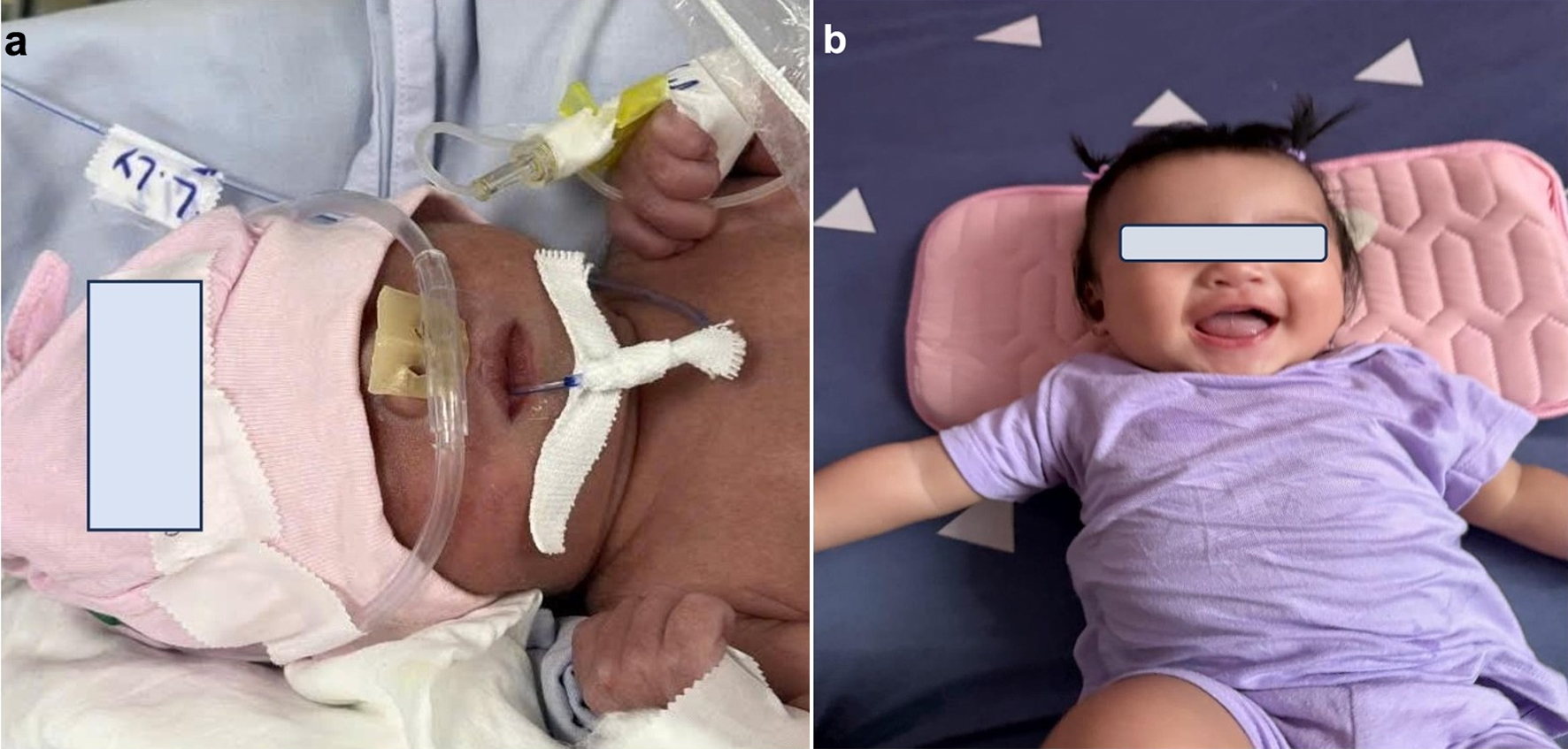 Click for large image | Figure 7. A newborn at 32 weeks and 6 days received oxygen support via nasal canula at neonatal intensive care unit (a) and a healthy 6-month infant on follow-up (b). |
Click to view | Table 2. Pregnancy Characteristics and Materno-Neonatal Outcomes in the Present Case |
Concerning patient’s perspective during this prolonged hospital stay and decision-making process, the couple acknowledged the bittersweet experience of grieving for one child and being happy for the favorable outcome of the other. The family was grateful to the team for her baby’s lifesaving.
| Discussion | ▴Top |
In single intrauterine fetal death of twin pregnancies, PB was the most common adverse outcome affecting 58.5% and 53.7% of monochorionic and dichorionic twin pregnancies [11]. The management of the pregnancy after delivery of the first fetus during a second-trimester miscarriage or very early PB has not been sufficiently defined. The scientific evidence is still controversial. The mechanism of ceased uterine contraction after the delivery of the first fetus has not been well understood. Reviewing the literature, more than 500 cases have been published from the last systematic review. GA at occurrence was recorded between 13 and 31 weeks [12]. In the present case, GA at delivery of the first twin was 24 weeks and 6 days. The second delivery occurred at 32 weeks and 6 days. In the present case, etiologies of the fetal death of the first fetus remain unknown. Although the aneuploidy screening result in the first trimester was negative, we could not assess completely the morphologic ultrasound scan before spontaneous delivery of the first fetus. Therefore, we could not understand the accurate etiology for fetal demise. Hypothesis concerning severe FGR could be made. In this case, the fetal autopsy was not performed. Therefore, other structural malformations were not investigated.
In the report of Temur, the live birth was postponed for 132 days from the 18 weeks to the 36 weeks and 6 days [13]. Baweja & Parmanand reported a series of three cases, among whom the longest delayed interval between the first expulsion of the first fetus and the spontaneous labor of the second fetus was 118 days [14]. Canu et al reported a prolongation of the pregnancy of the second twin for 29 days between births of siblings with preterm premature rupture of membranes (pPROM) of a single sac [15]. Recently, in the report of Jang, premature rupture of membranes in one of the twins before the viability term at 19 weeks of gestation, followed by a successful delay of delivery until 38 weeks has been mentioned [16]. In the literature, the longest interval of delivery was 154 days of latency [17].
Accordingly, tocolytics and cerclage were not a contraindication in these cases [12, 17]. Interval duration in the cerclage group was longer than in non-cerclage group (62.7 ± 10.4 versus 20.2 ± 6.7 days). In general, emergency cervical cerclage can be considered in cases of spontaneous abortion of the first twin in twin pregnancies to prolong the gestation and improve the prognosis of the remaining fetus until the fetus becomes viable and increases its birth weight [18]. Delivery of the first twin before 22 weeks of gestation and placement of a cerclage is associated with a longer prolongation interval (45 versus 19 days) [19]. However, the cerclage indication should be performed following experience and evaluation of caregivers. In the present case, the uterine contraction was absent, therefore, the patient was not indicated with tocolysis. Additionally, the cerclage was also not performed due to effacement and dilation of the cervix and suspicion of increased infectious risk. Instead, progesterone was orally administered at a dose of 400 mg/day until delivery of the second fetus. The effect of progesterone therapy is similar to cerclage and pessary use [20, 21].
According to Zheng et al, successful performance of the DID of twins can improve the survival rates for the second twin and improve prognosis. The average delayed delivery time was 15 days (range: 3–31 days). The second child was delivered at an average GA of 25 weeks and 5 days (range: 20 weeks and 4 days to 31 weeks and 3 days). The average birth weight of the second twin was 957 g (range: 360–1,930 g). However, careful attention is required when performing this treatment to prevent and treat possible complications such as intrauterine infection, sepsis, and postpartum hemorrhage that may arise during the procedure [22]. In the study of Louchet et al in France on 13 similar cases, delivery of twin 1 was at a median of 18 weeks’ gestation (14–24 weeks) and none survived. Delivery of the second twin occurred at a median of 25 weeks and 3 days of gestation, 51 days after twin 1 (range from 13 to 138 days). Seven of the 13 second twins (54%) survived. There were five cases of chorioamnionitis and one case of maternal disseminated intravascular coagulation [23]. In line with Huner et al, among 17 cases, the delivery of the second twin could be delayed, on average by 36 days. Pregnancies with delivery of the first twin before 22 gestational weeks had a longer prolongation than pregnancies with delivery of the first twin after 22 weeks (53 vs. 22 days) [19].
Similarly, Bouey et al concluded that a DID in twin pregnancy showed no evidence of harm and a potential benefit of decreased bronchopulmonary dysplasia mediated by increased GA and birthweight [24]. In the findings of Benito Vielba et al, the average stay of the twins that were admitted to the NICU was 72 days (28–116 days) [25]. In our case, the pregnant woman was scheduled to delivery by induction of labor at 36–37 weeks of gestation due to FGR grade I following the International Federation of Gynecology and Obstetrics (FIGO) practical recommendation [26]. Otherwise, earlier termination of pregnancy at 34 weeks depended on infectious presence, fetal viability, and the available resource of NICU. Induction of labor considered as a safe procedure could be applied among FGR pregnancies without abnormal Doppler parameters [27, 28]. Doppler ultrasound remains an important imaging tool in high-risk pregnancies [29, 30].
However, the labor progressed spontaneously at 32 weeks and 6 days in the present case. Due to prematurity, the newborn in the current report was admitted in NICU for 7 days. On follow-up, no severe complications such as retinopathy of prematurity, bronchopulmonary dysplasia, and intraventricular hemorrhage were present. No infectious complication was noted in our case since a strict monitoring was managed. In the literature, a serious maternal morbidity was reported in 39.0% of pregnancy after DID (71 of 183 cases). Therefore, obstetricians should be aware that DID is an effective management option to improve survival of remaining fetus for women with multiple pregnancy who deliver the first fetus between 13 and 31 weeks of gestation [12]. However, balance between harms and benefits for both the mother and fetus until reaching a viable term ought to be fully informed [24, 31].
Delayed delivery in multifetal pregnancies can be successful in highly selected cases if there are no contraindications and these pregnancies are managed in a tertiary perinatal center [8, 32]. The management plan should be clearly explained to the patient and her family, including its psychological implications. According to Schmitt & Orndorff, a multidisciplinary team approach from maternal–fetal medicine (MFM), neonatology, supportive care, spiritual care, and psychiatry were all necessary during patient’s care of a such case [33]. In addition, the surviving co-twin should undergo long-term surveillance with brain imaging and monitoring for neurodevelopmental comorbidity [11].
Conclusions
The delayed-intentional delivery may be considered for the patient desiring child, especially, for infertility patients when the patients are monitored closely at expertise center with multidisciplinary care. Intrauterine infection monitoring is still required to reduce maternal-fetal mortality and morbidity. A closely strict surveillance helps in reducing materno-fetal mortality and morbidity. In this era of evidence-based decision making, we need evidence for better recommendations. Due to limited applicability to the reported clinical context, further data are needed to support this critical management.
Learning points
This case highlights some important points in the management of DID in twin pregnancy. First, the delayed-intentional delivery managed by multidisciplinary team is a feasible approach for the patient desiring child. However, the risks of infection and potential poor outcome for the remaining fetus should be educated for the pregnant woman and her family. Second, materno-fetal infection is still a major concern. Thus, clinical monitoring and laboratory tests such as blood count test, CRP, procalcitonin, and cultivation of vaginal discharge should be performed to detect early infectious sign. Third, a strict surveillance at a tertiary obstetrical hospital helps in reducing materno-fetal mortality and morbidity.
Acknowledgments
We thank the patients and their families, who agreed to publication of their case reports. The authors are also grateful to the following colleagues in the Department of Pregnancy Pathology and Department of Imaging Diagnosis who contributed to patient care, acquiring images, and figure preparation: Nguyen Xuan Lan, Phan Thi Thuy and Tran Ngoc My.
Financial Disclosure
The authors received no funding from an external source.
Conflict of Interest
The authors declare that they have no competing interest regarding the publication of this article.
Informed Consent
Written informed consent was obtained from both patients for publication of this study and accompanying images.
Author Contributions
Ngoc Hai Tran, Huu Trung Nguyen, Thanh Hai Pham, Anh Dinh Bao Vuong, Yen Oanh Ngoc Nguyen, and Lan Huong Dang Bui contributed to patient care, undertaking the literature review, and revising the article critically for important intellectual content. Phuc Nhon Nguyen contributed to acquiring and interpreting the data, writing the draft manuscript and submitted manuscript, undertaking the literature review, and revising the article critically for important intellectual content. All authors approved the final submitted manuscript.
Data Availability
The data that support the findings of this study are available from the corresponding author upon reasonable request.
Abbreviations
CTG: cardiotocography; DID: delayed-interval delivery; FGR: fetal growth restriction; NICU: neonatal intensive care unit; PB: preterm birth
| References | ▴Top |
- Le DN, Nguyen PN. Successful management of interstitial heterotopic pregnancy by fetal reduction using ultrasound-guided laparoscopy. J Minim Invasive Gynecol. 2023;30(8):606-608.
doi pubmed - Tran Thi TP, Trinh Nhut TH, Dang MD, Ho Nguyen Thi HC, Nguyen PN. Discordance in crown-rump length and nuchal translucency thickness in the prediction of adverse outcomes among monochorionic diamniotic twin pregnancies: A single-center retrospective cohort study from Vietnam. Int J Gynaecol Obstet. 2025;170(1):478-488.
doi pubmed - Patrick T, Schoolcraft WB, Katz-Jaffe M. Vanishing twin syndrome results in higher risk of miscarriage even following euploid embryo transfer. Fertility and Sterility. 2022;118(4):e177.
doi - Deng C, Chen S, Hu Q, Huang G, Wang X, Yu H. Perinatal outcomes of spontaneous single fetal death in monochorionic twin pregnancies: a single-center retrospective study. Front Med (Lausanne). 2025;12:1646852.
doi pubmed - Raposo MI, Cardoso M, Ormonde M, Stokreef S, Correia L, Pereira A. Obstetric management of delayed-interval delivery. Case Rep Womens Health. 2017;16:11-13.
doi pubmed - Cozzolino M, Seravalli V, Masini G, Pasquini L, Di Tommaso M. Delayed-interval delivery in dichorionic twin pregnancies: a single-center experience. Ochsner J. 2015;15(3):248-250.
pubmed - Sun Z, Lyu X, Tian C, Chen L, Wang Y, Feng H. Delayed interval delivery of the twin. Matern Fetal Med. 2025;7(3):186-187.
doi pubmed - Fayad S, Bongain A, Holhfeld P, Janky E, Durand-Reville M, Ejnes L, Schaaps JP, et al. Delayed delivery of second twin: a multicentre study of 35 cases. Eur J Obstet Gynecol Reprod Biol. 2003;109(1):16-20.
doi pubmed - Gadeer RH, Alhinai A, Fung-Kee-Fung K, Werlang A. Delayed-interval delivery in multiple pregnancy: a single-center experience of five cases. AJP Rep. 2024;14(2):e156-e161.
doi pubmed - Wouters KA, Gianotten J, Bayram N, Doornbos JP. Term life birth after late abortion of the first twin. Acta Obstet Gynecol Scand. 2009;88(10):1148-1152.
doi pubmed - Mackie FL, Rigby A, Morris RK, Kilby MD. Prognosis of the co-twin following spontaneous single intrauterine fetal death in twin pregnancies: a systematic review and meta-analysis. BJOG. 2019;126(5):569-578.
doi pubmed - Cheung KW, Seto MTY, Wang W, Lai CWS, Kilby MD, Ng EHY. Effect of delayed interval delivery of remaining fetus(es) in multiple pregnancies on survival: a systematic review and meta-analysis. Am J Obstet Gynecol. 2020;222(4):306-319.e18.
doi pubmed - Temur I. A twin pregnancy provided with ICSI, an abortion of the first fetus at the 18th week and live birth of the second fetus at the end of the 36th week: a case report and literature review. J Matern Fetal Neonatal Med. 2013;26(13):1355-1358.
doi pubmed - Baweja KS, Parmanand P. Continuation of pregnancy after abortion / delivery of first twin.
- Canu A, Giannini A, Ghirri P, Malacarne E, Pancetti F, Simoncini T, Mannella P. Delayed delivery of the second twin: case report and literature review of diamniotic dichorionic twin pregnancy with very early preterm premature rupture of membranes. Case Rep Womens Health. 2019;22:e00104.
doi pubmed - Jang WK. Successful delayed interval delivery in twin pregnancy after early premature rupture of membranes of a leading fetus: a case report. Medicina (Kaunas). 2024;60(11):1800.
doi pubmed - de Frias CAS, Queiros A, Simoes HTF. Delayed-interval delivery in dichorionic twin pregnancies: a case report of 154 latency days. Rev Bras Ginecol Obstet. 2020;42(1):61-64.
doi pubmed - Cui H, Li H, Yin Z. Emergency cervical cerclage in delayed-interval delivery of twin pregnancies: a scoping review. BMC Pregnancy Childbirth. 2024;24(1):323.
doi pubmed - Huner B, Essers J, Schiefele L, Schutze S, Reister F, Janni W, Deniz M. Obstetric and fetal short- and long-term outcomes of delayed-interval delivery in multiple pregnancies. J Gynecol Obstet Hum Reprod. 2022;51(10):102486.
doi pubmed - Jarde A, Lutsiv O, Park CK, Beyene J, Dodd JM, Barrett J, Shah PS, et al. Effectiveness of progesterone, cerclage and pessary for preventing preterm birth in singleton pregnancies: a systematic review and network meta-analysis. BJOG. 2017;124(8):1176-1189.
doi pubmed - Putora K, Hornung R, Kinkel J, Fischer T, Putora PM. Progesterone, cervical cerclage or cervical pessary to prevent preterm birth: a decision-making analysis of international guidelines. BMC Pregnancy Childbirth. 2022;22(1):355.
doi pubmed - Zheng XQ, Yan JY, Xu RL, Wang XC, Li LY, Lin Z. An analysis of the maternal and infant outcomes in the delayed interval delivery of twins. Taiwan J Obstet Gynecol. 2020;59(3):361-365.
doi pubmed - Louchet M, Dussaux C, Luton D, Goffinet F, Bounan S, Mandelbrot L. Delayed-interval delivery of twins in 13 pregnancies. J Gynecol Obstet Hum Reprod. 2020;49(2):101660.
doi pubmed - Bouey NJ, Saha S, Wilson-Costello DE, Rysavy MA, Walsh M, Wyckoff MH, Hibbs AM. Delayed-interval delivery in multiple gestation pregnancies: neonatal mortality, morbidity, and development. J Perinatol. 2022;42(12):1607-1614.
doi pubmed - Benito Vielba M, De Bonrostro Torralba C, Pallares Arnal V, Herrero Serrano R, Tejero Cabrejas EL, Campillos Maza JM. Delayed-interval delivery in twin pregnancies: report of three cases and literature review. J Matern Fetal Neonatal Med. 2019;32(2):351-355.
doi pubmed - Melamed N, Baschat A, Yinon Y, Athanasiadis A, Mecacci F, Figueras F, Berghella V, et al. FIGO (international Federation of Gynecology and obstetrics) initiative on fetal growth: best practice advice for screening, diagnosis, and management of fetal growth restriction. Int J Gynaecol Obstet. 2021;152(S1):3-57.
doi pubmed - Nguyen PN, Ramos A, Marret H. Comparison of Materno-neonatal outcomes between cook balloon and prostaglandin methods in labor induction among pregnancies complicated by fetal growth restriction: a retrospective cohort study from France. J Clin Med. 2026;15(16):6194.
doi pubmed - Nguyen PN, Ramos A. Associated Factors Relating to the Success of Labor Induction among Pregnant Women Diagnosed with Fetal Intrauterine Growth Restriction: A Retrospective Cohort Study from France. AJP Rep. 2026;16(1):e18-e26.
doi pubmed - Nguyen Tran TN, Nguyen HT, Cao NT, Nguyen PN, Truong Thi LG, Le MT, Nguyen Vu QH. Umbilical cord coiling index in predicting neonatal outcomes: a single-center cross-sectional study from Vietnam. J Matern Fetal Neonatal Med. 2025;38(1):2517763.
doi pubmed - Nguyen Tran TN, Nguyen HT, Cao NT, Nguyen PN, Nguyen Thi KA, Le MT, Nguyen Vu QH. Correlation of Doppler indices and umbilical coiling with birthweight and small gestational age prediction in term pregnancies. J Neonatal Perinatal Med. 2026;19(4):418-428.
doi pubmed - Padilla-Iserte P, Vila-Vives JM, Ferri B, Gomez-Portero R, Diago V, Perales-Marin A. Delayed interval delivery of the second twin: obstetric management, neonatal outcomes, and 2-year follow-up. J Obstet Gynaecol India. 2014;64(5):344-348.
doi pubmed - Koo YJ. Successful delayed-interval delivery performed 128 days after the vaginal delivery of the first fetus in a twin pregnancy. Yeungnam Univ J Med. 2018;35(1):135-139.
doi pubmed - Schmitt ME, Orndorff CW. A multidisciplinary approach to delayed interval delivery in twin pregnancy. Journal of Obstetric, Gynecologic & Neonatal Nursing. 2014;43:S89-S90.
doi
This article is distributed under the terms of the Creative Commons Attribution 4.0 International License (CC BY 4.0), which permits unrestricted use, distribution, and reproduction in any medium, including commercial use, provided the original work is properly cited.
Journal of Medical Cases is published by Elmer Press Inc.