Figures
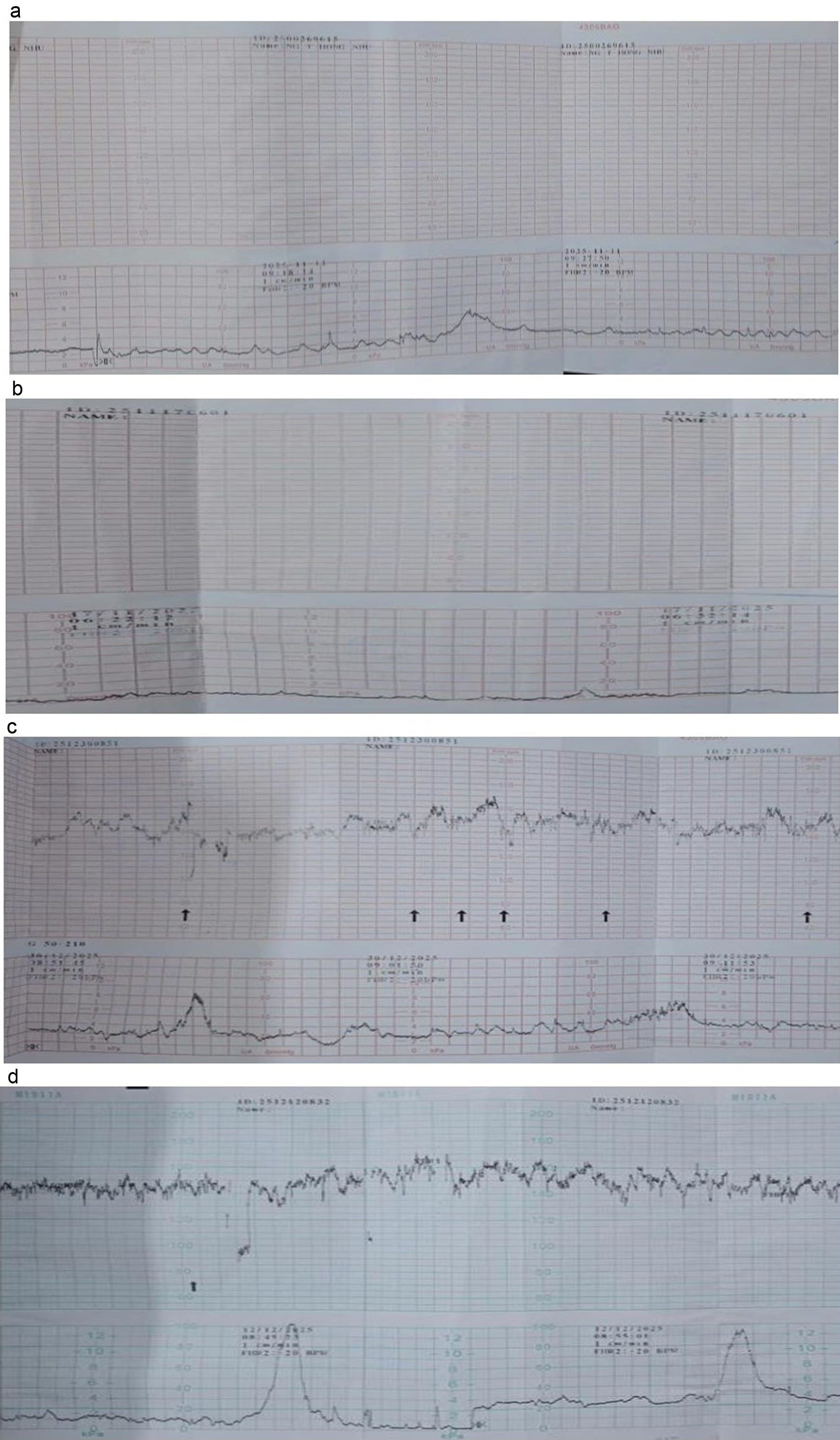
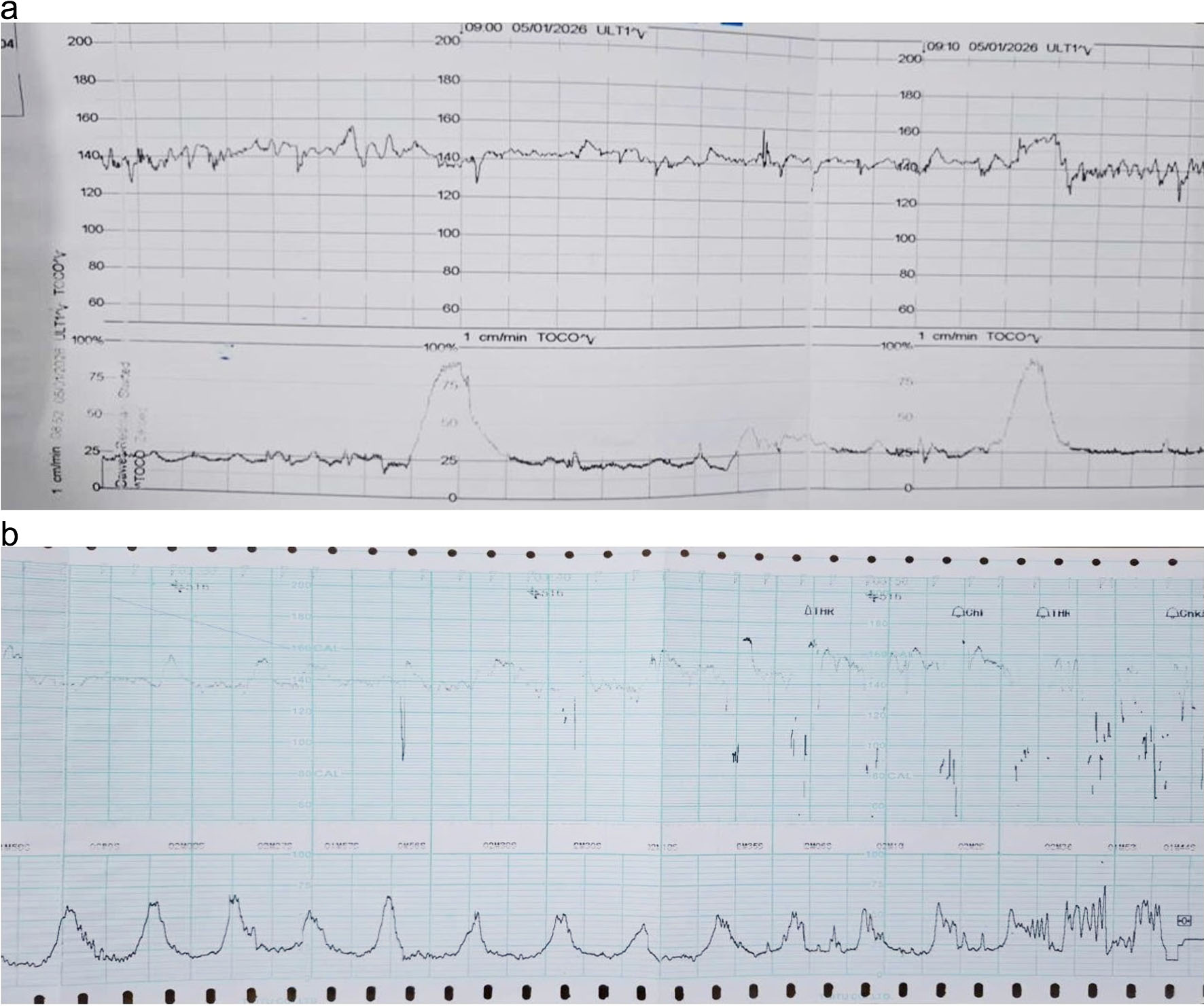
↓ Figure 1. Monitoring shows absence of significant uterine contraction following delivery of the first fetus at 24 weeks and 6 days (a) and after 48 h (b). On outpatient follow-up, cardiotocography (CTG) at 28 weeks and 3 days indicates the CTG group I according to the American College of Obstetricians and Gynecologists (ACOG) 2009 (c) and one uterine contraction per 10 min at 29 weeks (d).
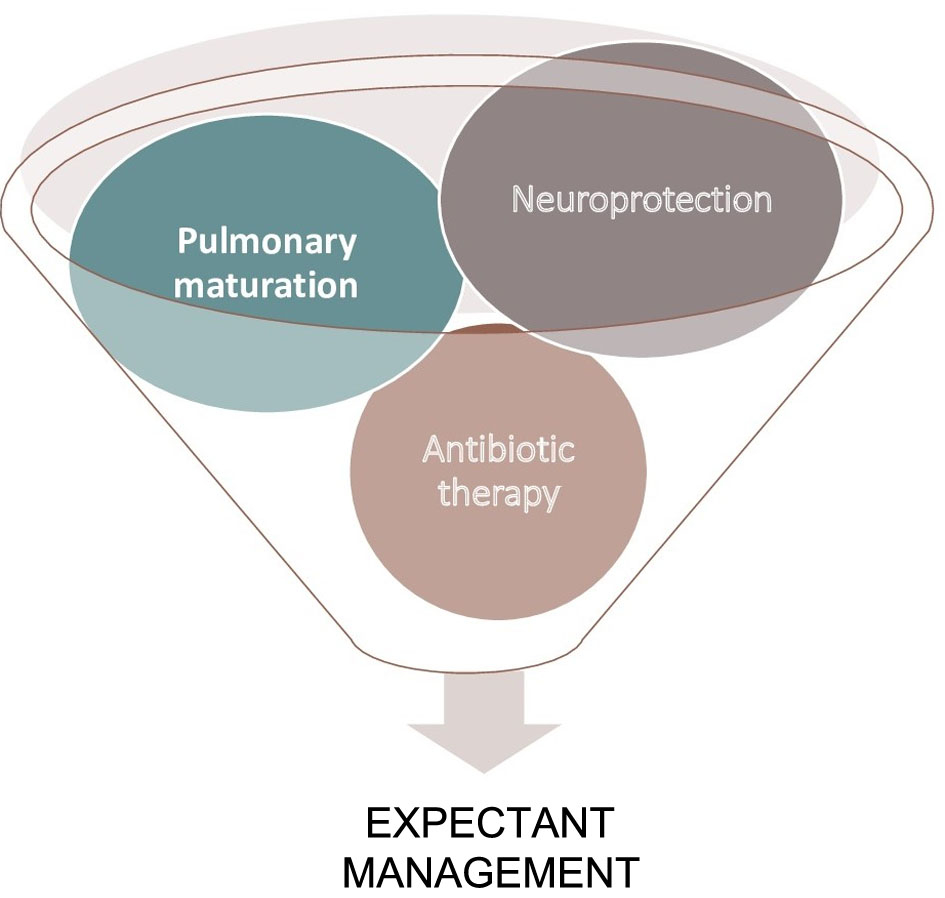
↓ Figure 2. Triad of the treatment for delayed-interval delivery in twin pregnancy.
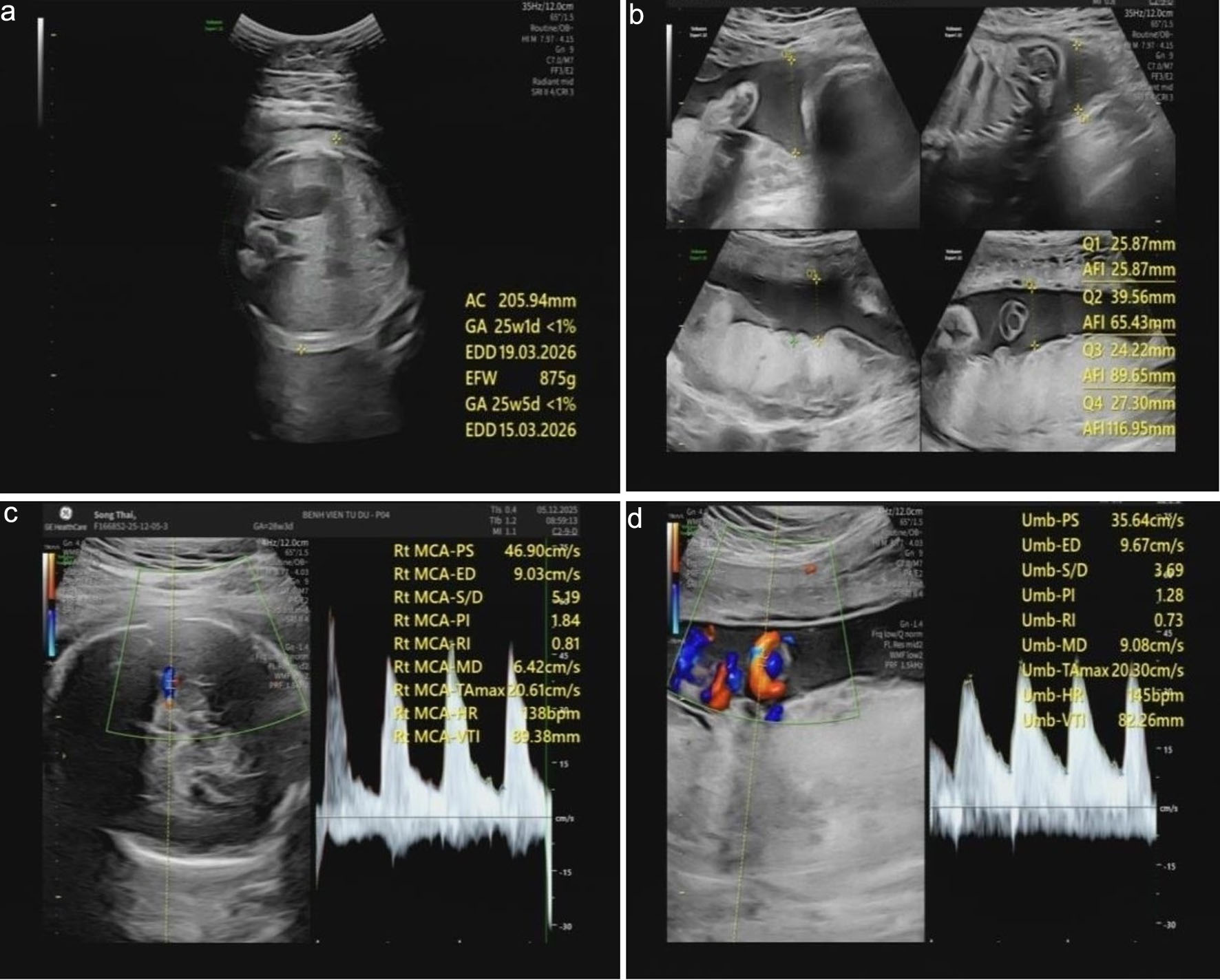
↓ Figure 3. Ultrasound at 28 weeks and 3 days shows a fetus that is small for gestational age, with an estimated fetal weight (EFW) of 875 g, below the first percentile (a); normal amniotic fluid volume, with an amniotic fluid index of 11 cm (b); normal middle cerebral artery Doppler findings (c); and normal umbilical artery Doppler findings (d).
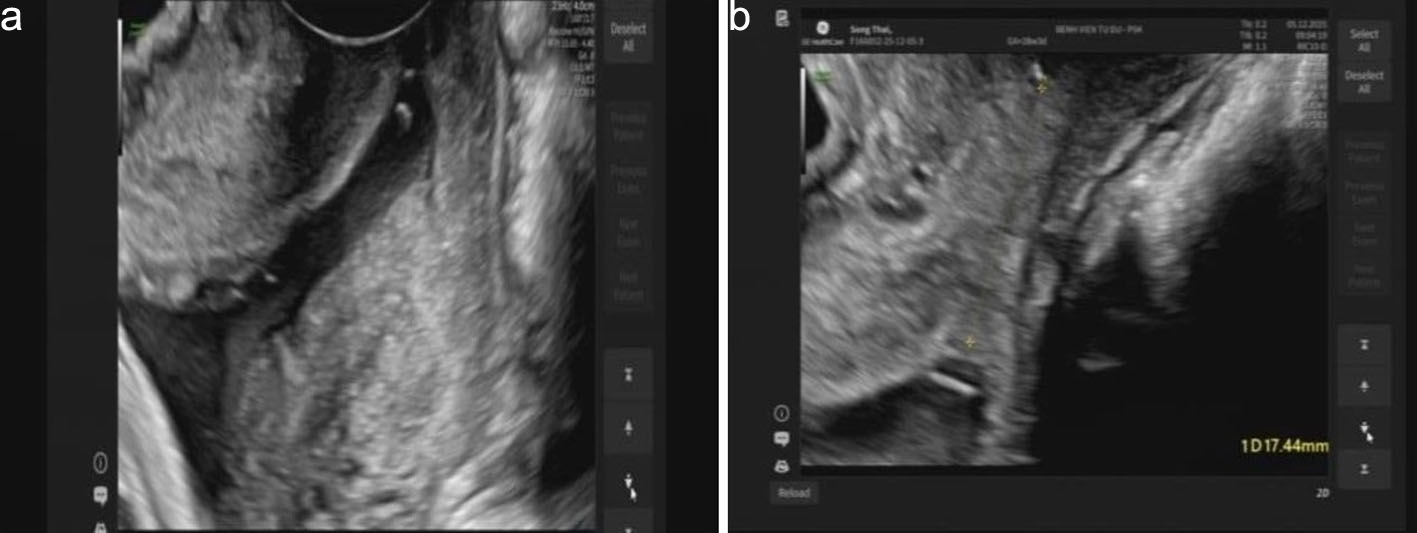
↓ Figure 4. Cervical U-shape (a) and cervical length at 17 mm (b) at 28 weeks and 3 days of gestation.
↓ Figure 5. Flowchart summarizes the expectant management in the present case.

↓ Figure 6. The cardiotocography (CTG) shows normal fetal heart tracing with two uterine contractions at 32 weeks and 3 days (a). The monitoring depicts regular uterine contractions, approximate 4–5 contractions per 10 min at 32 weeks and 6 days (b).
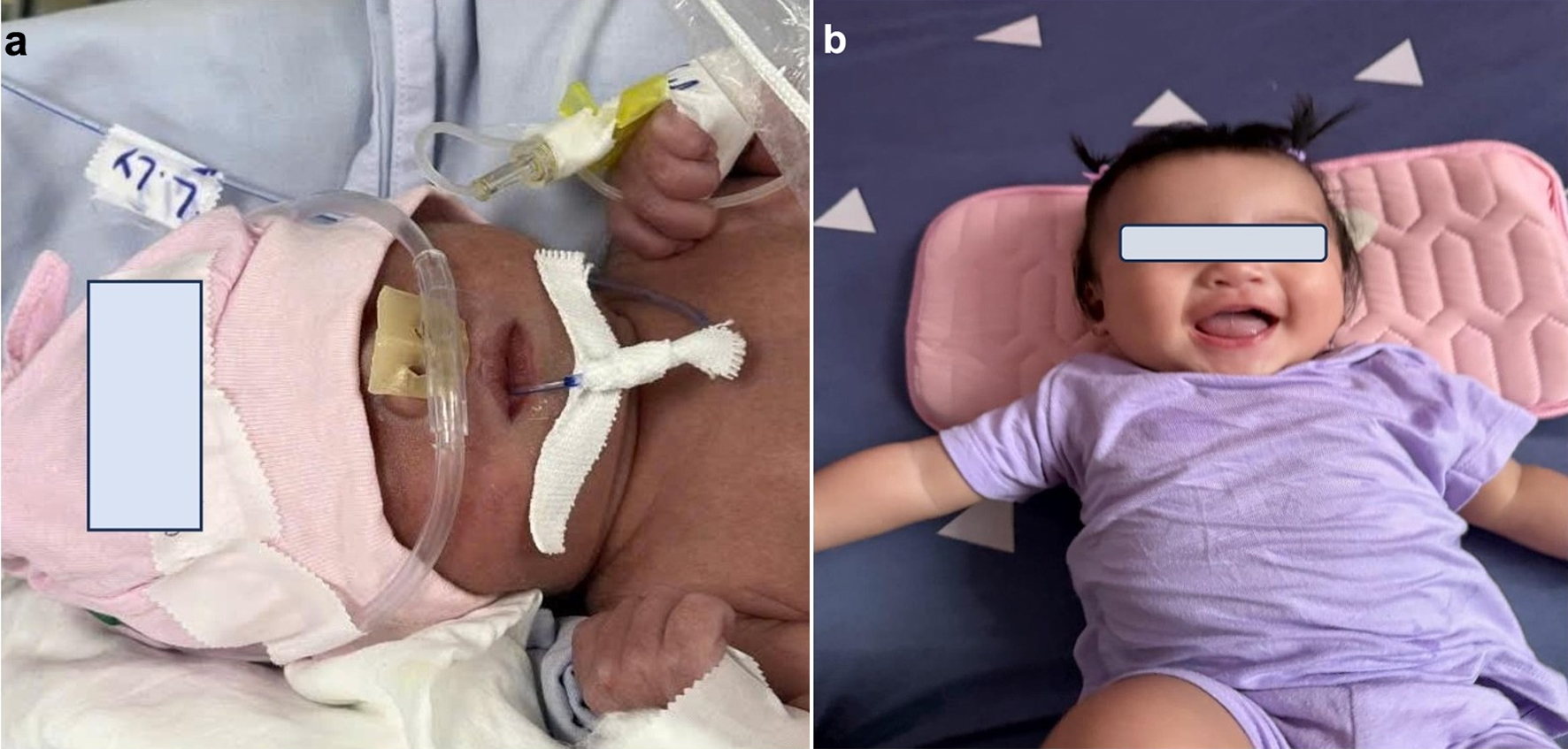
↓ Figure 7. A newborn at 32 weeks and 6 days received oxygen support via nasal canula at neonatal intensive care unit (a) and a healthy 6-month infant on follow-up (b).
Tables
↓ Table 1. Blood Count Tests of WBC and NEU
| Date | 20/11 | 22/11 | 24/11 | 27/11 | 28/11 | 5/12 | 12/12 | 16/12 | 22/12 | 29/12 |
|---|
| NEU: neutrophil; WBC: white blood cell. |
| WBC (3.37–8.38) (109/L) | 9.89 | 8.65 | 10.68 | 9.33 | 10.24 | 11.38 | 11.48 | 9.73 | 10.8 | 13.15 |
| NEU (39.8–70.5) (%) | 78.3 | 66.2 | 71.6 | 73.3 | 72.8 | 73.6 | 74.7 | 72.5 | 73.3 | 73.5 |
↓ Table 2. Pregnancy Characteristics and Materno-Neonatal Outcomes in the Present Case
| Characteristics | Findings |
|---|
| GA: gestational age; NICU: neonatal intensive care unit. |
| Maternal age | 21 years old |
| History of obstetrics | G1P0 |
| Mode of conception | In vitro fertilization (IVF) |
| Number of fetuses | Twin pregnancy |
| GA at the first delivery | 24 weeks and 6 days |
| GA at the second delivery | 32 weeks and 6 days |
| Duration time interval | 8-week prolongation |
| Mode of delivery | Spontaneous labor, vaginal birth |
| Estimated blood loss | 300 mL |
| Placental findings | First placenta: small and yellowish brown. Second placenta: normal appearance. |
| Materno-fetal complications | Absent |
| Newborn status | Female, Apgar score of 6/7, 1,600 g |
| NICU admission | 7 days |
| Clinical condition at discharge | Good |