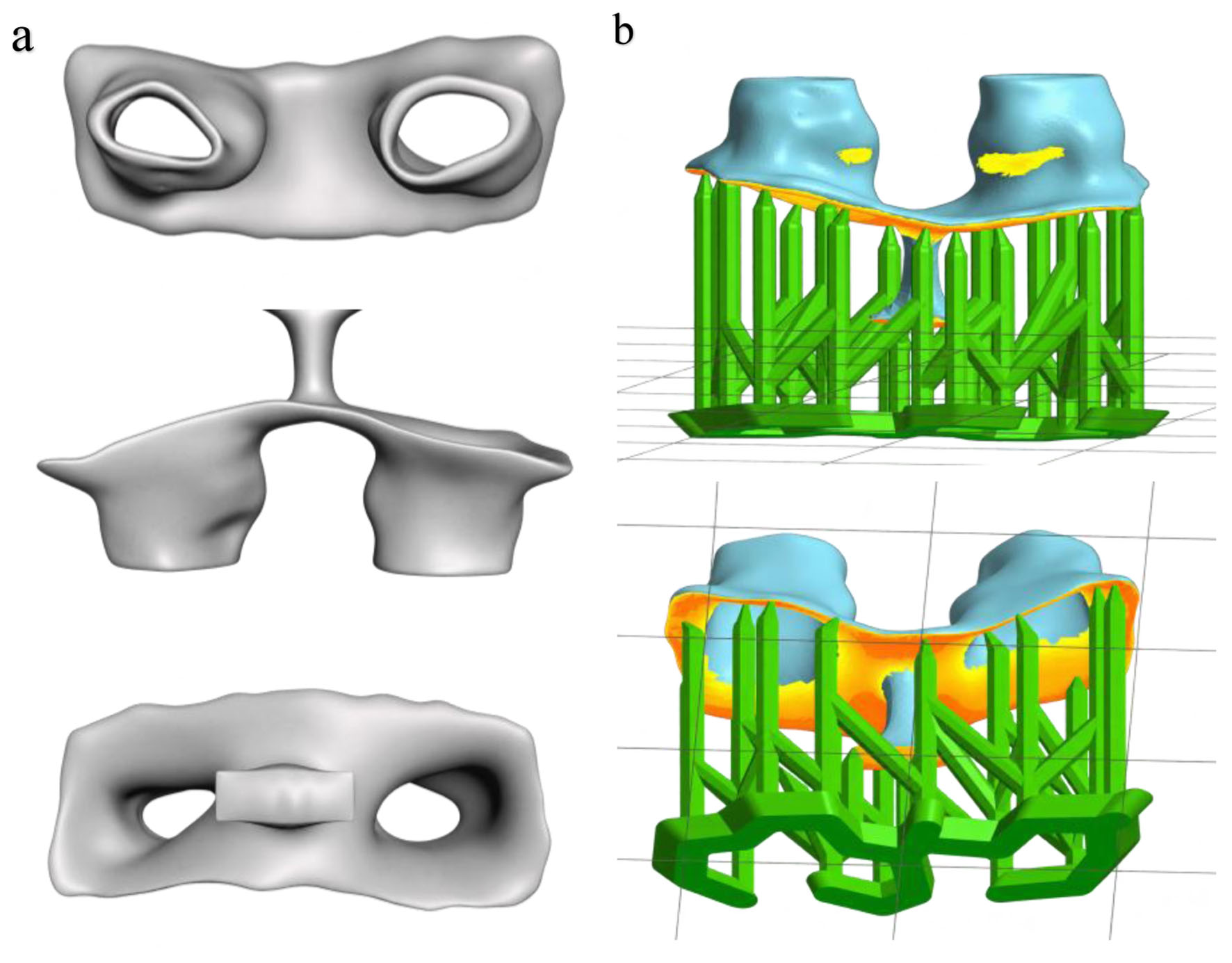
↓ Figure 1. Digital design and preparation of the custom nostril retainer. (a) Computer-aided design of the appliance. (b) Appliance positioned in UNIZ Slicer for 3D printing.
| Journal of Medical Cases, ISSN 1923-4155 print, 1923-4163 online, Open Access |
| Article copyright, the authors; Journal compilation copyright, J Med Cases and Elmer Press Inc |
| Journal website https://jmc.elmerpub.com |
Case Report
Volume 18, 2027, e5440
Serial Custom 3D-Printed Nostril Retainers After Unilateral Cleft Lip Repair in Infants: A Comparative Report of Two Cases
Figures
Table
| Characteristic | Intervention case | Control case |
|---|---|---|
| Age and sex | 3 months; female | 3 months; male |
| Diagnosis | Complete left cleft lip and palate | Complete left cleft lip and palate |
| Presurgical molding | None | None |
| Primary surgery | Fisher lip and nasal repair | Fisher lip and nasal repair |
| Surgeon and institution | Same surgeon and institution | Same surgeon and institution |
| Postoperative retention | Six serial custom bilateral retainers | No retainer |
| Retention course | Started at week 1; approximately 6 months of use | Not applicable |
| Clinical and photographic follow-up | 1 week, 3 months, and 6 months | 1 week, 3 months, and 6 months |
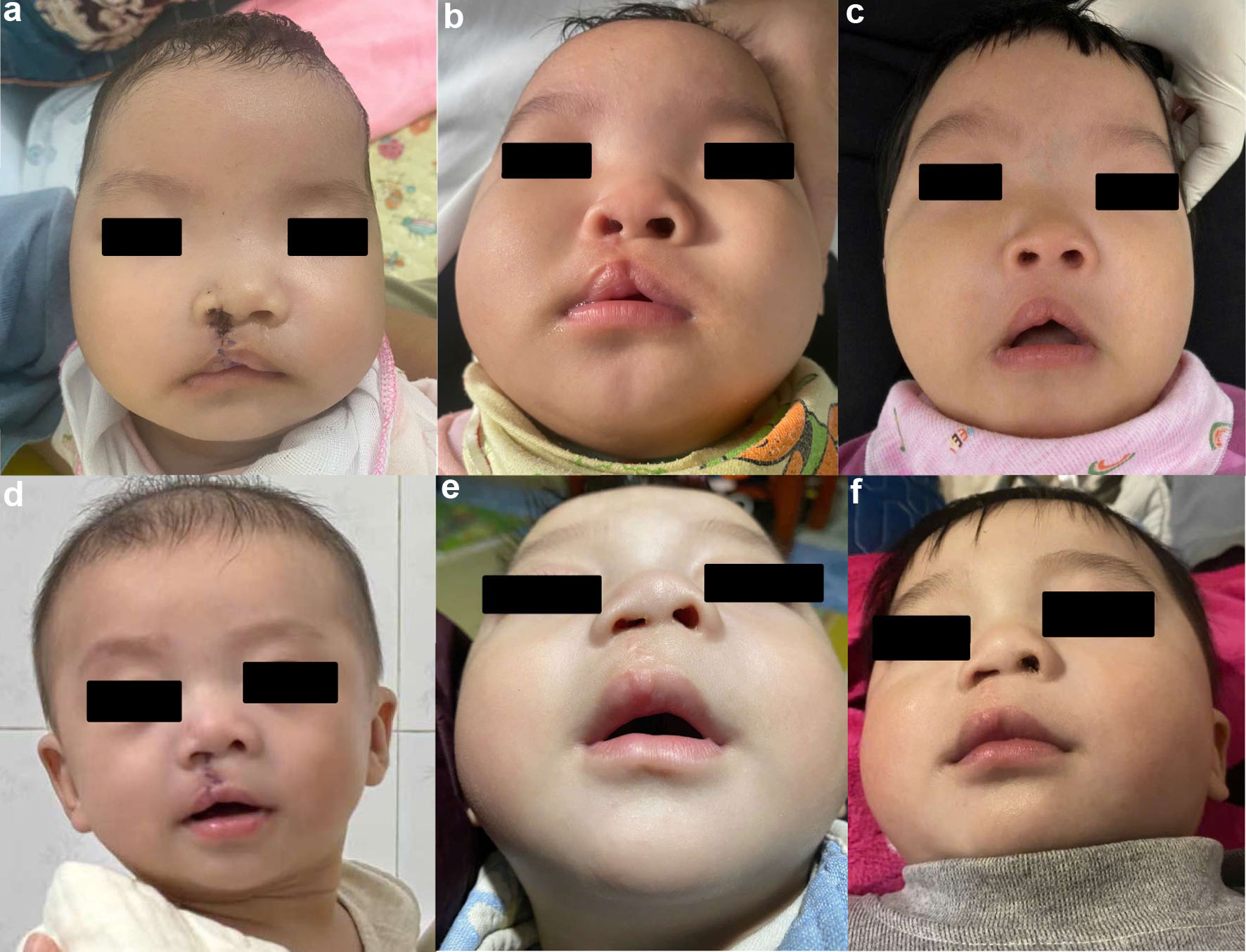
| Qualitative later appearance | Less pronounced cleft-side alar collapse than in the control case. | More pronounced cleft-side alar collapse |
| Device-related observations | Initial blanching for 20–30 s; no reported local allergy or loosening | Not applicable |