Journal of Medical Cases, ISSN 1923-4155 print, 1923-4163 online, Open Access
Article copyright, the authors; Journal compilation copyright, J Med Cases and Elmer Press Inc
Journal website https://jmc.elmerpub.com

Case Report

Volume 17, Number 8, August 2026, pages 385-393


Emergency Laparoscopic Appendectomy in a High-Risk Cardiac Patient With Severe Left Main Coronary Artery Disease on Dual Antiplatelet Therapy

Figures

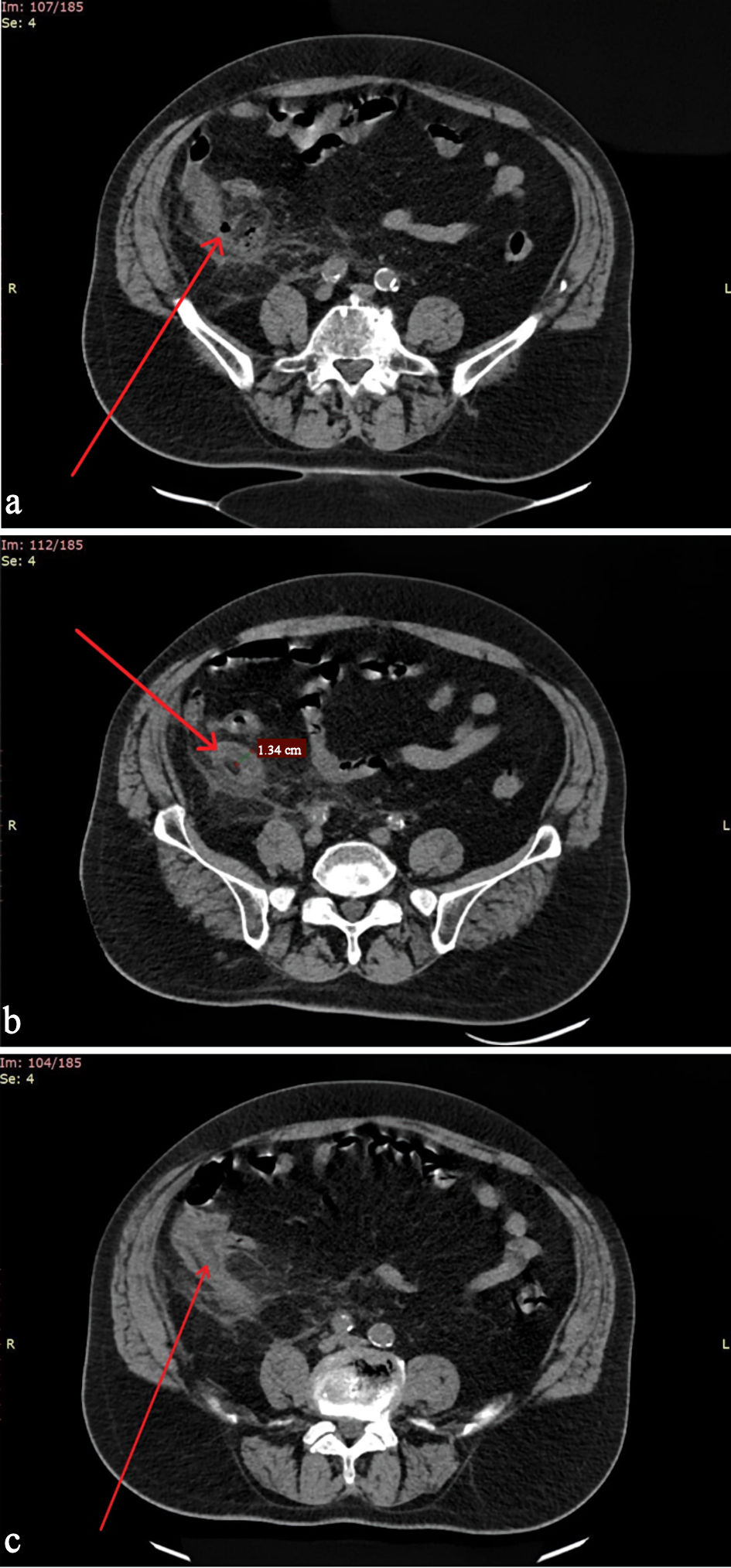
↓  Figure 1. Abdominal CT scans demonstrating a perforated and severely inflamed appendix with appendiceal wall thickening and evidence of structural destruction (arrows). (a) Perforated appendix with structural destruction. (b) Marked appendiceal inflammation with increased wall thickness. (c) Additional axial view demonstrating perforation and inflammatory changes. CT: computed tomography.
Figure 1.
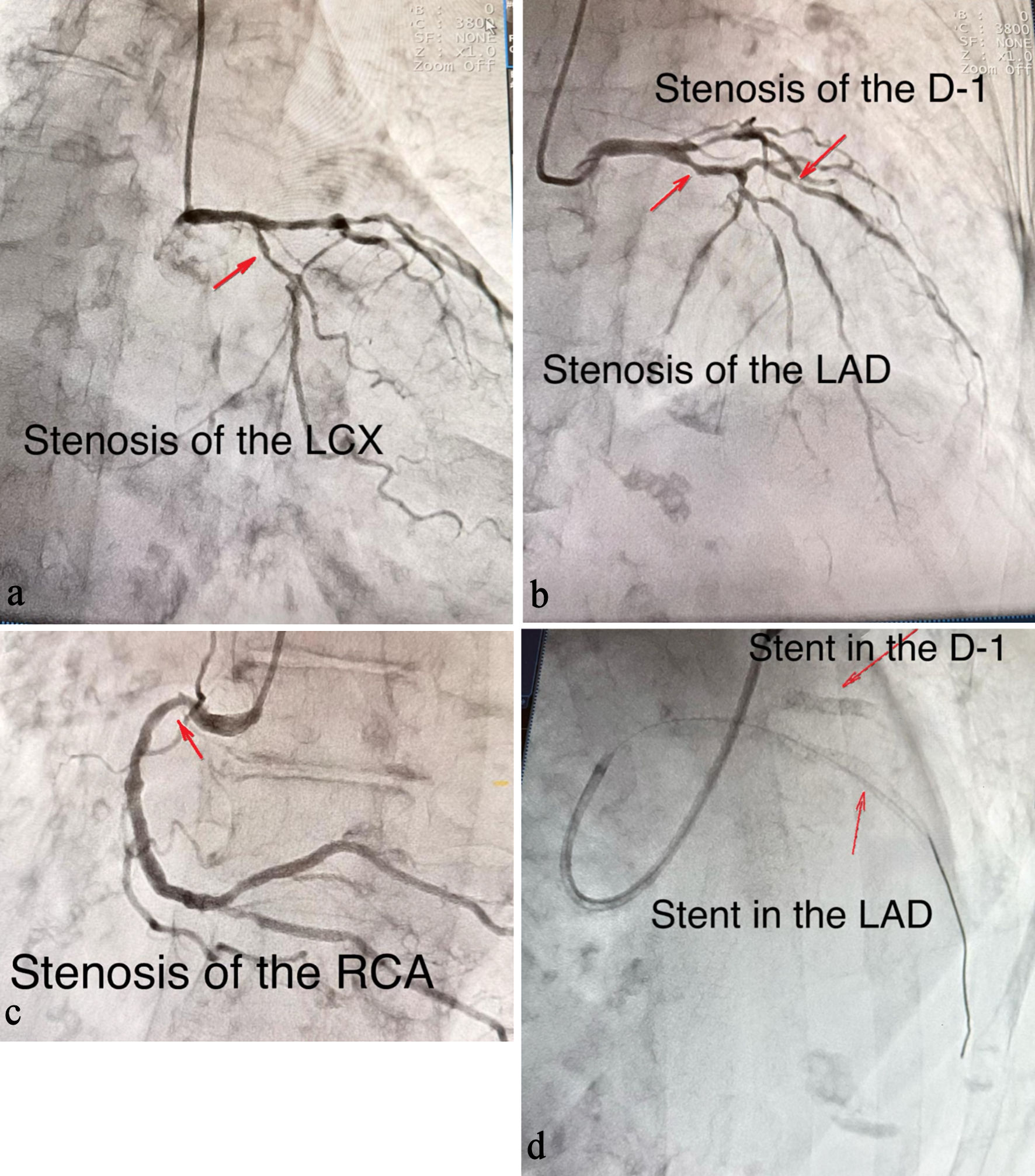
↓  Figure 2. Coronary angiography and post-intervention findings. (a) Stenosis of the left circumflex artery (LCX). (b) Stenosis of the left anterior descending (LAD) and first diagonal (D-1) arteries. (c) Stenosis of the right coronary artery (RCA). (d) Final angiographic result after percutaneous coronary intervention and balloon angioplasty demonstrating stent placement in the LAD and D-1 arteries.
Figure 2.
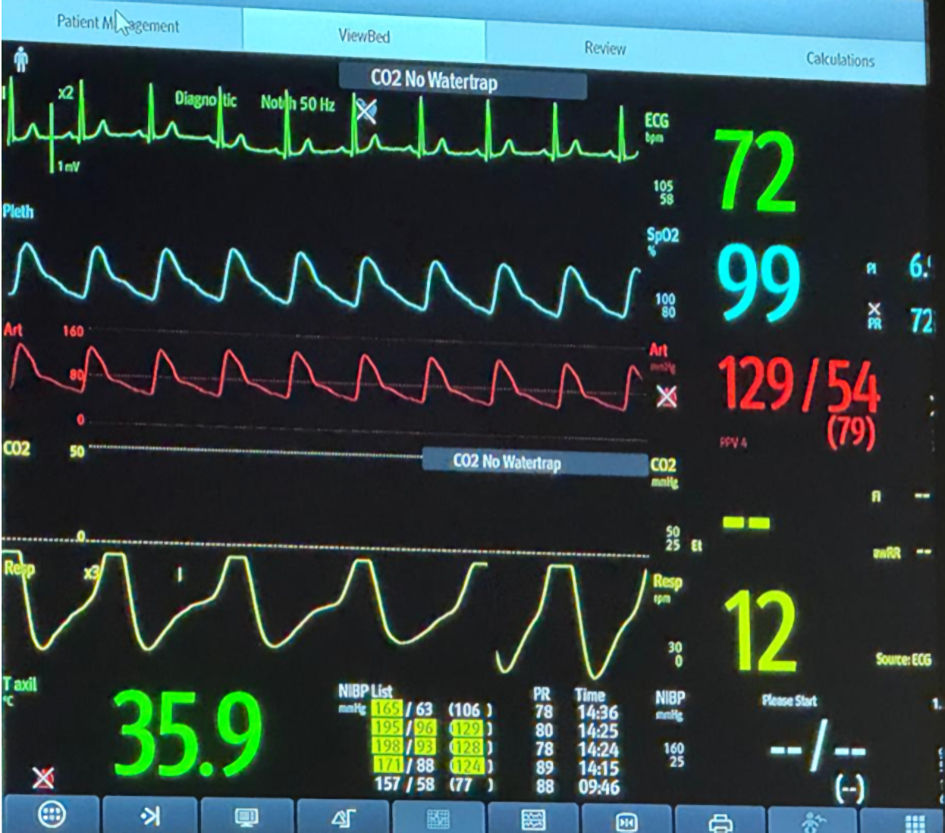
↓  Figure 3. Hemodynamic intraoperative monitoring.
Figure 3.
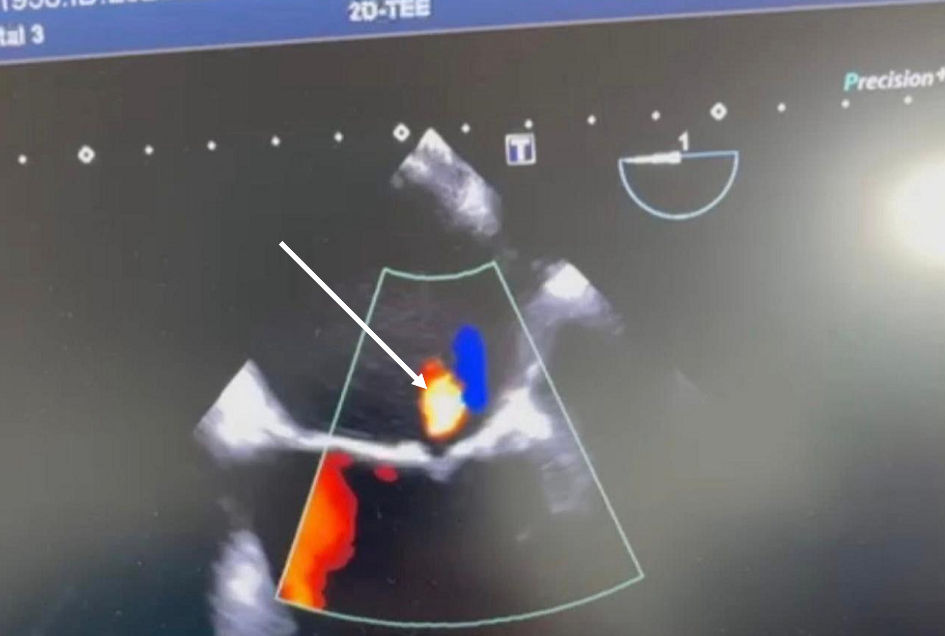
↓  Figure 4. Intraoperative transesophageal echocardiography showing mitral regurgitation; color Doppler demonstrates systolic flow from the left ventricle to the left atrium (white arrow).
Figure 4.
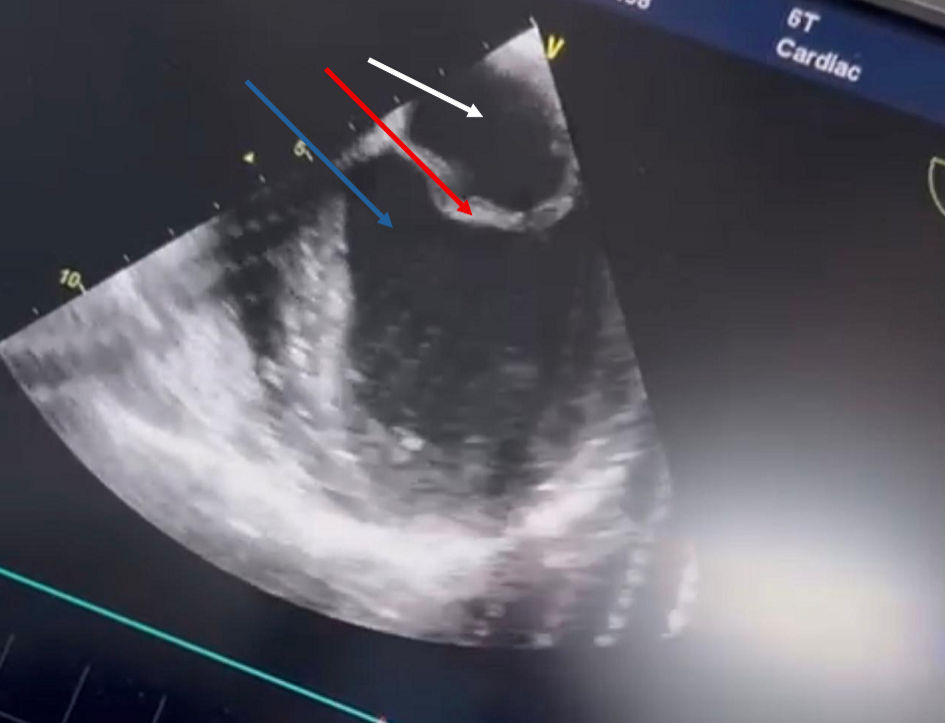
↓  Figure 5. Intraoperative transesophageal echocardiography of the left atrium and ventricle for functional assessment and fluid guidance (left atrium: white arrow; mitral valve: red arrow; left ventricle: blue arrow).
Figure 5.

Tables

↓  Table 1. Perioperative Anesthetic, Hemodynamic, and Postoperative Cardiac Assessment Parameters
 
ParameterDetails
MAP: mean arterial pressure; CK-MB: creatine kinase–MB; ECG: electrocardiogram.
Induction agentsPropofol 150 mg, fentanyl 200 µg, vecuronium 10 mg
Intraoperative MAP targetMaintained between 70–75 mm Hg
Estimated blood lossNo significant blood loss during the procedure
Hemoglobin trendPreoperative: 12.3 g/dL; postoperative: 11.8 g/dL
Postoperative troponin I0.008 µg/L (normal range 0–0.019)
Postoperative CK-MB0.60 ng/mL (normal range < 6.22)
Postoperative ECGNo ischemic changes/evidence of myocardial ischemia


↓  Table 2. Summary of Key Studies on Perioperative Management After Coronary Stenting and Their Relevance to Our Case
 
StudyMain findingsRelevance to our case
DES: drug-eluting stent; hs-cTnI: high-sensitivity cardiac troponin I; PCI: percutaneous coronary intervention; MACE: major adverse cardiovascular event; DAPT: dual antiplatelet therapy TEE: transesophageal echocardiography;
Lee et al, 2023 [8]In 186 patients, early surgery (< 6 months after DES) was not associated with increased postoperative myocardial injury when preoperative hs-cTnI was normal.Supports the feasibility of urgent surgery in selected high-risk patients when delay is not possible.
Xu et al, 2025 [9]In 2,501 patients undergoing gastrointestinal cancer surgery after PCI, earlier surgery carried higher MACE risk, especially within the first 87 days.Reinforces that delaying surgery is preferable, but urgent surgery may still be necessary in critical conditions.
Choi et al, 2010 [10]Surgery within the first 3 months after DES implantation was associated with higher adverse outcomes.Highlights the elevated perioperative risk in our patient with recent PCI.
Sharma et al, 2004 [11]Early surgery within 90 days, especially < 3 weeks, had high mortality when thienopyridines were discontinued; continuation of antiplatelet therapy reduced mortality without increasing bleeding.Supports our decision to continue DAPT perioperatively despite bleeding concerns.
Van Kuijk et al, 2009 [21]Perioperative MACEs decreased as the interval between stenting and surgery increased; continued DAPT increased bleeding risk but did not fully prevent MACEs.Demonstrates the complex balance between thrombosis and bleeding risk.
Damazo-Escobedo et al, 2022 [15]Prolonged DAPT was associated with low major bleeding (1.5%) and mortality (3.7%), with low thrombosis/restenosis rates.Suggests that continued DAPT may be tolerated without major bleeding excess.
Rossini et al, 2018 [20]Emphasized multidisciplinary perioperative antithrombotic management tailored to surgical and thrombotic risk.Reflects the multidisciplinary individualized strategy used in our patient.
Barash et al, 2010 [22]Premature DAPT interruption increases stent thrombosis risk; urgent surgery requires individualized antiplatelet management.Supports prioritizing thrombosis prevention in very high-risk coronary anatomy.
Gurajala et al, 2016 [12]Urgent noncardiac surgery after coronary stenting requires individualized perioperative planning and monitoring.Supports the tailored anesthetic and monitoring strategy applied in our case.
Vicenzi et al, 2006 [16]Surgery soon after PCI, especially within 6 weeks, was associated with increased perioperative cardiac events.Highlights the high-risk timing of surgery in our patient.
Faloye et al, 2025 [17]Continuation of aspirin reduces stent thrombosis and ischemic events despite modest bleeding risk.Supports maintaining antiplatelet therapy perioperatively.
Rohatgi et al, 2022 [18]Aspirin continuation is generally recommended in urgent surgery, with individualized P2Y12 inhibitor management.Relevant to perioperative DAPT decision-making in our patient.
Yoon et al, 2020 [14]DAPT continuation is protective against 30-day MACEs; anesthetic technique itself does not independently affect outcomes.Supports the importance of maintaining DAPT and intensive perioperative management.
Brilakis et al, 2007 [19]Premature DAPT discontinuation is the strongest predictor of stent thrombosis and carries high mortality.One of the main reasons DAPT was intentionally continued in our patient.
Watkin et al, 2023 [23]Laparoscopy reduces surgical stress, but pneumoperitoneum can affect cardiovascular physiology, requiring careful monitoring.Supports our use of low-pressure pneumoperitoneum, invasive monitoring, and TEE.


↓  Table 3. Key Anesthetic Recommendations for Patients With Coronary Stents Undergoing Noncardiac Surgery
 
CategoryRecommendation/key pointRationale/notes
DAPT: dual antiplatelet therapy.
Antiplatelet therapyContinue DAPT, especially aspirin, when possibleReduces risk of stent thrombosis; bleeding risk must be monitored
Anesthetic techniqueBoth volatile agents and total intravenous anesthesia (TIVA) acceptableNo clear evidence favors either; focus on hemodynamic stability
Hemodynamic managementAvoid tachycardia, hypotension, and abrupt hypertensionPrevents perioperative myocardial ischemia
VentilationApply lung-protective ventilation (low tidal volume, plateau < 30 cm H2O, driving pressure < 13 cm H2O)Reduces ventilator-induced lung injury and preserves oxygenation
Surgical approachPrefer minimally invasive/laparoscopic surgery with low insufflation pressureMinimizes hemodynamic compromise, tissue trauma, and blood loss
MonitoringUse invasive hemodynamic monitoring (arterial line, continuous perfusion assessment)Allows real-time adjustment of anesthetic depth, fluids, and vasoactive support
Fluid and vasopressor managementTailor fluids and vasoactive drugs to maintain coronary perfusionMaintains myocardial oxygen supply–demand balance
Postoperative careContinue DAPT, monitor hemodynamics, assess for bleeding and cardiac complicationsEnsures safe recovery and early detection of complications