Journal of Medical Cases, ISSN 1923-4155 print, 1923-4163 online, Open Access
Article copyright, the authors; Journal compilation copyright, J Med Cases and Elmer Press Inc
Journal website https://jmc.elmerpub.com

Case Report

Volume 17, Number 6, June 2026, pages 275-279


Trans-Endometrial Cesarean Myomectomy for a Large Anterior Lower-Segment Intramural Fibroid Preventing Hysterotomy Closure

Figures

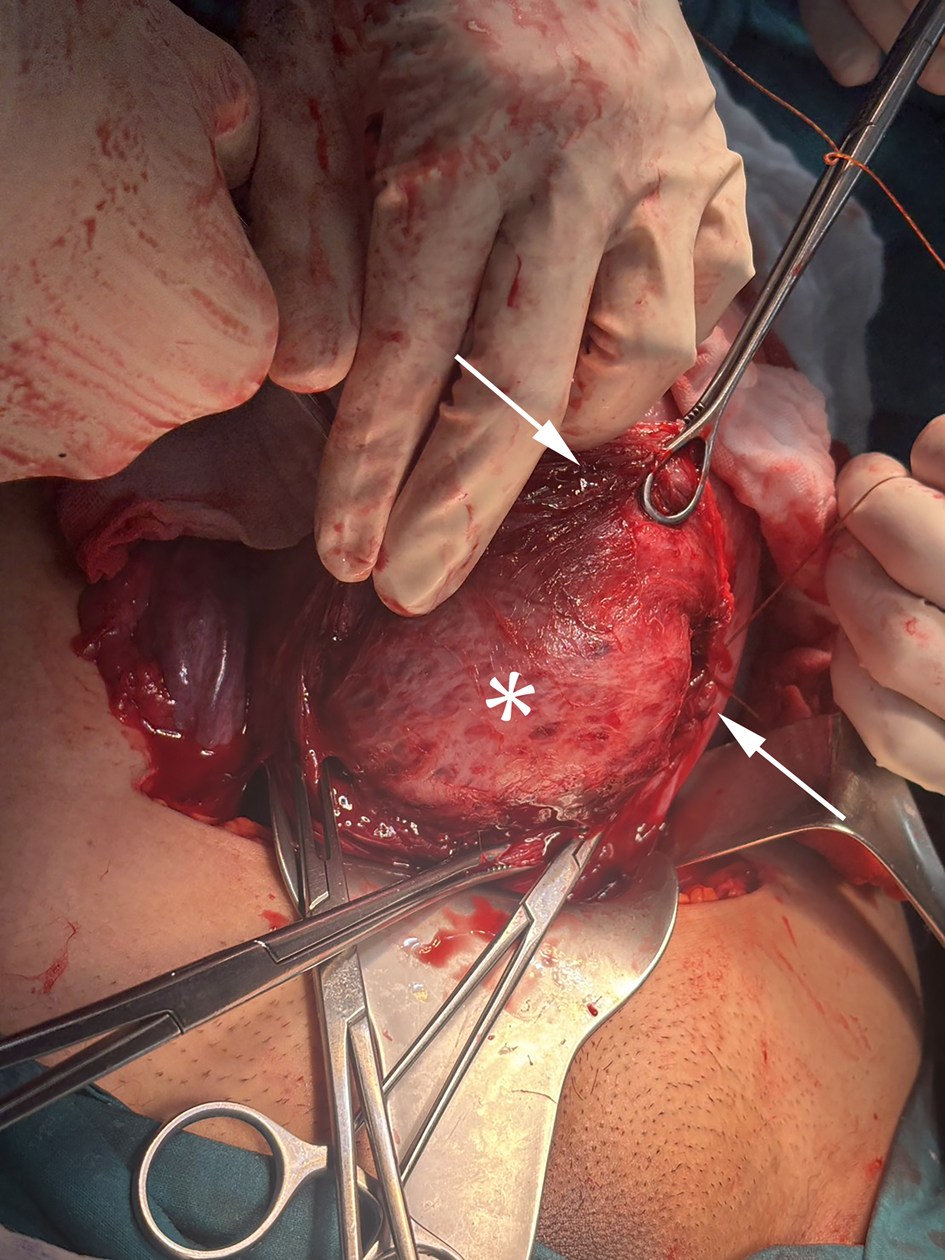
↓  Figure 1. Prenatal ultrasound at 20 weeks’ gestation showing an anterior-wall intramural fibroid (yellow cross-marks) measuring approximately 7.5 × 7.9 cm. The lesion was in the lower anterior uterine segment.
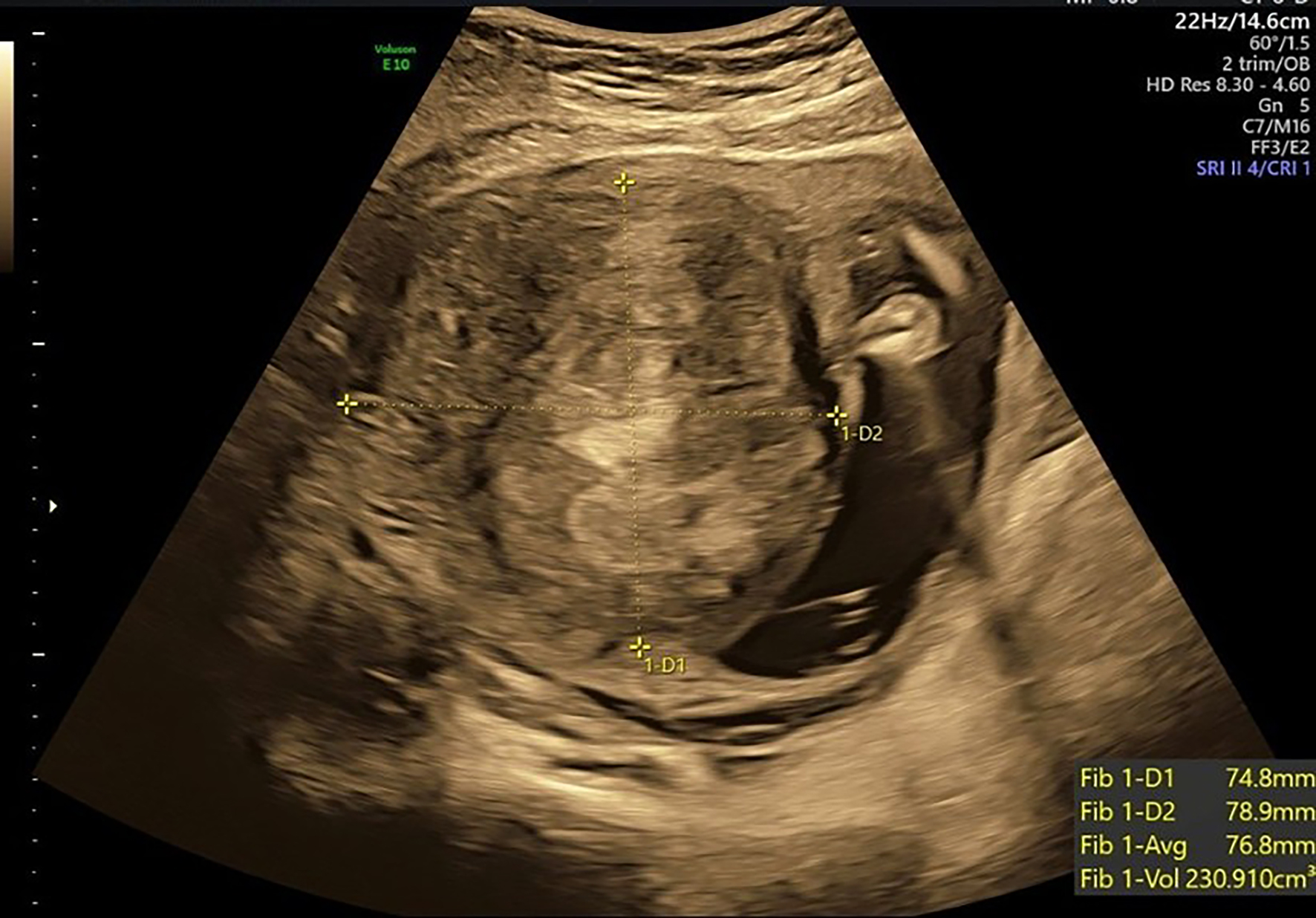
Figure 1.
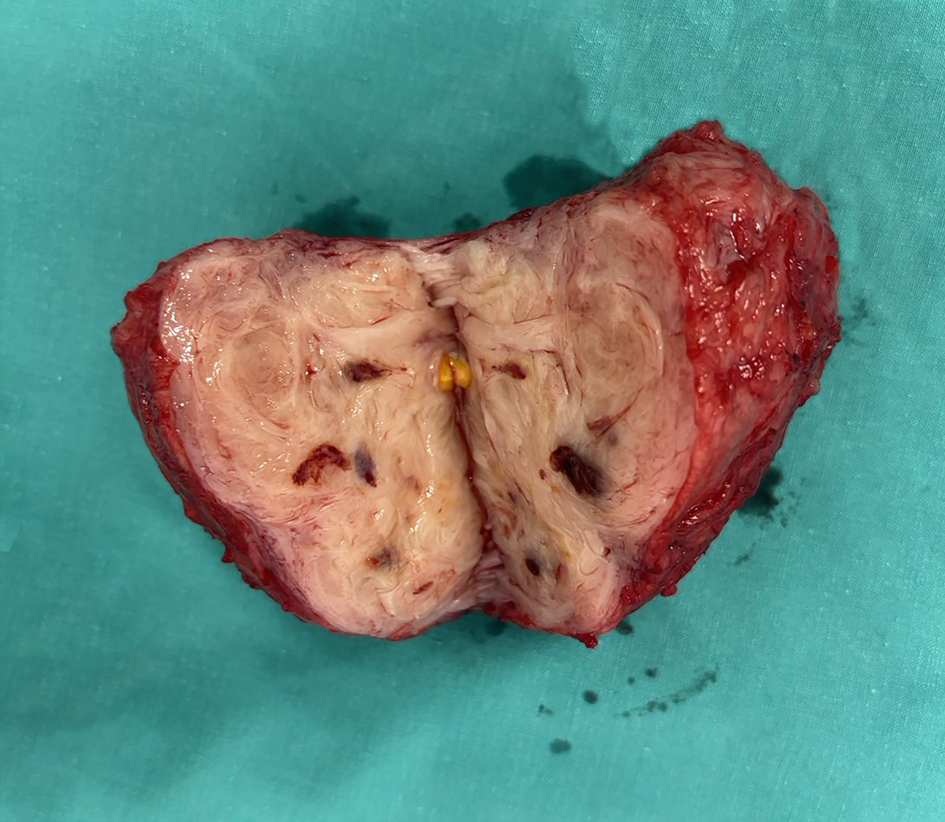
↓  Figure 2. Intraoperative photograph demonstrating the surgical field during trans-endometrial cesarean myomectomy. The upper arrow indicates the point at which the intramural fibroid protrudes into the hysterotomy incision line, preventing myometrial approximation. The asterisk (*) denotes the fibroid body (pseudocapsule surface) following exposure through the existing hysterotomy incision. The lower arrow indicates the myometrial edge, illustrating the anatomical impossibility of uterine closure without prior fibroid enucleation. No additional serosal incision was required.
Figure 2.
↓  Figure 3. Gross specimen of the excised leiomyoma following trans-endometrial cesarean myomectomy, weighing 239 g. The cut surface demonstrates the characteristic whorled appearance of uterine leiomyoma. Histopathological examination confirmed the diagnosis of leiomyoma.
Figure 3.