The Hidden Link: Cryoglobulinemic Membranoproliferative Glomerulonephritis Secondary to Monoclonal Gammopathy of Renal Significance
DOI:
https://doi.org/10.14740/jmc5318Keywords:
Membranoproliferative, Glomerulonephritis, MPGN, MGRS, MGUSAbstract
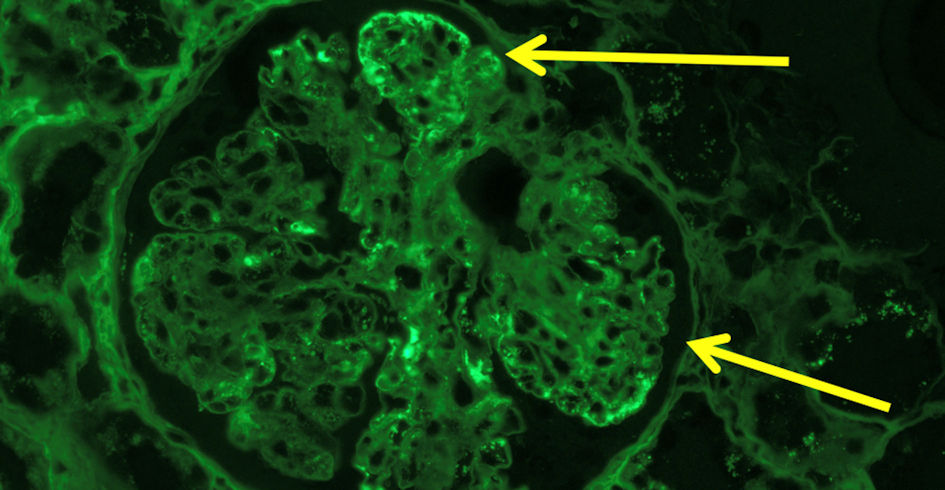
Membranoproliferative glomerulonephritis (MPGN) is a histopathological pattern that represents a spectrum of glomerular injury diseases. MPGN is usually associated with infections, autoimmune diseases and monoclonal gammopathies. Monoclonal gammopathy of renal significance (MGRS) is any proliferative B-cell or plasma-cell disease that causes abnormal buildup of monoclonal proteins in the kidneys. It is usually underdiagnosed due to its rarity. We present a case of a 74-year-old woman referred to nephrology with worsening creatinine levels, proteinuria and microscopic hematuria. Laboratory evaluation showed low C3 levels and elevated serum free light chain ratio. Kidney biopsy showed immune deposits consistent with cryoglobulinemic glomerulonephritis secondary to MGRS. Patient was treated with prednisone and mycophenolate mofetil, resulting in improvement in the creatinine functions, proteinuria, and hematuria.
Published
Issue
Section
License
Copyright (c) 2026 The authors

This work is licensed under a Creative Commons Attribution 4.0 International License.